



Considering Venetian plaster walls, but unsure how much sheen your room can carry? The finish often called Venetian plaster paint can range from a subdued stone effect to a reflective polish, and that difference matters across an entire room. Here’s how to choose a finish and color that suit your space, with guidance on installation costs and care before you commit.
What Is Venetian Plaster? The Material Behind the Finish
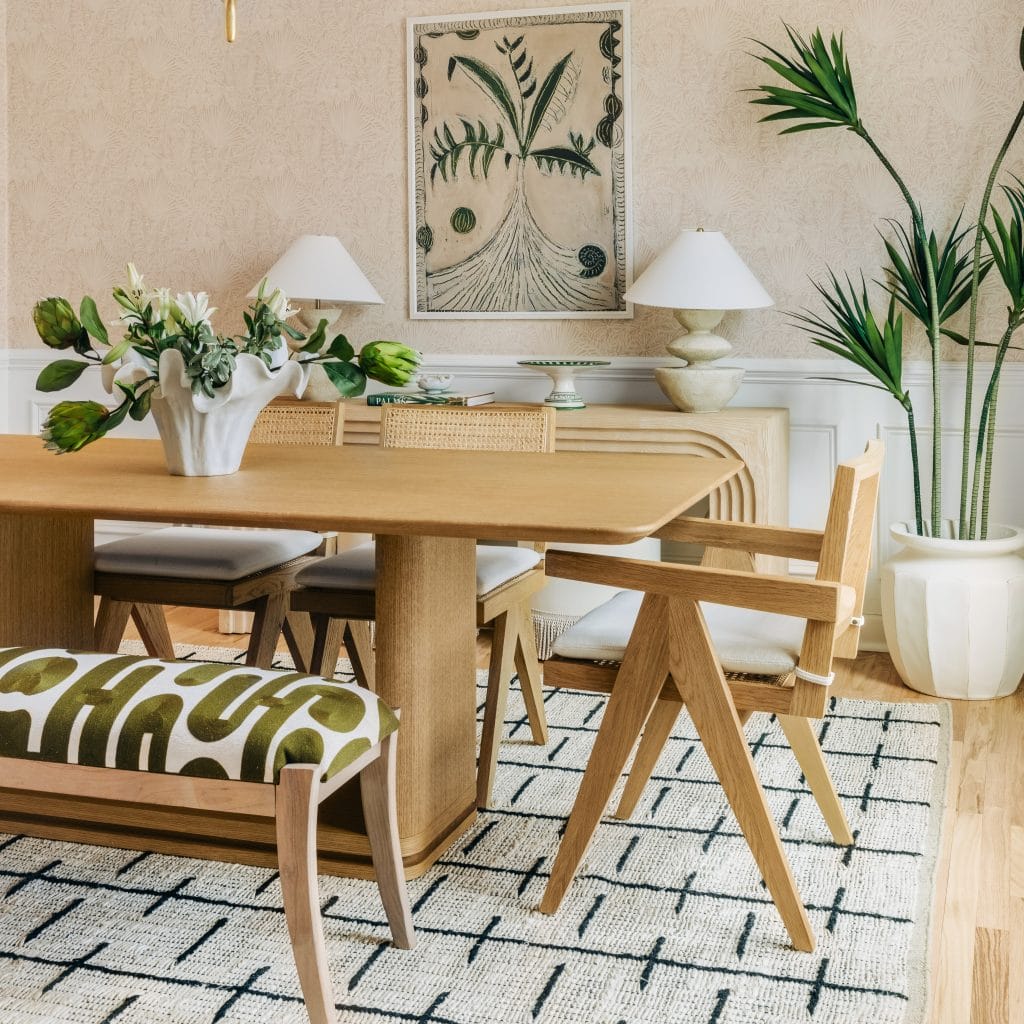
Traditional Venetian plaster is a blend of lime putty and marble dust. A skilled applicator trowels it on in several thin layers, then burnishes the final coat to compress the surface and bring up its sheen. The result is a solid mineral layer with real depth, which is why designers class it as a building material in its own right.
It is easy to confuse with its neighbors. Limewash walls use a thin lime wash that soaks into the surface and dries to a flat, chalky matte. Microcement is a cement and polymer coating, usually sealed for water resistance, with a more industrial look.
Interest is climbing fast. According to the 2026 Houzz Emerging Summer Trends Report, searches for Venetian plaster paint rose 94% year over year, part of a broader return to Old-World design and handcrafted surfaces. Specialist applicators also report growing demand for hand-troweled finishes.
Pro Tip: Which Venetian plaster look suits your taste? Try our Free Interior Design Style Quiz to discover your ideal style today!
Venetian Plaster Finishes: Which One Is Right for Your Home
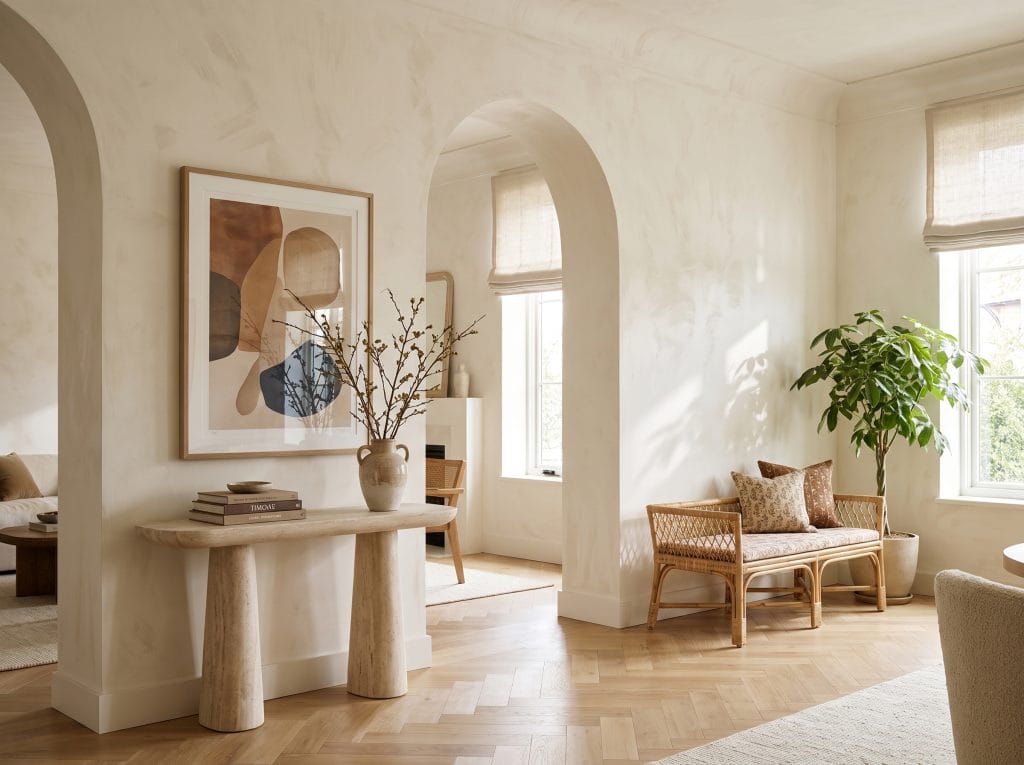
Each Venetian plaster paint finish comes from a different recipe and technique, and the choice affects both the look and where the wall can go. Here are the four your designer is most likely to suggest.
Grassello (High-Gloss Polish)
Grassello is the most traditional option, made from aged lime putty and polished to a mirror-like gloss. Light moves across it much like it does across marble. The finish suits formal living rooms, dining rooms and entry halls, where a reflective feature wall can hold attention. It also demands the most skill to apply, so installer experience matters here more than anywhere else.
Marmorino (Semi-Matte with Depth)
Marmorino plaster mixes lime with coarser crushed marble, giving it a stone-like surface and a faint sparkle up close. Its sheen sits lower than Grassello’s. With a protective sealer, marmorino works well in bathrooms and spa-inspired suites, where the texture pairs naturally with honed stone.
Stucco Veneziano (Smooth Finish)
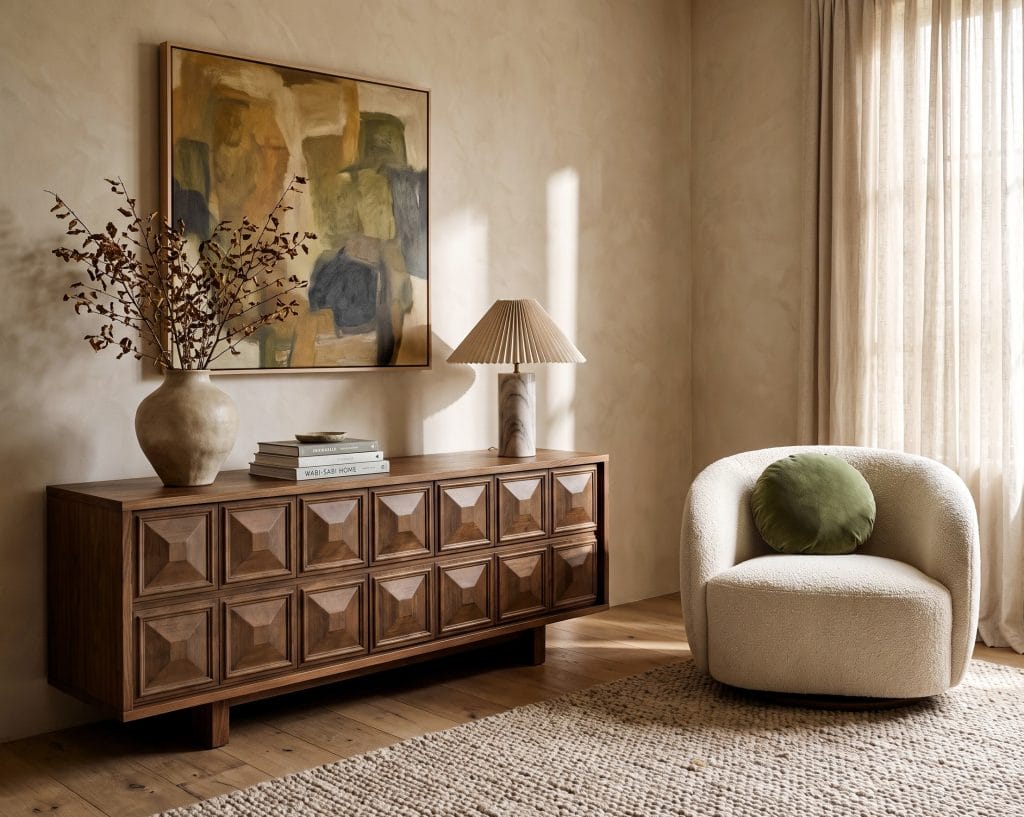
For most homes, stucco Veneziano is the finish to start with. Its silky satin surface falls between grassello’s gloss and a matte plaster, and it has a cleaner, more modern feel. Designers often use it across an entire room, since its mostly moderate sheen feels easy on the eye across large wall areas.
Tadelakt (Moroccan Lime Plaster)
Tadelakt comes from Morocco and belongs to the same lime plaster family. Applicators compress it with smooth stones and seal it with black olive-oil soap, which reacts with the lime to create a water-resistant surface. That makes it one of the few plasters suited to a shower enclosure. Application is slow and specialized, so expect Tadelakt to sit at the top of the price range.
Venetian Plaster Colors: From Warm Neutrals to Moody Darks
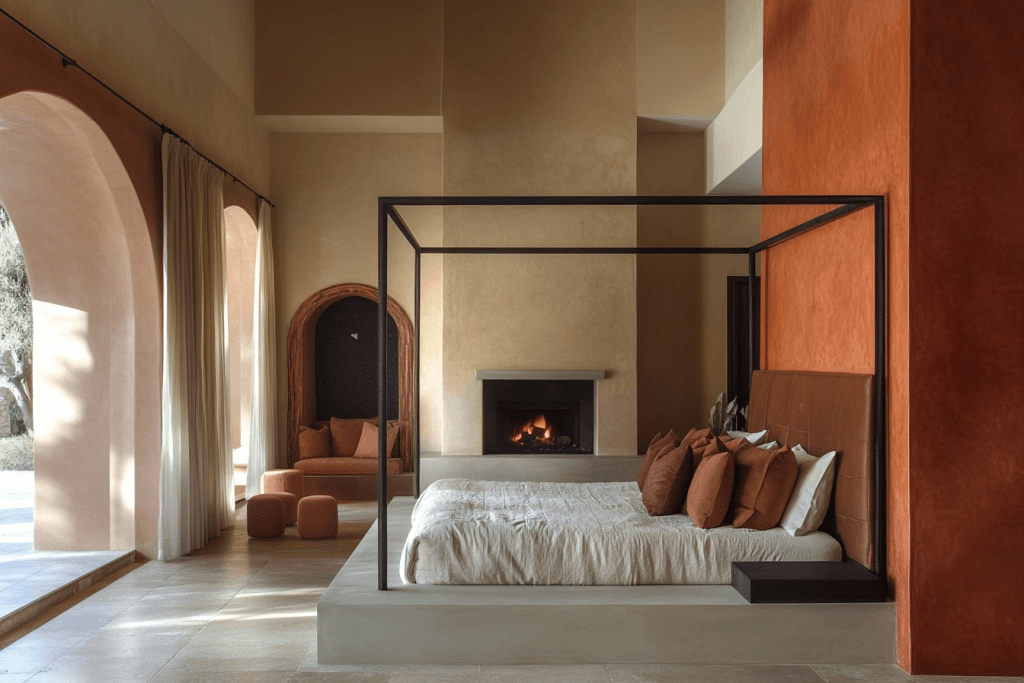
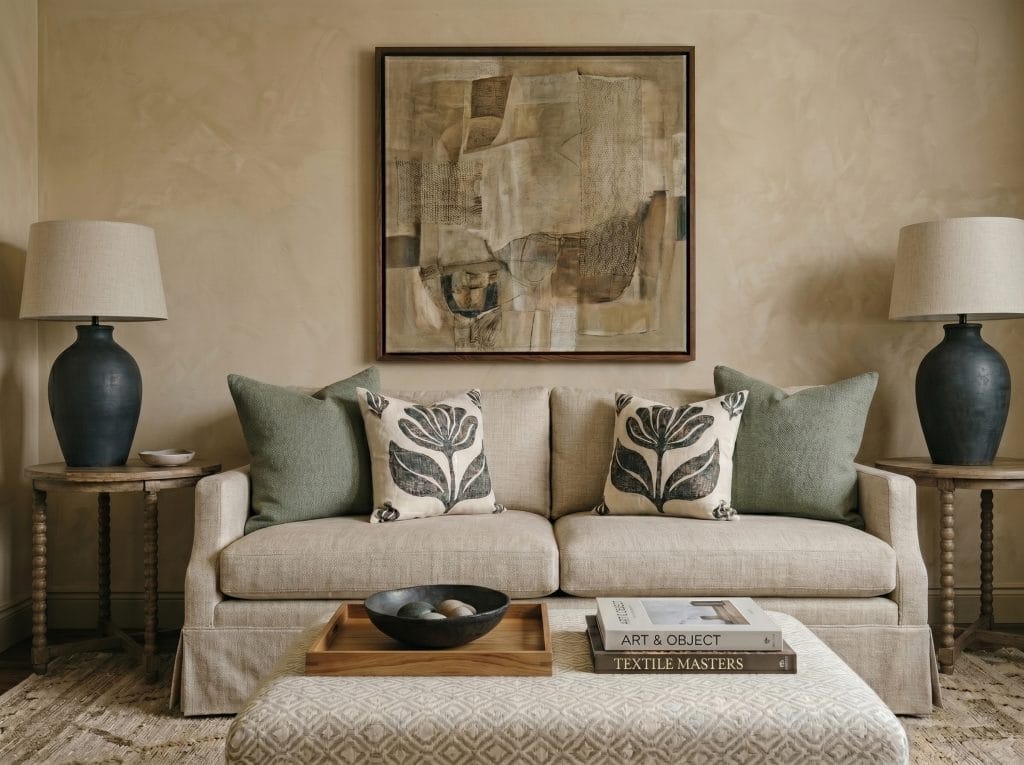
Venetian plaster colors are tinted into the paint itself, so the shade has depth through every layer. Designers in 2026 are leaning toward earthy tones that echo natural stone. Soft terracotta and dusty clay are also gaining ground, especially in dining rooms. Whichever shade you choose, the sheen of the finish will shift how dark or light it appears, so sample the color in the exact finish you plan to use.
Travertine & Warm Beige
Warm beige is the most timeless choice, and it closely resembles travertine once polished. In a Venetian plaster living room or dining room, it creates a calm backdrop for walnut and oak furniture. It also works well in entryways, where it sets a warm tone as soon as you walk in.
Marble White & Off-White
White grassello is the classic luxury finish. Polished to a high sheen, it bounces daylight around the room and brings out subtle veining in the plaster. It performs best in larger rooms with generous natural light. Smaller, darker spaces can make a bright gloss look cold, so an off-white in a satin finish may suit them better.
Sage & Muted Green
Sage green has become a favorite for Venetian plaster bedroom walls and bathrooms. The muted tone feels calm, and it pairs easily with linen bedding and stone vanities. A marmorino finish in sage adds gentle texture behind a headboard.
Charcoal & Ink Dark
Charcoal and ink shades bring the most drama. A high-gloss finish catches light across the dark surface, giving the color movement and depth. A Venetian plaster fireplace surround in charcoal gives a living room a strong focal point. Powder rooms are another good fit, since the small area can carry a bold color. For more on layering surfaces like these, see our guide to wall texture ideas.
Which Venetian plaster color would work with your flooring and furniture? Work with a Decorilla designer to bring it into your room’s palette.
How Much Does Venetian Plaster Cost?
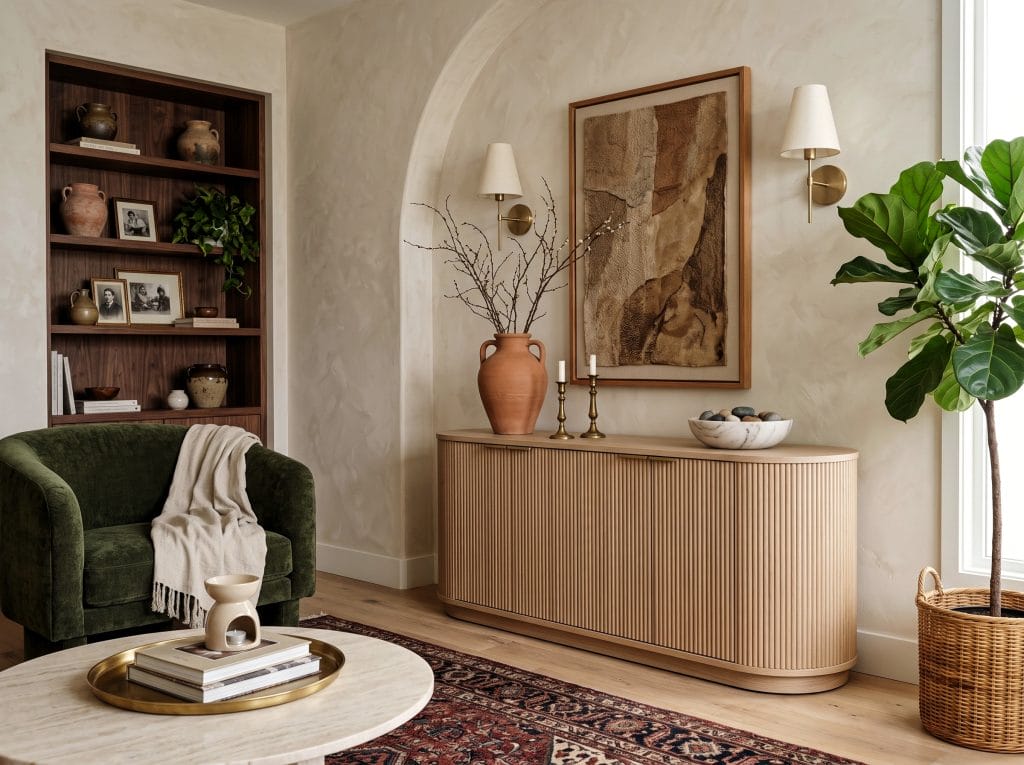
Venetian plaster is a premium finish, and the pricing reflects the labor behind it. Professional installation typically runs $10 to $30 per square foot. A single accent wall usually lands between $1,500 and $4,500, while a full room can reach $6,000 to $15,000 or more.
Several factors move the number. Tadelakt and high-gloss grassello take longer to apply, so they often cost more than stucco Veneziano. Intricate trowel work and a highly polished finish can increase labor costs. Walls with cracks or uneven drywall need prep work before the first coat. The applicator’s experience also plays a large role, since a skilled artisan controls the depth and polish of the final surface.
For comparison, limewash usually costs noticeably less per square foot and goes on faster. When weighing Venetian plaster vs. limewash, the deciding factor is usually the look. If you want visible sheen and stone-like depth, Venetian plaster walls justify the higher cost.
DIY kits are available, but true Venetian plaster depends on a burnishing technique that takes practice to learn. For anything beyond a small test panel, hiring a professional protects your investment.
Venetian Plaster Care: How to Keep It Looking Flawless
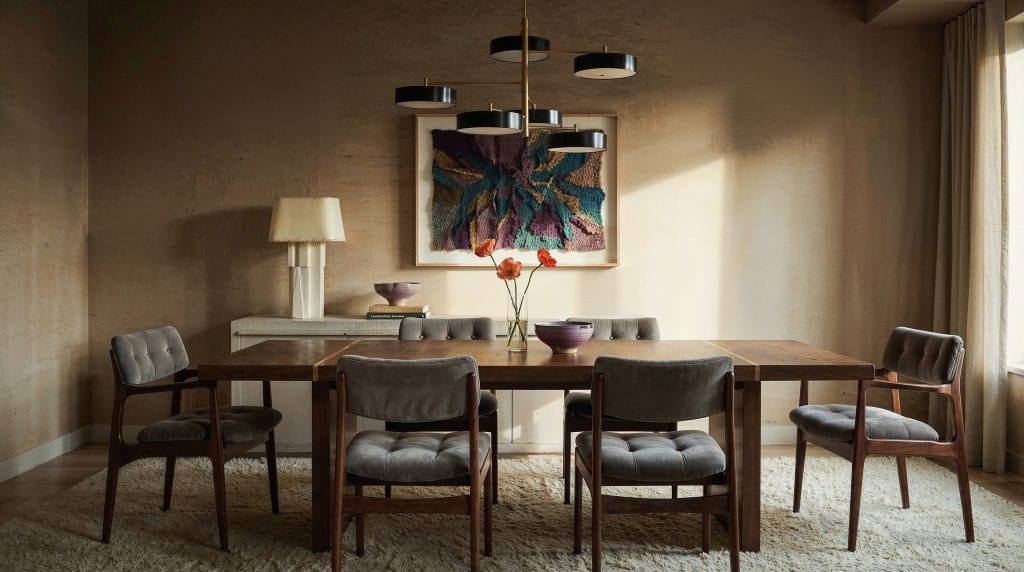
Venetian plaster needs little maintenance, but it does have specific requirements. Knowing how to care for Venetian plaster starts with cleaning. Use a soft, damp cloth with a little mild soap, and skip abrasive pads and bleach, which can dull or etch the surface.
Many finishes are protected with a wax topcoat, which may need reapplication every three to five years. Standard Venetian plaster resists water only when sealed. For shower walls, ask an experienced applicator which plaster finish suits direct water exposure.
Small scuffs can be repaired, although matching the original color and sheen takes skill. If possible, call back the artisan who installed the wall. Properly applied and maintained, hand-troweled Venetian plaster finishes can last for decades.
Want Venetian plaster in your home? Start with a designer.
Decorilla can help you decide where Venetian plaster belongs and choose a color that works with your existing finishes. Explore the overall effect in a 3D room design, then review physical plaster samples with your applicator before installation. Book your Free Online Interior Design Consultation to start your project today!





Comments