


Interior design trends 2027 are moving further away from layouts built to look complete in one sitting. Rooms are getting harder to date at a glance, and that is part of the point: you can also usually tell who lives there. The shift shows up in everything from collected interiors and New Heritage to social spaces and adaptive layouts. Television disappears into joinery while a game table claims space that once belonged to a media wall.
That makes this year particularly useful if you’re updating a home piece by piece. Many strong transformations begin with what is already there, then change how it is arranged or used. We traced the 12 trends designers expect to matter most in 2027, along with practical ways to bring each one home.
12 Interior Design Trends That Will Define 2027
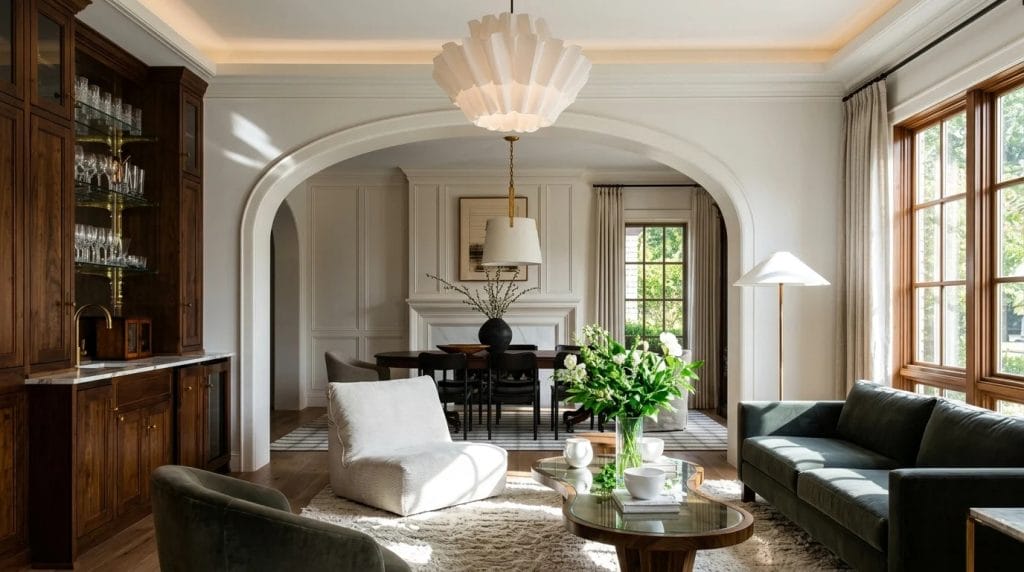
Four tensions shape the year. Human craft shares a single object with digital intelligence. Heritage detail meets fabrication methods that were unavailable five years ago, while calm surfaces carry moments of play. And furniture built to last a lifetime is asked to move and to serve more than one purpose.
1. New Heritage Blends the Past With the Future
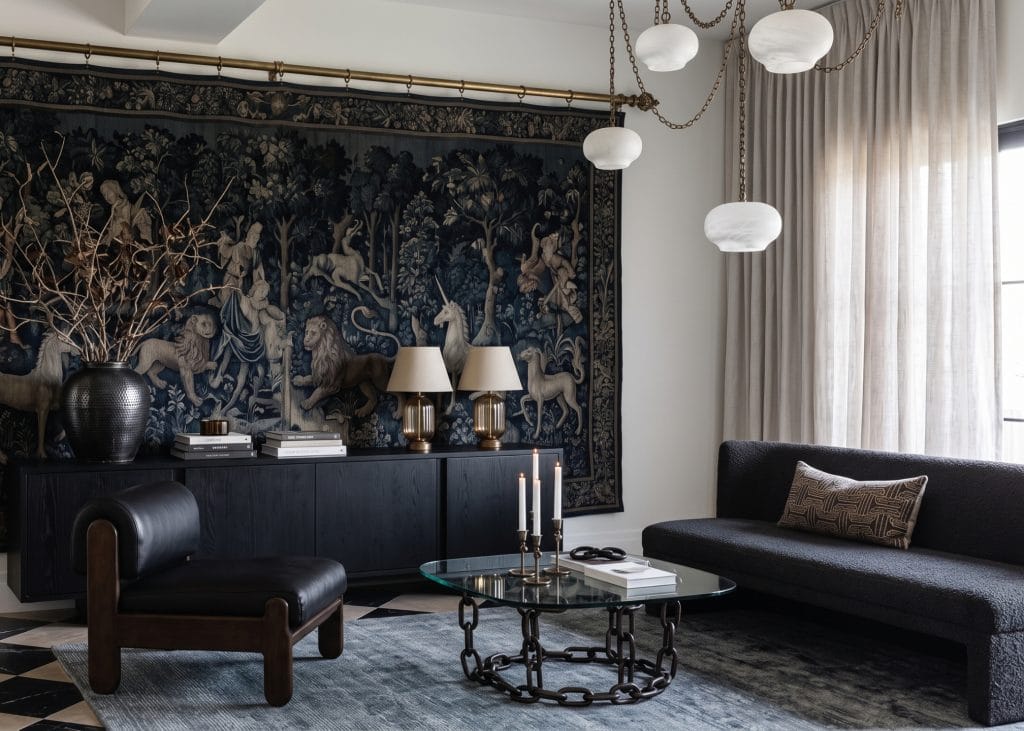
Antiques drifted into contemporary rooms across the last few seasons, and 2027 interior design trends push the formality off them entirely. New Heritage is the name attaching to traditional design once that classic formality comes off.
The style places genuinely old pieces into rooms with modern proportions. The old tapestries, the age of the furniture, or natural distress supply the character while the surrounding architecture keeps quiet. Upholstery moved the same way. Turned spindles or shaped legs now appear under washed linen and heavy cotton canvas, which drops their register far enough for a wing chair to sit beside a low modular sofa.
How to bring this trend home: Restraint around the antique is what keeps it current. A room loaded with it tips a space into period reconstruction. That costs the antique its surprise.
2. Personal, Collected Interiors Replace Copy-Paste Design
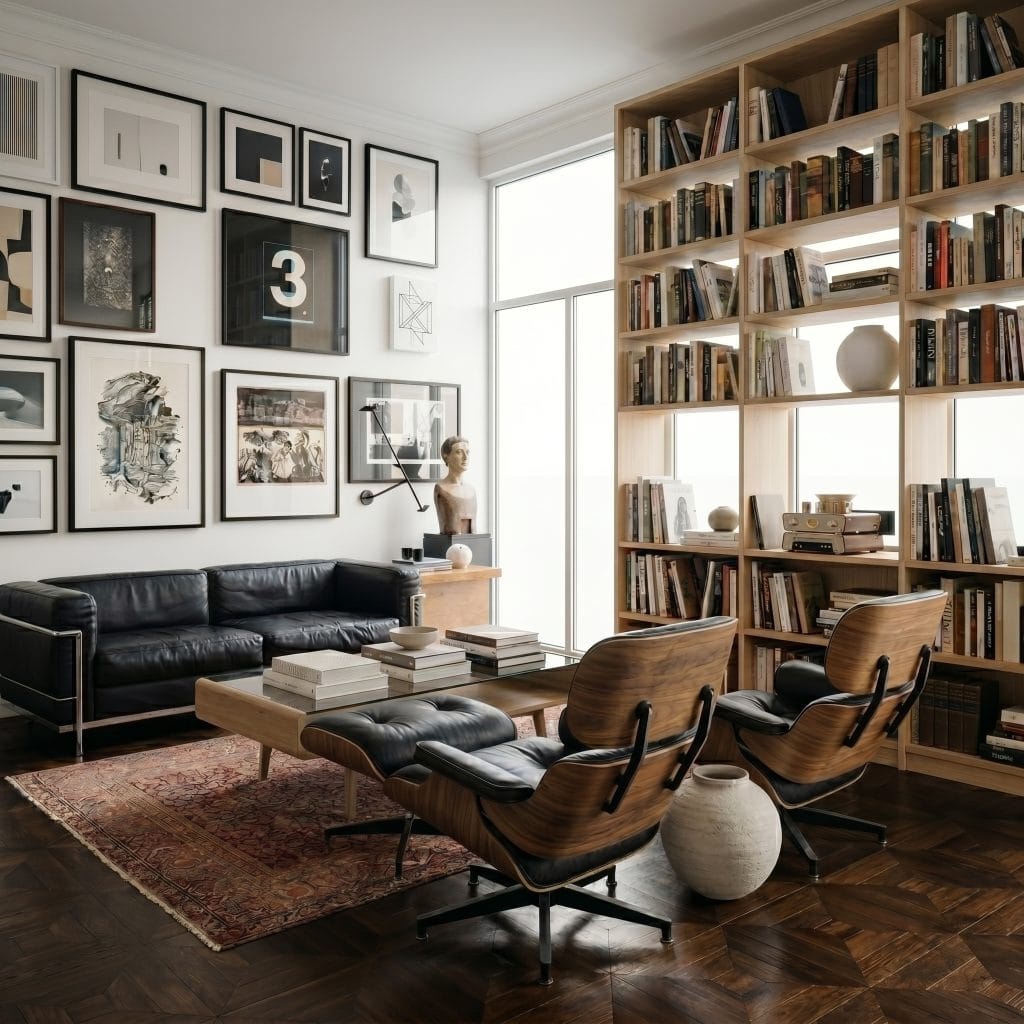
More often than not, clients arrive at a project with a list of pieces they intend to keep. Personality has become the organizing principle of a home, and this is the defining trend of the year. A 2027 interior is built to announce who lives in it, drawing on vintage, inherited, meaningful, and new pieces held together by the owner’s own logic. The showroom look of the past years is what people are designing away from now. Every other current in interior design trends 2027 runs downstream of this one.
In practice, matching sets have gone. Nightstands can differ from each other, and a sofa can be flanked by chairs sharing only a seat height. Coherence comes from a repeating element, so keep the wood tones within a narrow range or run a single metal across the hardware and lighting.
How to bring this trend home: Be careful with scale when blending in pieces built for differently sized rooms.
Which 2027 trends fit your style? Take our Free Interior Design Style Quiz to find your starting point, and get personalized results!
Takes less than 2 minutes!
3. Craft Meets Code: Handmade Detail in a Digital Workflow
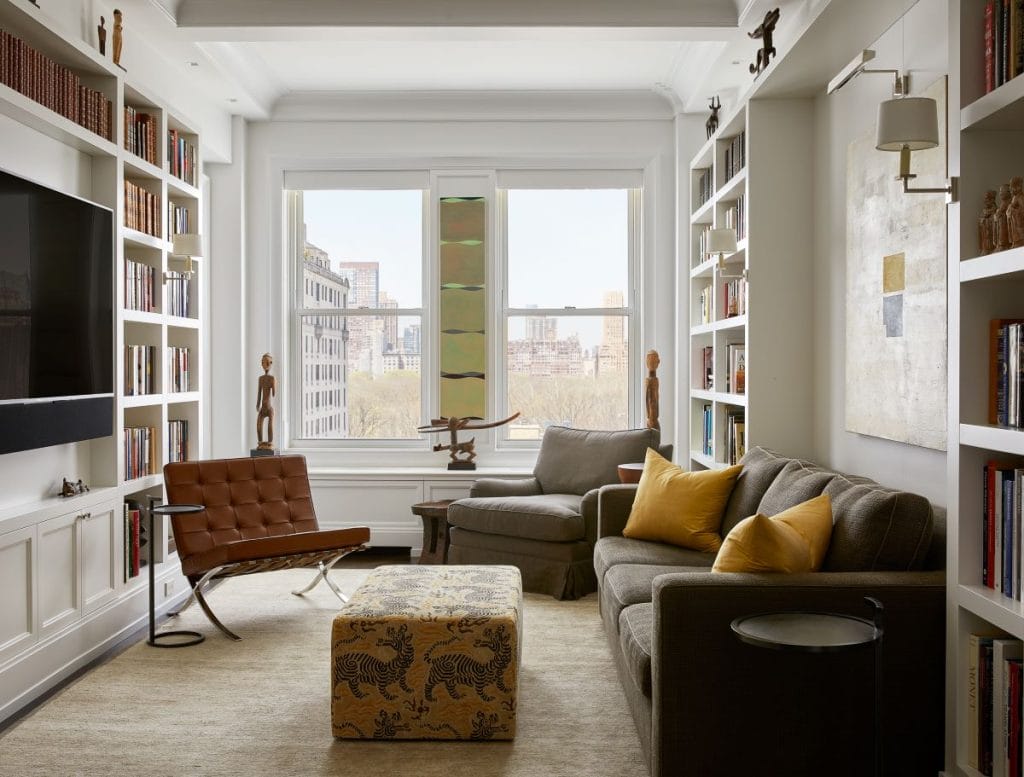
Handmade and machine-made have stopped behaving like separate categories. The objects arriving in homes this year carry evidence of both. A pattern generated by software travels to a workshop and gets corrected by hand before it reaches a fabric or a glaze. The irregularities that survive are the ones we meet in the trade.
Why this is great: small-batch digital fabrication has brought one-off pieces within reach of budgets that were closed to them only a few years ago. Visible inconsistency used to mark a second-quality product, and it now carries the premium. That inversion is what turns a workshop practice into a very welcome 2027 interior design trend.
How to bring this trend home: Variation across a run of handmade tile is the reason to buy it. Just be sure to order about fifteen percent over, because matching a later batch is close to impossible.
4. Furniture Becomes Functional Art
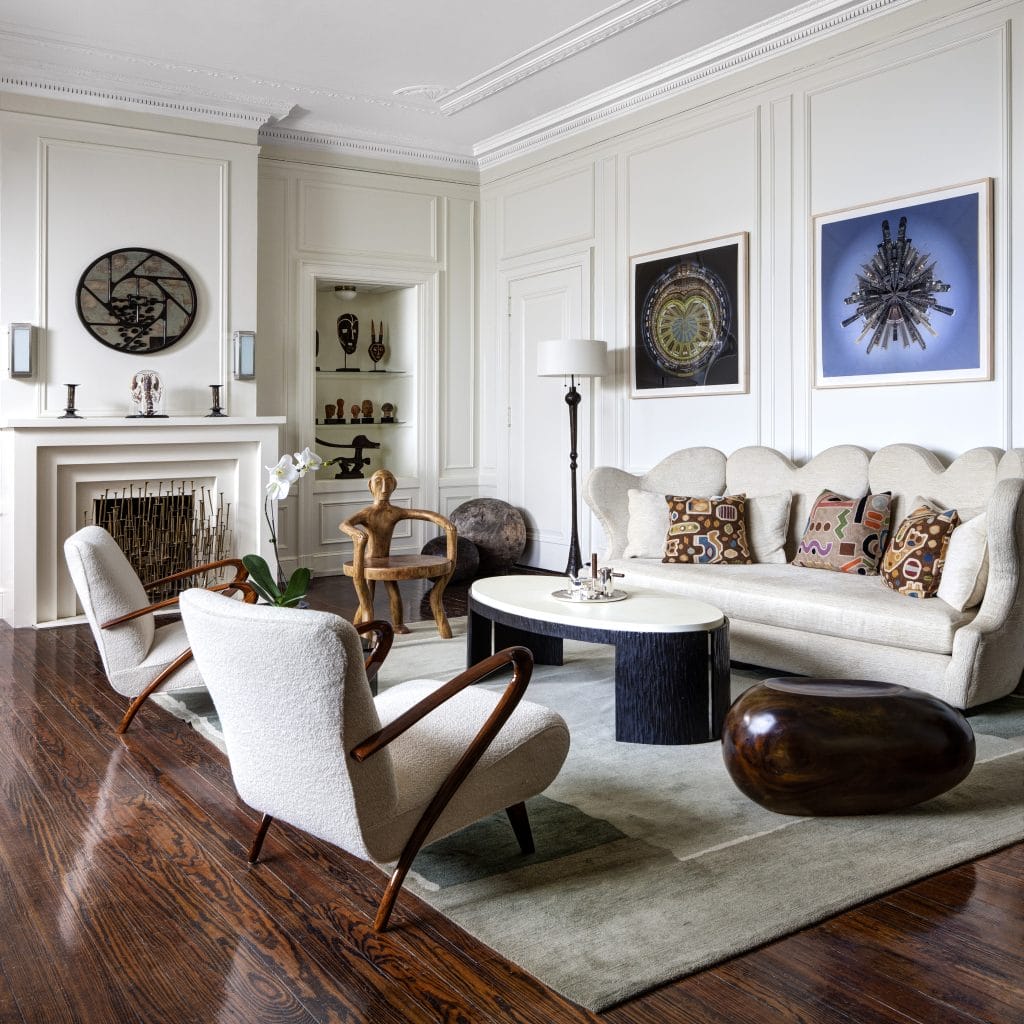
One object per room is now expected to work as sculpture, which lifts this above a season of statement pieces. The trendiest designs are built from burl or figured timber. They borrow their form from architecture, with plinths and stepped profiles taking on work that used to belong to millwork.
Volume matters. These designs aim to register as a whole before the eye starts picking out legs or other functional parts. A sideboard on a solid plinth reads almost like a block set into the room; a dining table with one carved pedestal gets the same effect from a continuous base.
How to bring this trend home: Give the sculptural furniture piece an approach view so that anyone entering the room encounters it at an angle.
5. Social Spaces Make a Real Comeback

Somewhere in the last two years, the living room designed around a screen fell out of favor, and gathering became the space’s stated purpose again. Seating faces itself now.
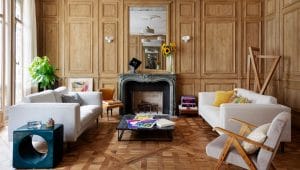
Two sofas across a low table outperform a single long run against a wall, because conversation needs facing sightlines and a surface everyone can reach. Game tables have also reappeared, sized for cards and left out permanently, while closed dining rooms absorb the budget that went to media walls for a decade.
How to bring this trend home: Six to eight feet between facing seats is the working range. Past ten, people raise their voices or give up on the conversation, at which point a seating group stops functioning.
6. Flexible Furniture and Adaptive Layouts Replace Fixed Rooms
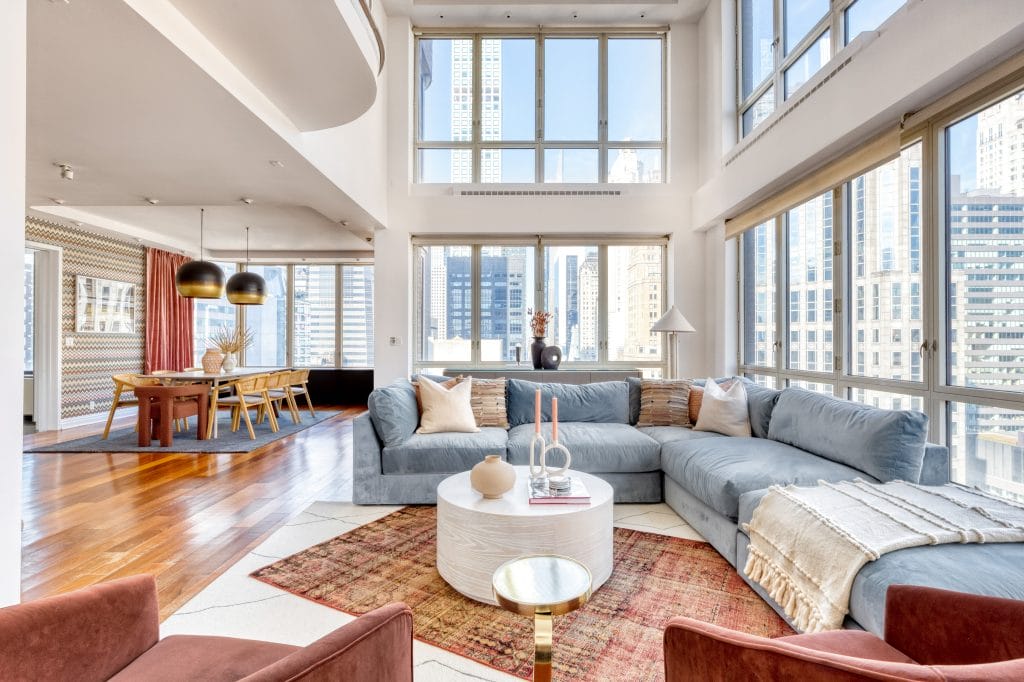
The open plan survived its backlash, but what changed is the zoning inside it. Half-height walls and joinery running partway across a space now give definition while daylight still reaches the back of the plan.
Furniture carries the rest of the load. Modular seating can be separated and recombined depending on the evening, accompanied by extending tables that now hide their mechanism completely. Sliding panels close a corner off when one person works while another watches something, which is where the fixed-room floor plan finally lost its argument.
How to bring this trend home: A rug sized to the seating group marks a boundary. Get at least the front legs of every seat onto it. Measure carefully, since undersized rugs are the most common zoning failure in open plans.
7. Sensory Design Engages More Than Sight
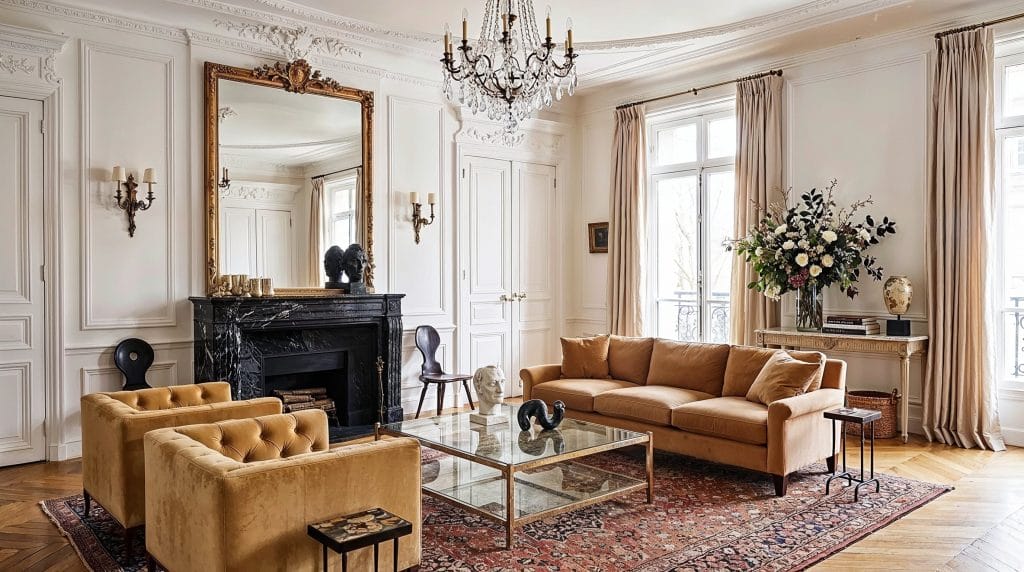
Interior design trends for 2027 bring spaces designed for the ear and the hand. Hard kitchens and minimalist rooms full of metal ring at levels people find exhausting, so the answer has moved into the design itself.
Upholstered wall panels and heavy interlined drapery make the space cozier, followed by acoustic backing above the ceiling plane. Tactility is specified with equal care, so bouclé, brushed mohair, washed linen, and raw silk layer across a single seating group. Even the scent now appears in briefs more often, sometimes right alongside lighting.
How to bring this trend home: In a hard room, full-height interlined curtains can do a substantial amount of acoustic work before you start adding dedicated panels; plus they often cost less to install. Specify them full height and generously gathered.
8. Comfort Gets Bigger and More Sculptural

Sofas got deeper because the brief changed. Rest is what furniture is designed around in 2027, and the proportions followed, with arms widening into surfaces broad enough to hold a cup. The tight-tailored silhouette that dominated the last cycle now looks brittle beside them.
Puffer upholstery has also moved out of novelty and into serious production, its quilted volumes generous enough to carry a room alone, while daybeds have returned as primary seating. But the main distinction separating 2027 home decor trends from a passing softness is that the reclined position now receives the same design attention the upright one always has.
How to bring this trend home: Measure the walking route before the silhouette wins the argument. A forty-inch-deep sofa dropped into a standard living room leaves circulation that fails the first time eight people gather in the space.
9. Raw Meets Refined: Material Palettes Build on Contrast
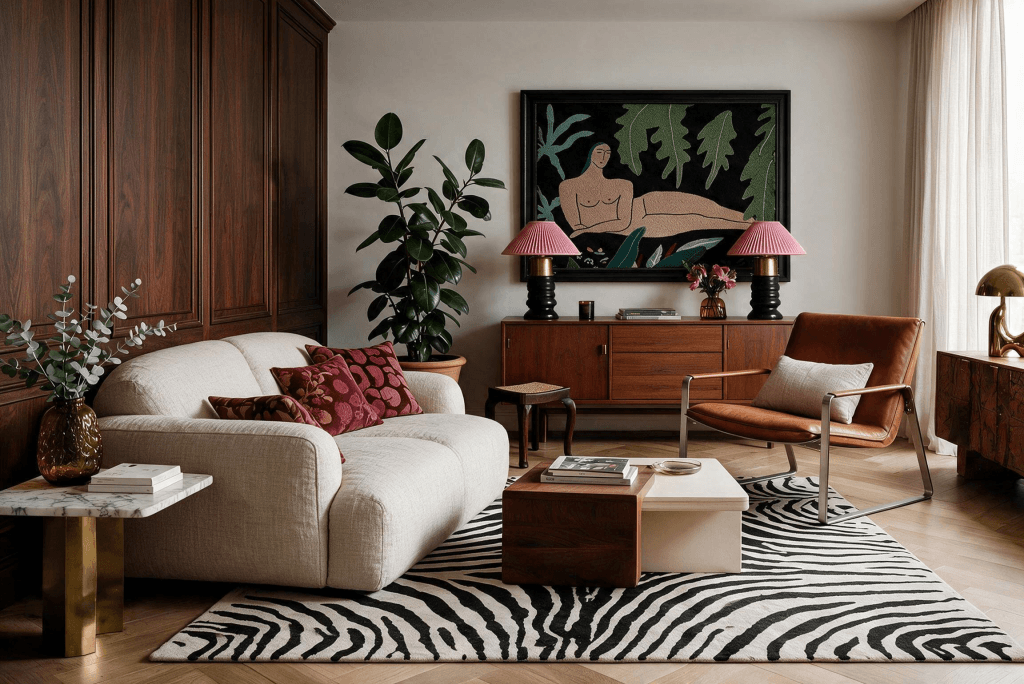
Put something rough beside something polished, and both materials gain. That instinct now governs material palettes. The single-finish scheme that ran through the last decade is what gave way to this latest trend.
Rough lime plaster beside a polished nickel fitting gives a wall dimension it cannot generate alone: the plaster becomes more tactile. Combining lacquer and unfilled travertine in a side table makes the stone’s pits and irregularities much easier to register. The same tension works with handmade tile and machine-finished elements. One makes the precision of the other more visible.
How to bring this trend home: Keep the reflective elements sparse on any one plane. A second usually cancels the first, since two competing highlights on the same wall turn depth into noise.
10. Glossy Finishes Break Up the Matte Era
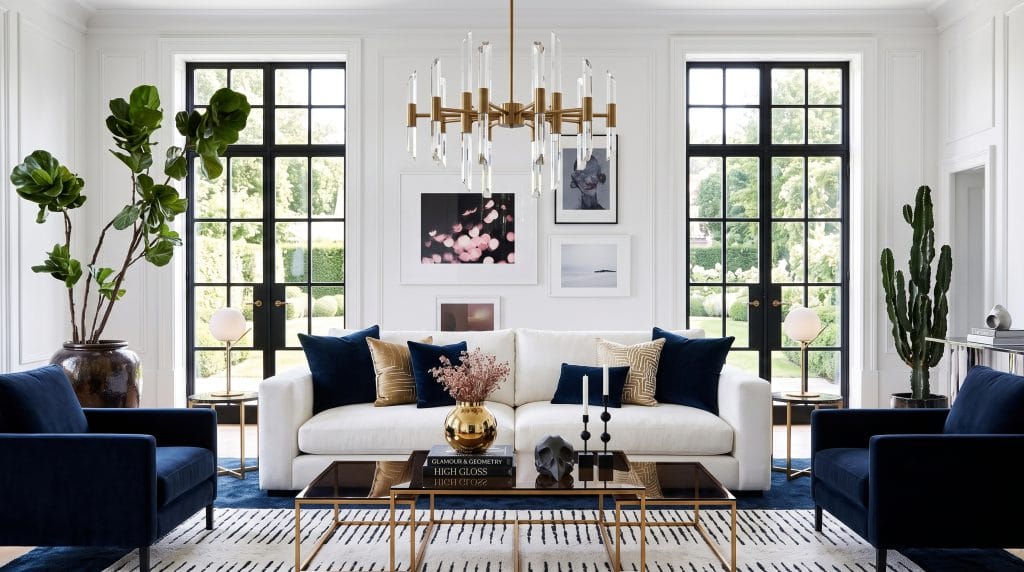
Shine has returned after a decade of flat paint and honed stone, and it’s no surprise since the color has, too. On a gloss surface, the white glare bounces away at an angle, leaving the color to come back undiluted. As a result, the same green appears darker and more saturated in lacquer than in eggshell.
Deep shades gain the most from that, which is why lacquer and saturated color are arriving together. Lacquered cabinetry, glazed lamp bases, polished brass, and mirrored panel inserts all catch light and push it back into a room. That makes it one of the 2027 interior design trends that north-facing spaces will love most.
How to bring this trend home: Lacquer shows every flaw in the substrate beneath it. Budget for the surface prep or choose satin instead.
11. Pattern and Playfulness Move Into Architecture
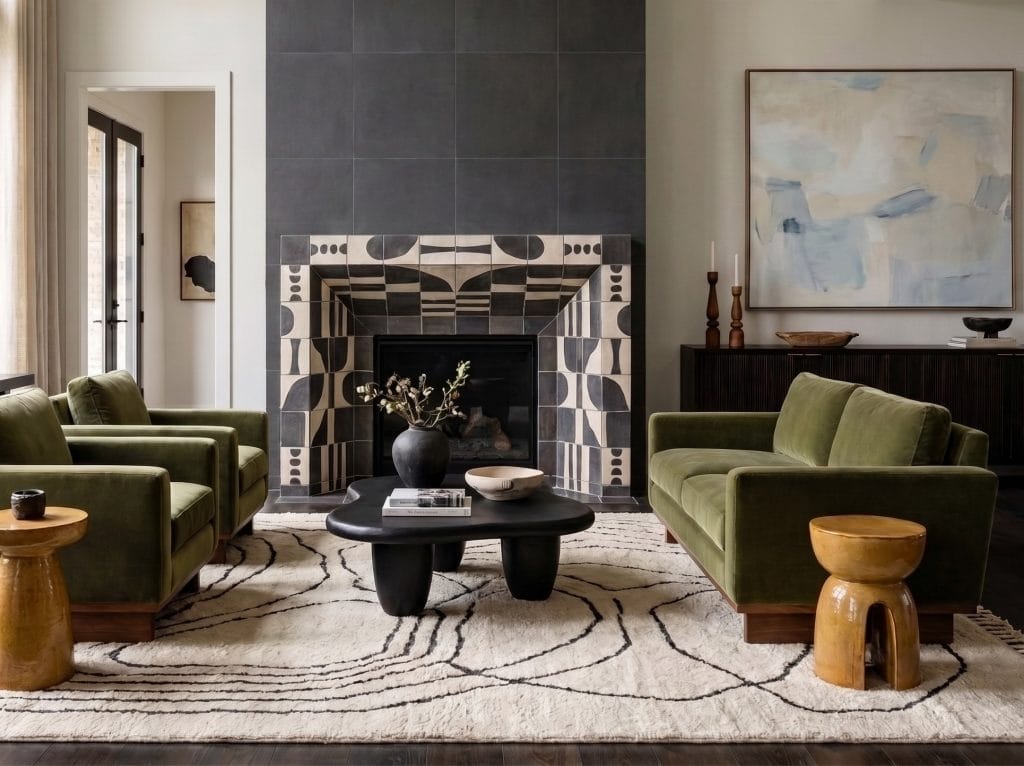
The pattern built into the architecture survives every change in accessories. Think tile that climbs a bathroom wall to the ceiling and continues across it. Or, cabinet doors that carry reeding or a hand-painted panel, or the trim that appears along a stair stringer in a color that departs from the walls. Decorative ceilings and whimsical accents are a thing, too.
Asymmetry has arrived alongside this as another prominent trend in 2027 interior design. Expect to see more off-center fireplaces and deliberately uneven window treatments loosening rooms that would otherwise feel too arranged.
How to bring this trend home: Keep the rest of the plan disciplined so the deviation is legible.
12. Invisible Technology Supports Everyday Living

Technology is becoming less visible just as homes are becoming more connected. In 2027, the smarter interior is the one that barely looks technological at all. Speakers can already disappear behind plaster, TVs can retreat into cabinetry or sit behind movable artwork, while sensors and controls are being integrated into walls and joinery.
Motorized shades are following the same trajectory: GE, for example, introduced new Matter-compatible smart shades at CES 2026, designed around discreet hardware and automated schedules. Even induction cooking is moving beneath porcelain worktops, leaving the kitchen island as an uninterrupted surface when nobody is cooking.
How to bring this trend home: Plan concealed technology at the same time as lighting, joinery, and electrical layouts. The only way to make it genuinely invisible is for the architecture to accommodate it from the start.
Interior Design Color Trends 2027
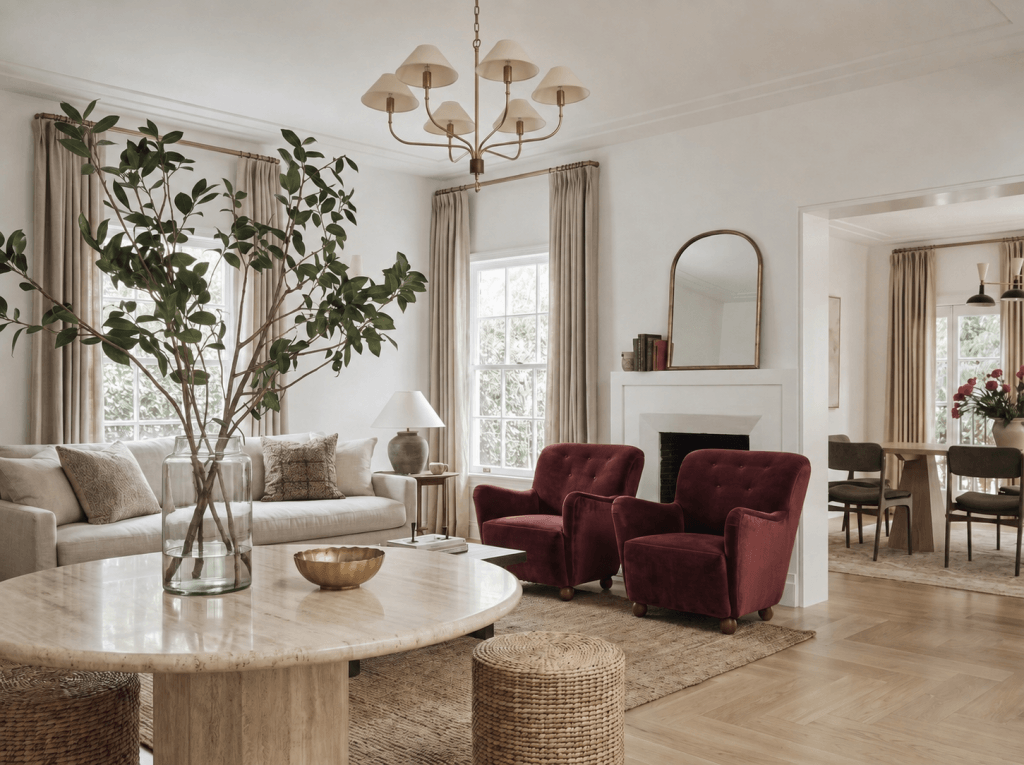
Home decor trends for 2027 run on a two-part palette. Grounding natural tones carry the room, and expressive accents supply the pulse.
Warm Earth Tones Replace Cold Neutrals

Mushroom, clay, walnut, terracotta, bark, and olive have taken over walls and cabinetry across whole floors. These shades hold their character under changing daylight. They also sit easily beside wood and stone, so the envelope of a room reads as continuous.
Quiet Colors Support Wellness
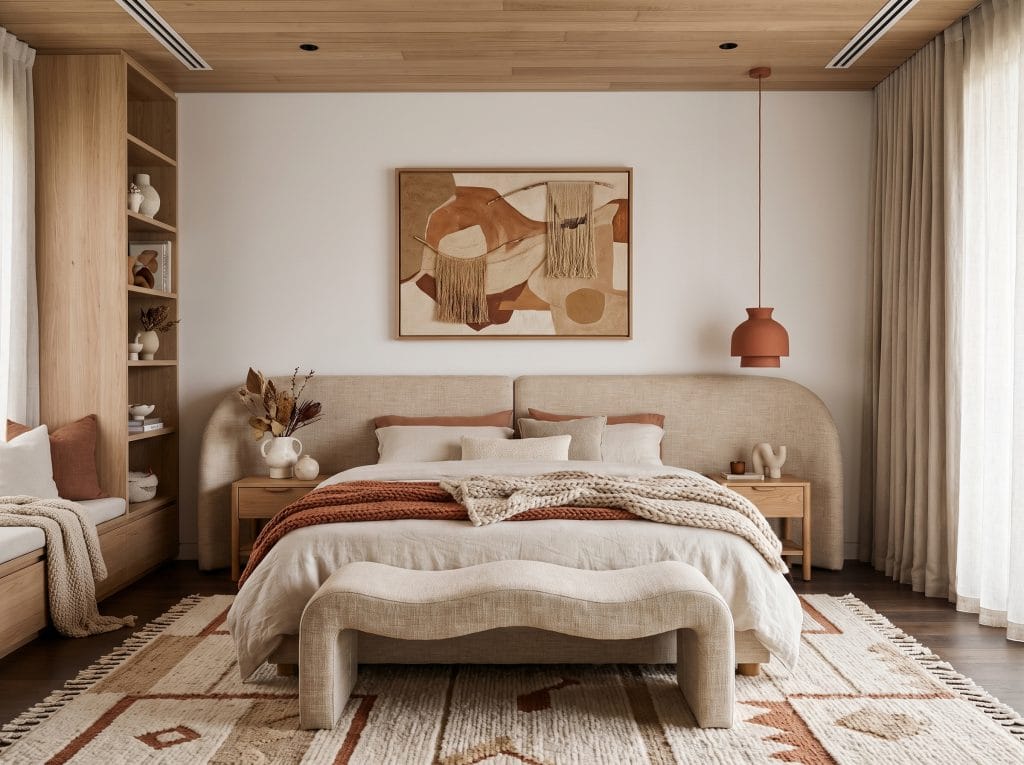
Bedrooms and bathrooms are getting soft whites with a trace of yellow in them. Muted greens and gray-based dusty blues, meanwhile, remain a timeless choice. What they all have in common is that they lower the room’s visual temperature and make it easier to wind down inside.
Expressive Color Returns Through Accents

Jewel tones will now appear more in lacquer and velvet, most often on a single upholstered piece. Cinematic shades borrowed from film palettes turn up in drapery and painted joinery. Digital-inspired brights get used sparingly, on a chair or a stack of ceramics, where their intensity works in a small dose.
2027 Colors of the Year We Know So Far
The first official 2027 paint forecasts are already showing how broad the palette has become. Behr chose the brown-based olive Grounded, Valspar went to the muted blue Cottage Door, while Dutch Boy selected the earthy orange Deep Rooted. Sherwin-Williams moved lighter with Celery, a yellow-green drawn from its much broader Rewild forecast.
Interior Styles Evolving in 2027
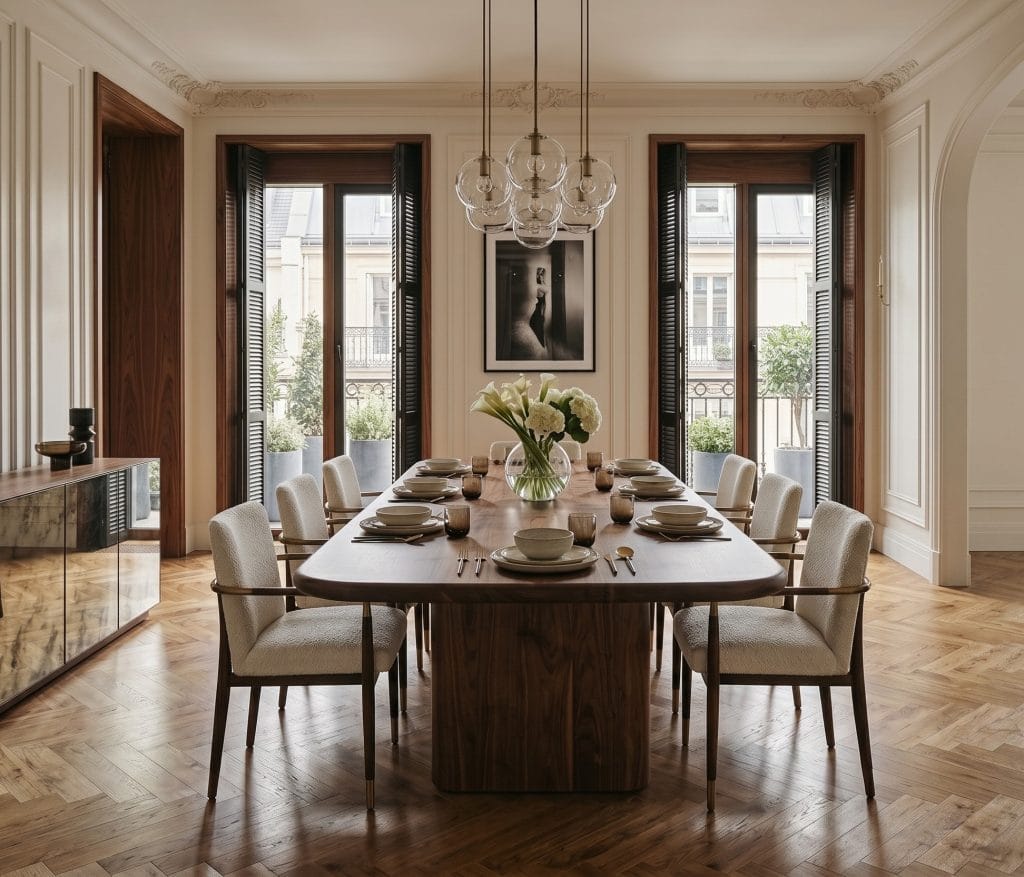
Warm Modern is becoming Sensory Modern, holding onto its wood and low profiles while gaining acoustic softness and heavily layered texture. Traditional has moved into New Heritage, where serious antiques land in interiors with contemporary proportions and open circulation.
Eclectic has tightened into curated maximalism, with more pieces on display and a stricter hand behind the edit. Minimalism has warmed into atmospheric minimalism, keeping its restraint while gaining plaster depth and the kind of light that changes across an afternoon.
Interior Trends Designers Are Leaving Behind
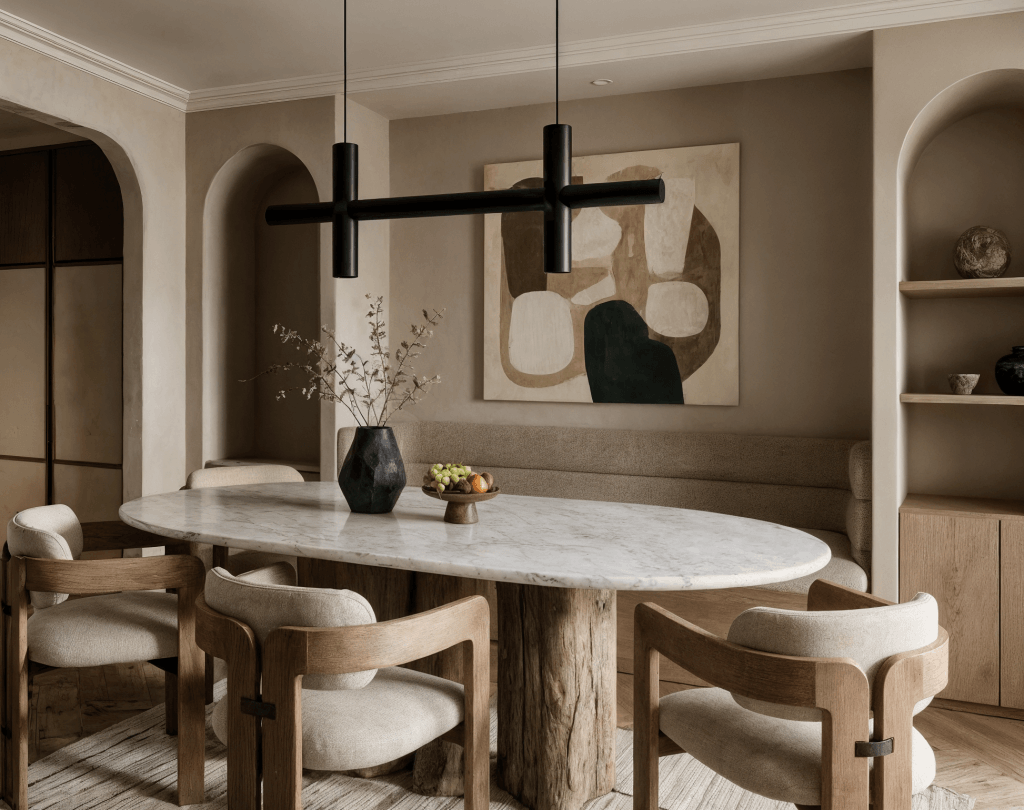
Copy-and-paste, cookie-cutter interiors have run their course, along with the disposable furniture bought to fill them for a season. Cold, textureless rooms have also lost their audience.
Some of the most recognizable interiors of the early 2020s are beginning to show their age. Beige-on-beige quiet luxury is one of them. The materials themselves are going nowhere; it is the repetition that has worn thin. In 2027, designers are moving toward stronger color, mixed patinas, vintage furniture, pattern, and rooms that are harder to assign to a single aesthetic category.
Certain details have reached the same saturation point. Fluting has spread from custom cabinetry to mass-market consoles, vanities, islands, and wall panels, while the solitary accent wall increasingly looks like a remnant of an earlier decorating cycle. Bouclé is becoming less automatic after years of appearing on almost every rounded chair and sofa.
For interior trends in 2027, expect fewer devices like these used simply because they signal “current design,” and more scrutiny of whether the material, finish, or architectural detail actually belongs in that particular room.
FAQs About 2027 Interior Design Trends
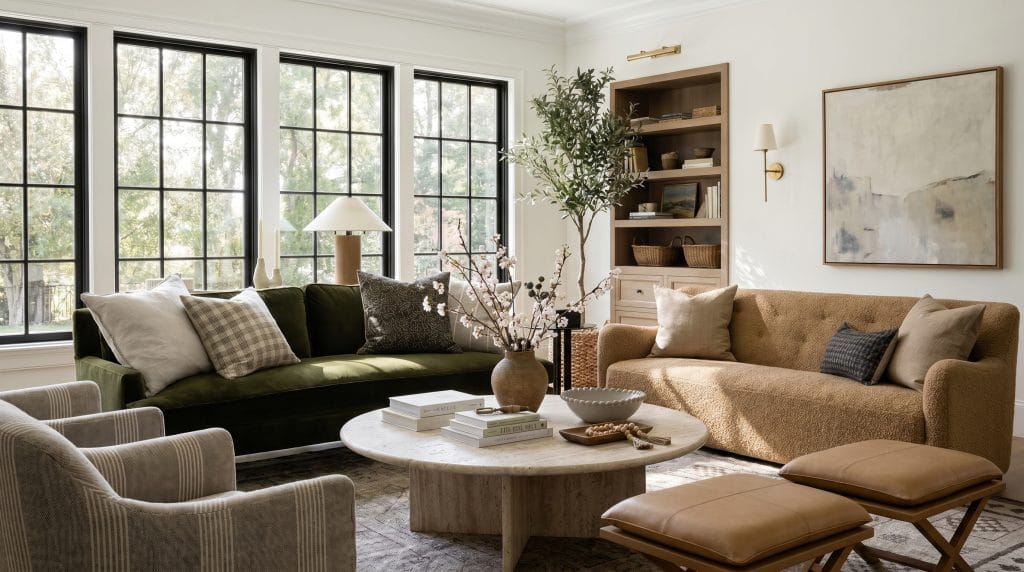
Collected, personal interiors. Rooms are being built from pieces with individual histories, edited into a composition that could only work in one home. Everything else in 2027 supports that shift.
Warm earth tones dominate the envelope, with mushroom, clay, terracotta, and olive appearing on walls and cabinetry. Quiet muted greens and dusty blues handle bedrooms and bathrooms. Jewel tones and cinematic shades arrive as accents on upholstery and lacquered joinery.
Yes, in a warmer form. Atmospheric Minimalism keeps the restraint and the clear surfaces while adding plaster texture and deeper color. The result feels calm and lived-in at the same time.
Start with what you already own and edit hard. Bring in one contrasting material, such as a gloss lamp against plaster or a raw wood bowl on a polished surface. Rearrange seating so it faces inward for conversation. Swap cold gray paint for a warm earth tone, since color changes a room faster than anything else at that price.
Ready to bring 2027 into your home?
With a Decorilla design package, your designer brings your ideas together in a coordinated room plan, with realistic 3D visuals and a curated shopping list, so you can see how your choices work together before ordering furniture. Schedule your Free Online Interior Design Consultation to start your project today!


Comments