


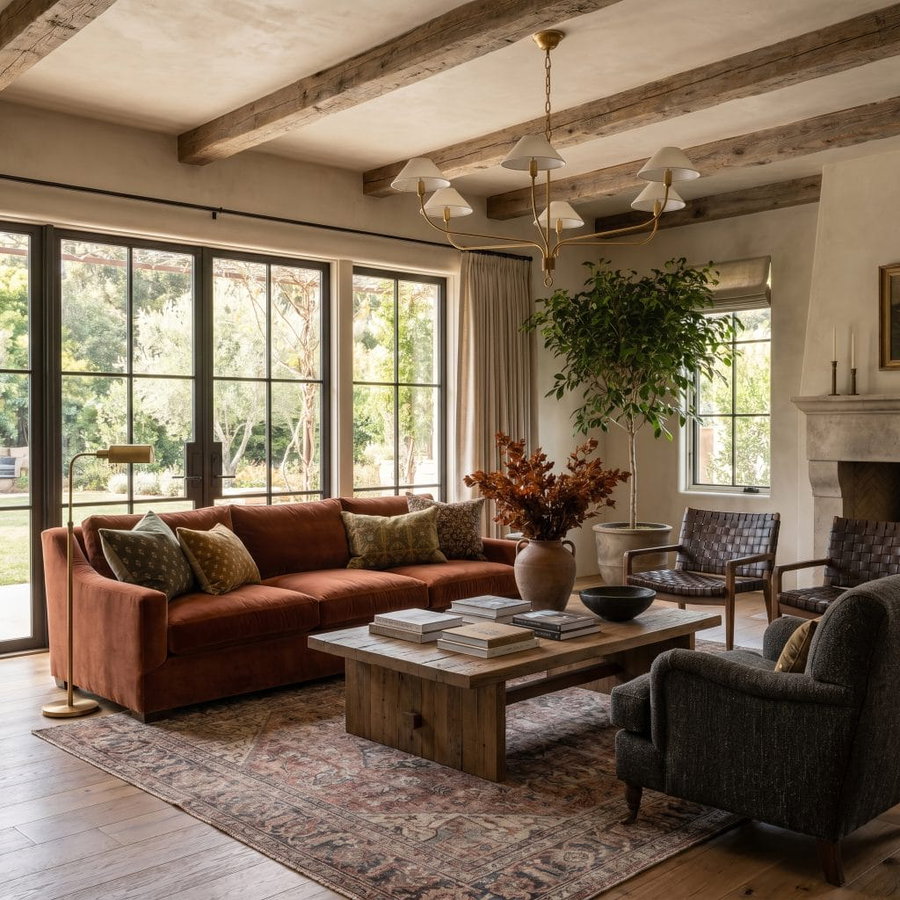
Limewash walls give a room soft, cloudy movement, with color that shifts slightly from one brushstroke to the next. The finish has traveled from Mediterranean villages into contemporary homes, and designers now use it anywhere from a bedroom wall to a fireplace surround. Below, we cover the limewash paint colors designers reach for most, along with the practical trade-offs to weigh before you commit.
What Are Limewash Walls? The Ancient Finish Making a Modern Comeback
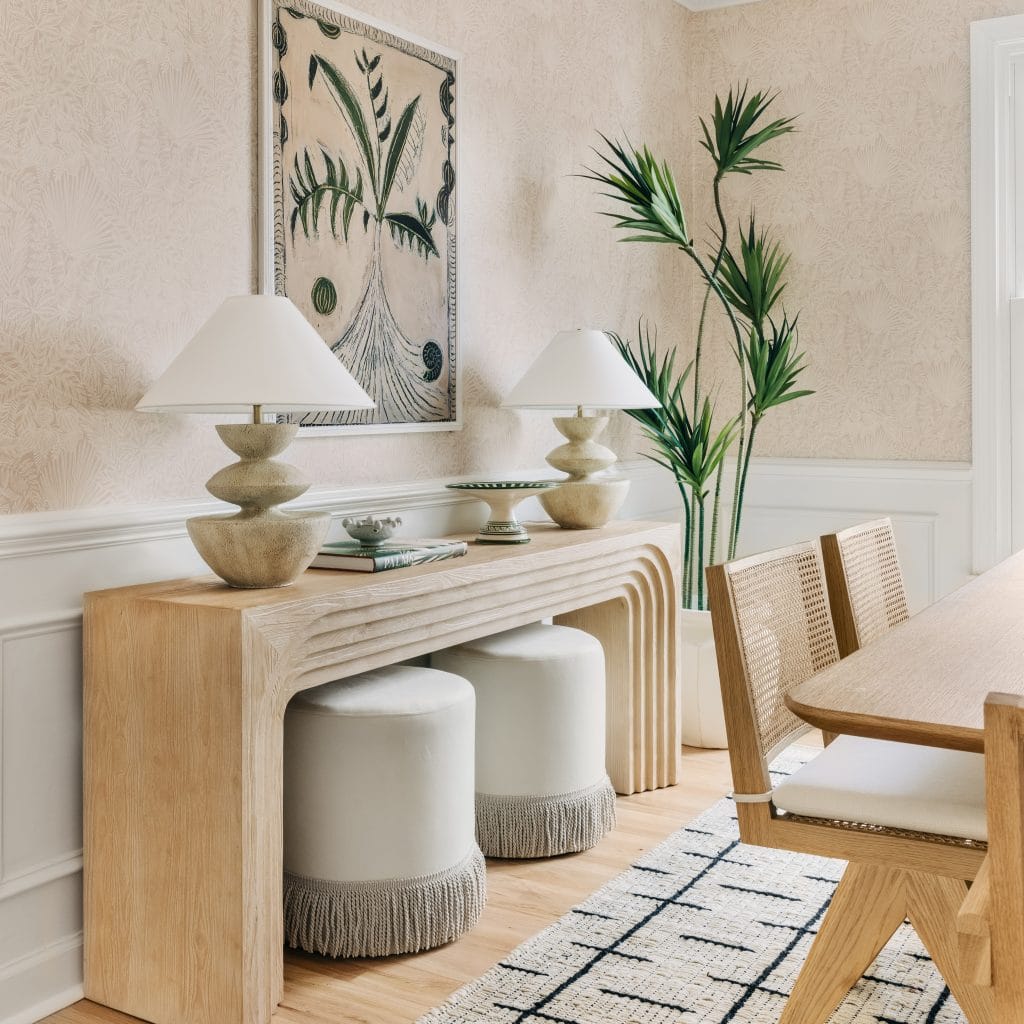
Limewash has become one of the most talked-about wall finishes and major design trends. Across many homes, it is replacing the flat eggshell walls that defined the last decade.
The paint is made from slaked lime, which is limestone that has been burned and soaked in water, then colored with natural pigments. Once it’s brushed on, it slowly hardens and turns back into a thin layer of stone. This is the main distinction from regular paint that just sits on top of the wall. Limewash soaks into brick and plaster and becomes part of the surface, which is why smooth drywall needs a special primer before you apply it.
Few finishes carry so much history as limewash. Venetian plaster is its close relative, but also a separate product. It is a thicker lime putty mixed with marble dust, troweled on in thin layers and often burnished to a sheen. Limewash goes on with a wide brush in loose, crossing strokes, producing matte, mottled surface. Both finishes sit at the center of the wider shift toward texture in interior design.
Pro Tip: You love limewash walls but wonder what to do with the rest of your room? Try our Free Interior Design Style Quiz to discover your ideal style today!
The Best Limewash Wall Colors for Every Mood
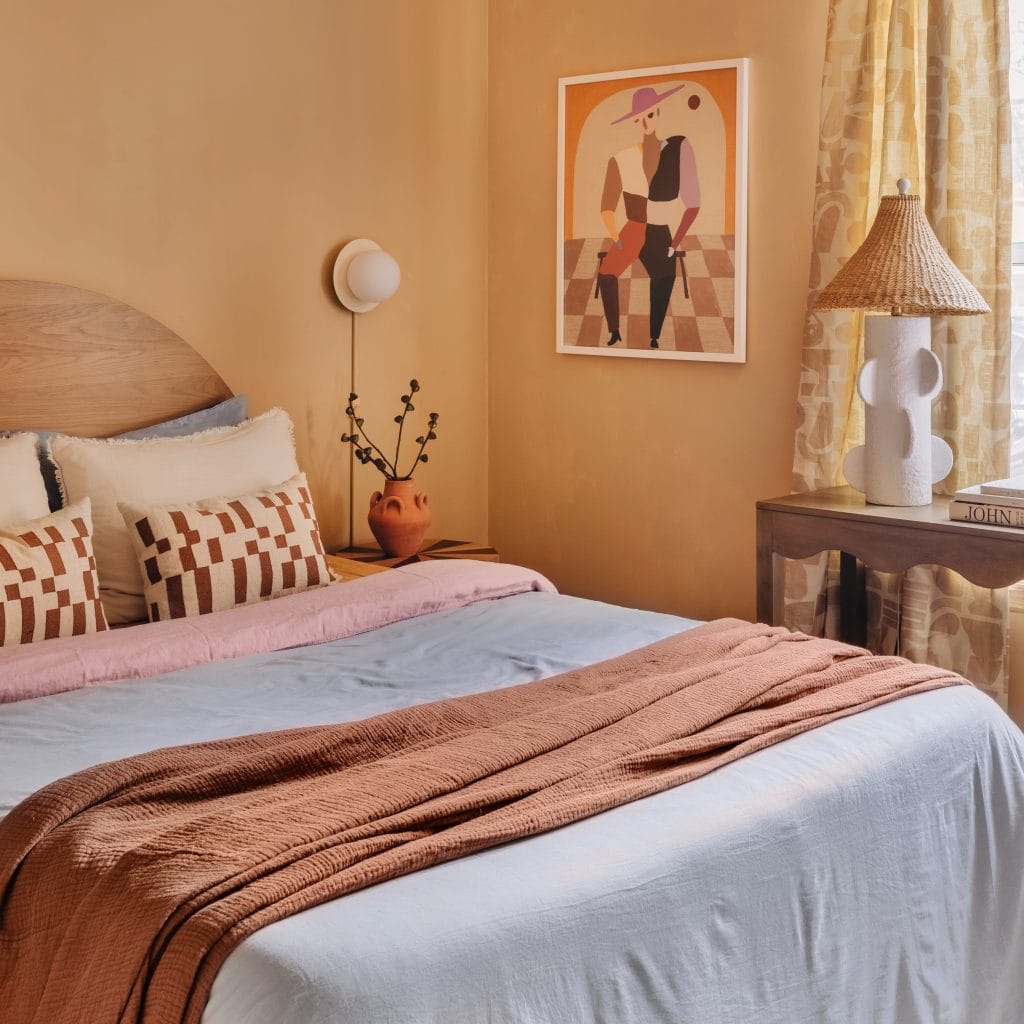
Limewash paint colors come from natural earths and iron oxides, which give the whole palette a soft, slightly chalky character. Most ranges are built on whites and warm neutrals. Warm greige suits rooms where wood furniture should carry the visual weight. Dusty blue is also a great option that brings a cool, light feel to bedrooms and bathrooms.
Another important thing: light changes the color of a limewash wall throughout the day. Morning sun brings out cooler undertones in the brushwork. Evening lamplight, meanwhile, pulls the same wall toward a warmer, deeper shade. You’ll want to make sure that the shade is right, so paint a large sample board and check it on each wall at several times of day before choosing.
White & Off-White Limewash
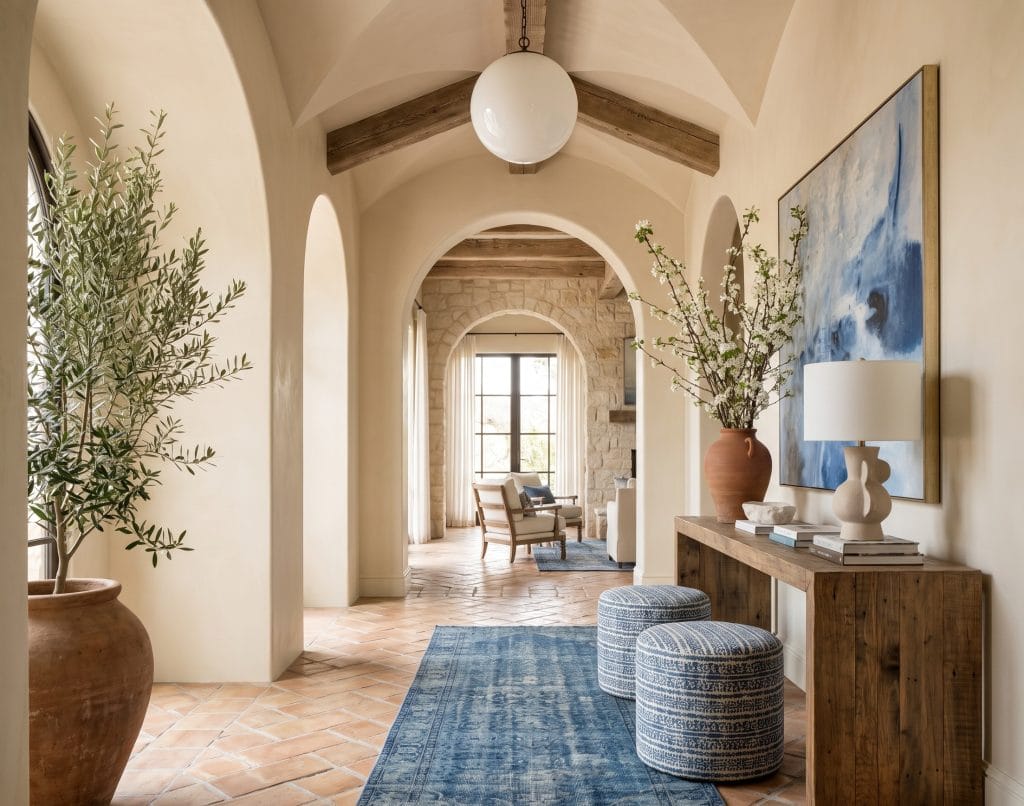
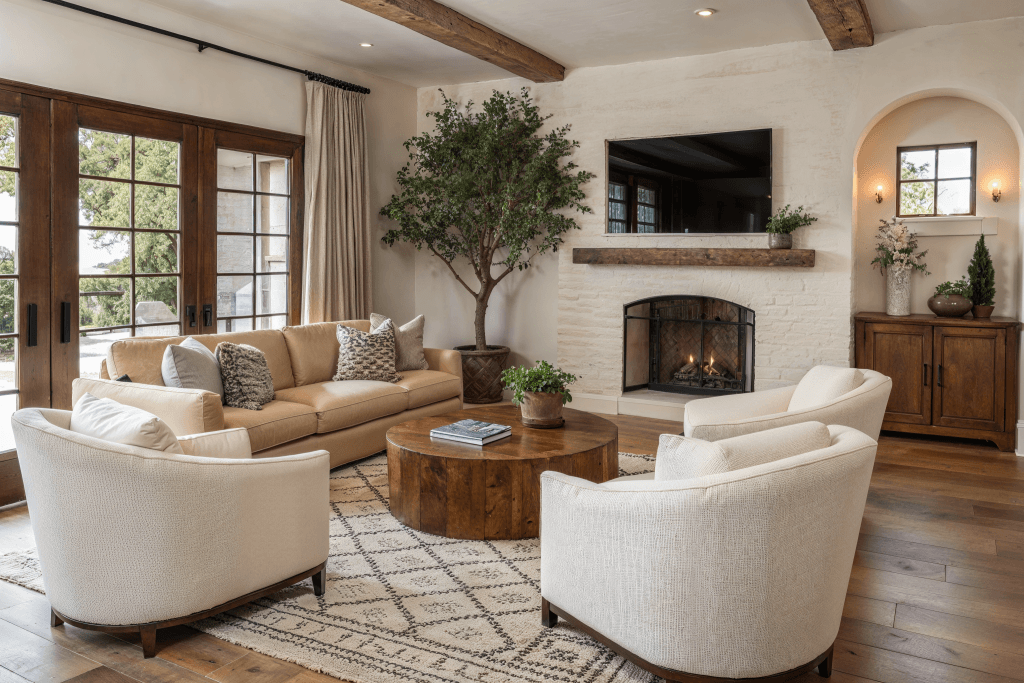
The tonal variation in each coat gives white limewash walls more depth than flat white paint, which makes them the most flexible starting point. Off-whites with a trace of ochre suit north-facing rooms, where a pure white can turn cold. The finish also pairs easily with farmhouse design, complementing reclaimed wood beams and plank floors.
Terracotta & Warm Earth Tones
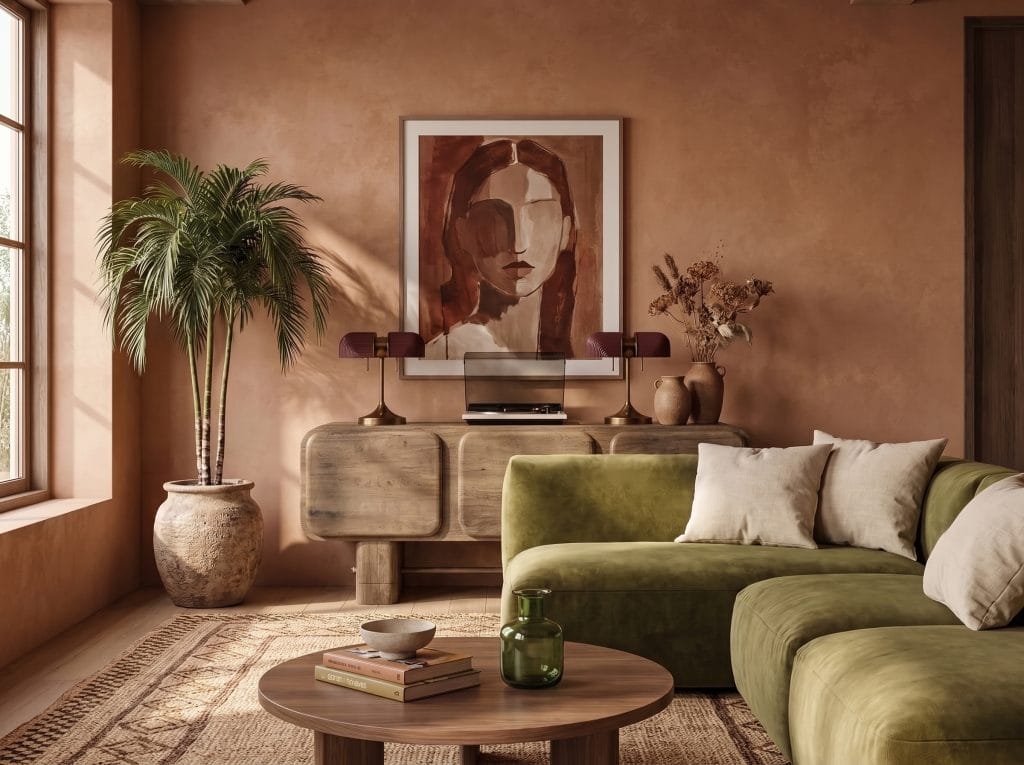
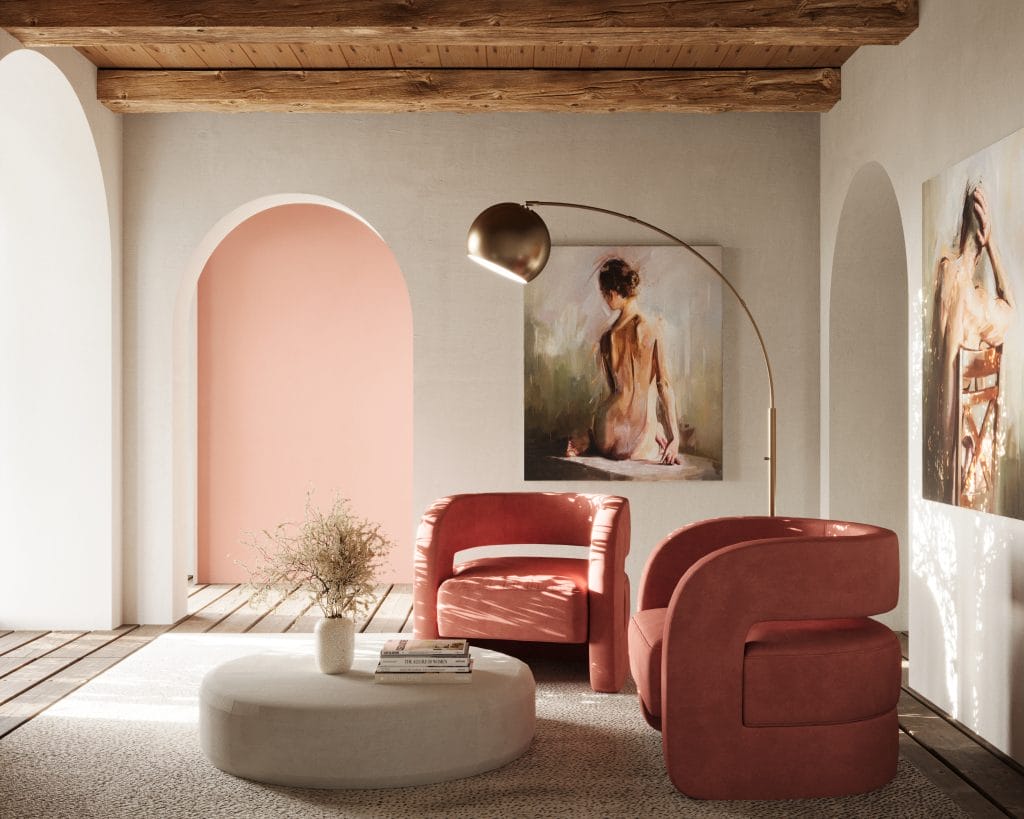
Terracotta takes limewash back to its Mediterranean roots. Clay-based pigments look especially rich next to oak and aged brass. Because the color is strong, one wall is often enough. Pair a terracotta wall behind the dining table with pale sand on the remaining walls.
Sage Green & Muted Botanicals
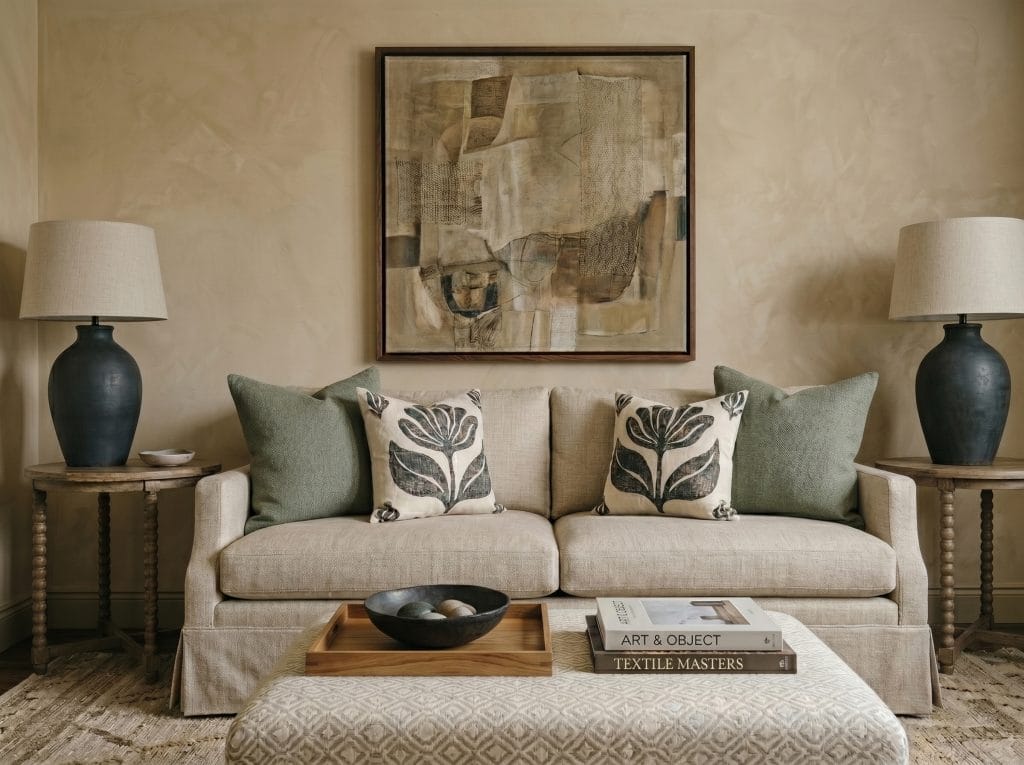
Sage green limewash is a favorite for bedrooms and home offices. Most sage mixes carry a grey undertone, which keeps the color muted even in strong daylight. Olive and eucalyptus shades behave in a similar way and sit well beside pale timber and houseplants.
Charcoal & Moody Darks
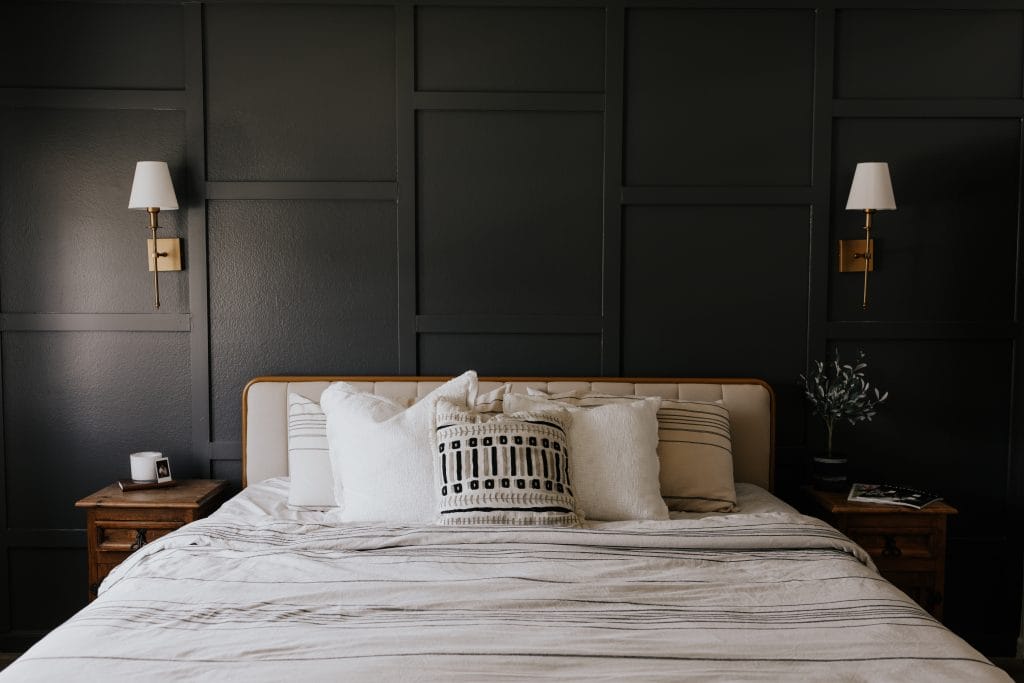
Dark limewash shows the brushwork more clearly than any other shade. Light catches the lighter mineral particles across the darker ground, so a charcoal wall has visible movement. A limewash paint fireplace in charcoal gives a living room an immediate focal point against paler surrounding walls. Darker shades do show scuffs sooner, so plan for touch-ups in busy areas.
Limewash Walls Pros and Cons: The Honest Breakdown
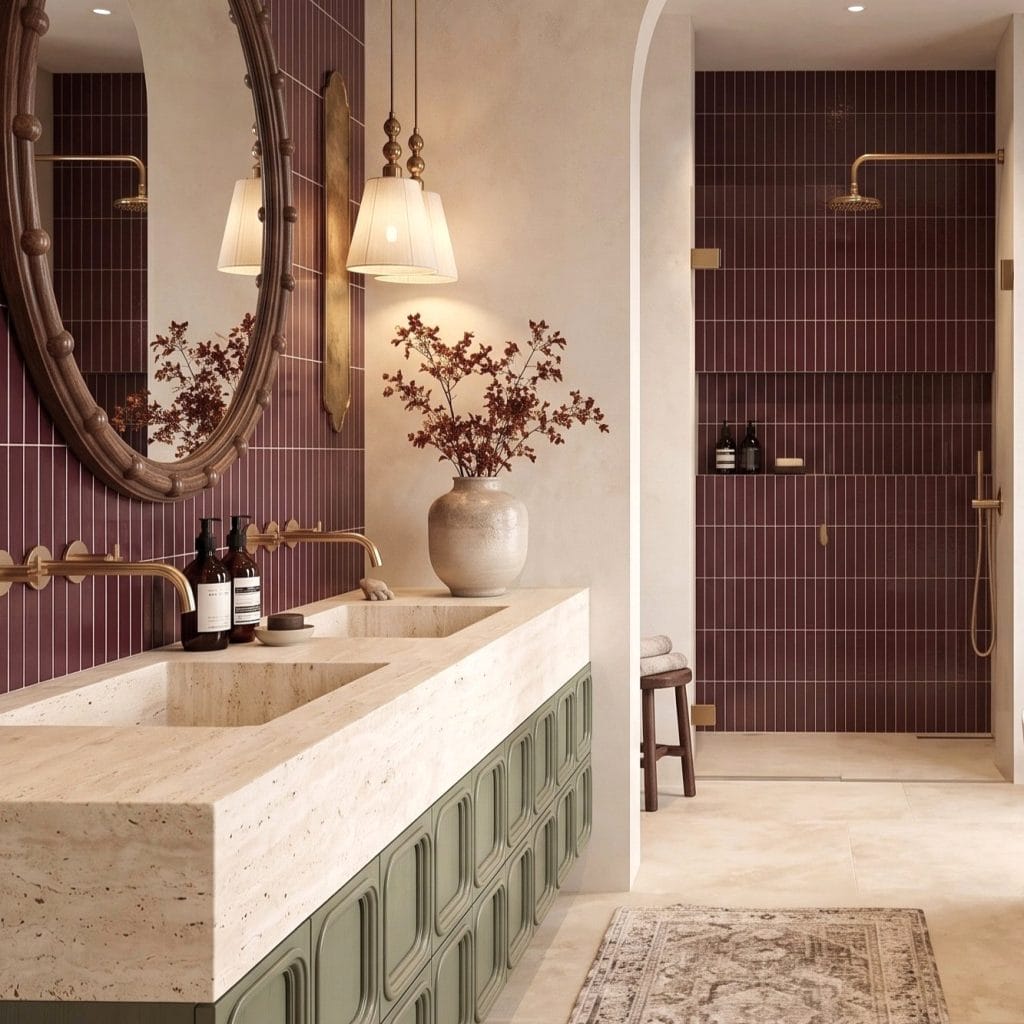
Limewash suits many rooms, but it asks for more care than standard paint. Weigh these factors before you commit.
Pros
- Natural composition: Lime and mineral pigments are very low in VOCs, which makes limewash a good fit for bedrooms and nurseries.
- Breathability: Moisture can pass through the finish, which helps older masonry walls avoid peeling and trapped damp.
- Mold resistance: The high alkalinity of lime naturally discourages mold and mildew.
- Unique texture: Every wall ends up slightly different, with soft variations in tone across the surface.
- Easy upkeep: Worn patches can be refreshed with a light coat as the finish ages.
Cons
- Application: Limewash has a learning curve. If you’re working out how to limewash walls yourself, start on a small wall; professional application is recommended for large rooms and ceilings.
- Cost: Professional application typically runs $6 to $15 per square foot, depending on surface prep and region.
- Moisture: Bathrooms and kitchens need a breathable sealer to protect the finish from water marks.
- Durability: Limewash can chalk lightly to the touch and handles scrubbing poorly compared with acrylic paint.
- Color range: Mineral pigments limit the palette to earthy, muted shades, so saturated brights are off the table.
For most homes, the decision comes down to whether the texture justifies the extra cost and care in the rooms you have in mind.
Room by Room: Where Limewash Works Best
The best limewash wall ideas start with how much light a room gets and how often people use it.
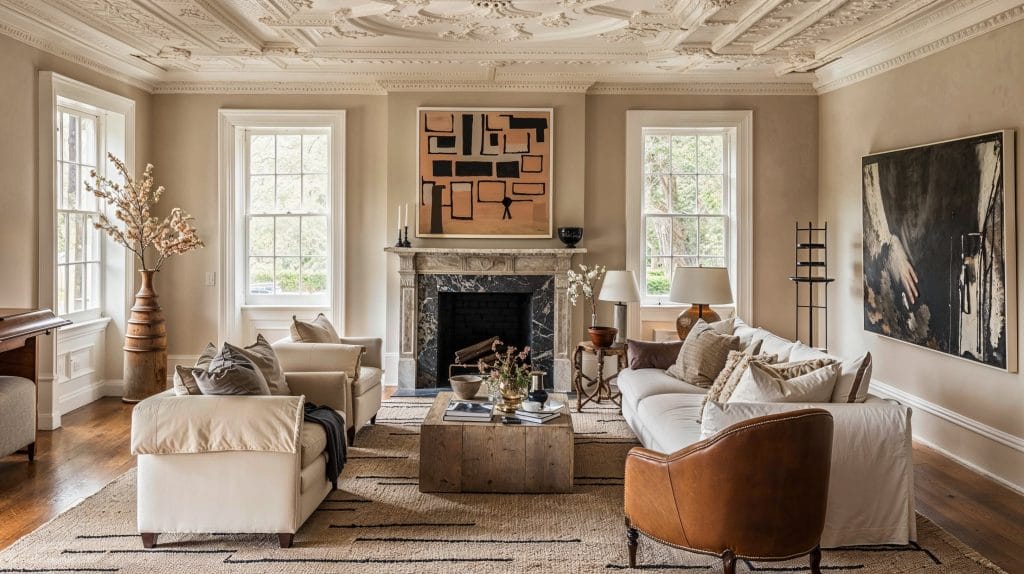
Living room. Limewash paint in a living room can cover the whole space or a single wall behind the sofa. A full room in warm white gives living room design a soft backdrop, while a deeper shade on the fireplace wall anchors the seating area.
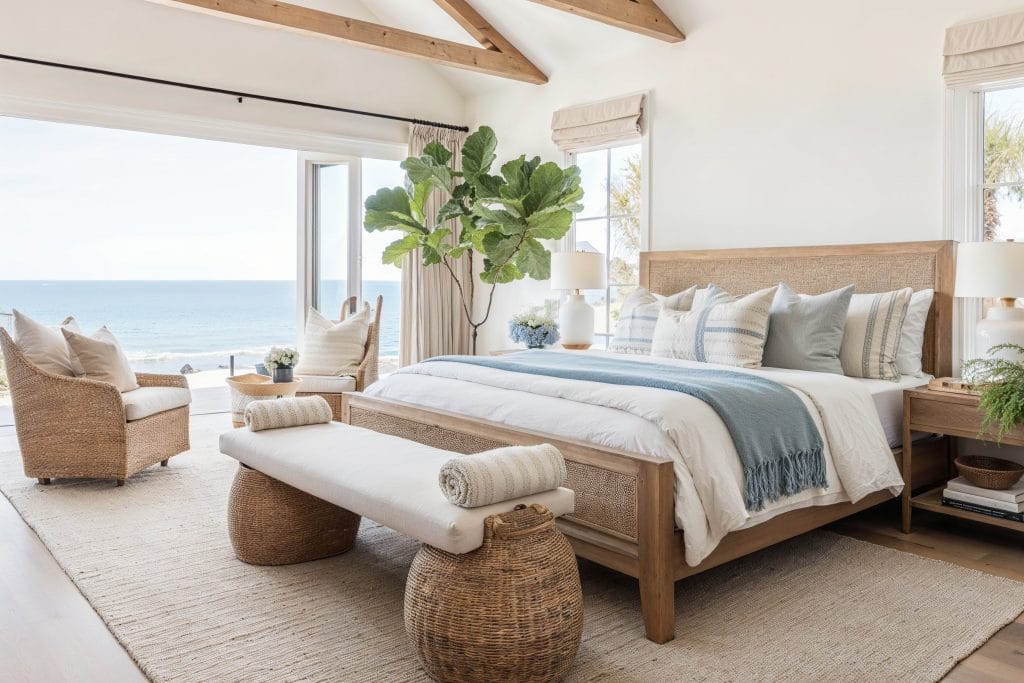
Bedroom. For limewash bedroom walls, designers usually focus on the wall behind the bed. The texture frames the headboard and adds depth to a simple bedroom design. Sage and greige work well here.
Dining room. A terracotta or ochre accent wall suits dining rooms, where evening candlelight deepens the warm pigment.
Entryway. With its small wall area, an entryway is a low-risk place to try charcoal or deep olive. A breathable sealer helps where coats and bags brush against the wall.
Home office. Behind a desk, off-white or greige limewash creates a quiet backdrop with subtle texture that shows up well on video calls.
Not sure which limewash color works for your space?
Limewash shifts with the light in each room, so the right shade is easier to judge alongside your own furniture. Decorilla matches you with an interior designer who knows how to make the finish work in your home. Schedule your Free Online Interior Design Consultation to start your project today!





Comments