


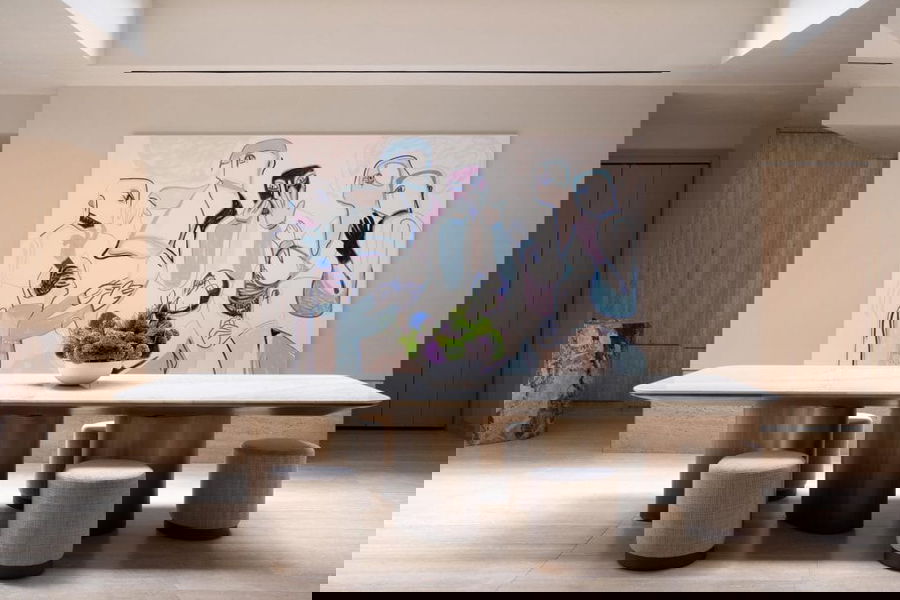
What drives office design trends when work patterns keep shifting? The way people use offices has changed, and designers are catching up. In 2026, the answers come from real data. Explore how they reflect the shift in practice, revealing where office design is heading and why it matters.
Listen to the full podcast →
1. Human‑Centric Environments
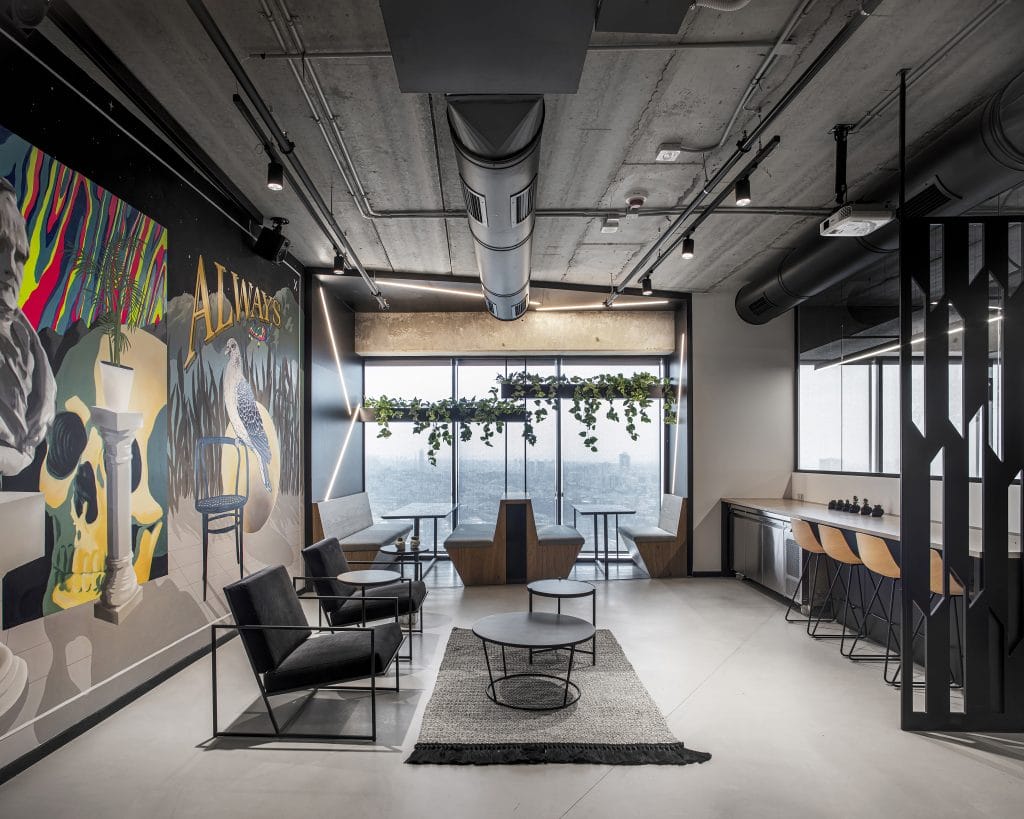
One of the major commercial office trends for 2026 places physiological stability ahead of spatial branding. At its core is measured support across extended periods of seated and semi-mobile work. Systems furniture is calibrated to micro-movements, such as recline resistance tuned to spine angle, or armrests shaped to reduce shoulder fatigue over time.
In addition, human-centered strategies are now also evident in the sequencing of environmental systems. Ventilation, lighting, and workstation layout are no longer separated by discipline but treated as interdependent factors in baseline cognitive function. As a result, there is less strain across long workdays, and the environment supports focus and overall satisfaction.
Pro Tip: Wondering which office design trends could work for your taste and your workspace? Try our Free Interior Design Style Quiz to discover your ideal style today!
2. Hybrid & Optimized Layouts
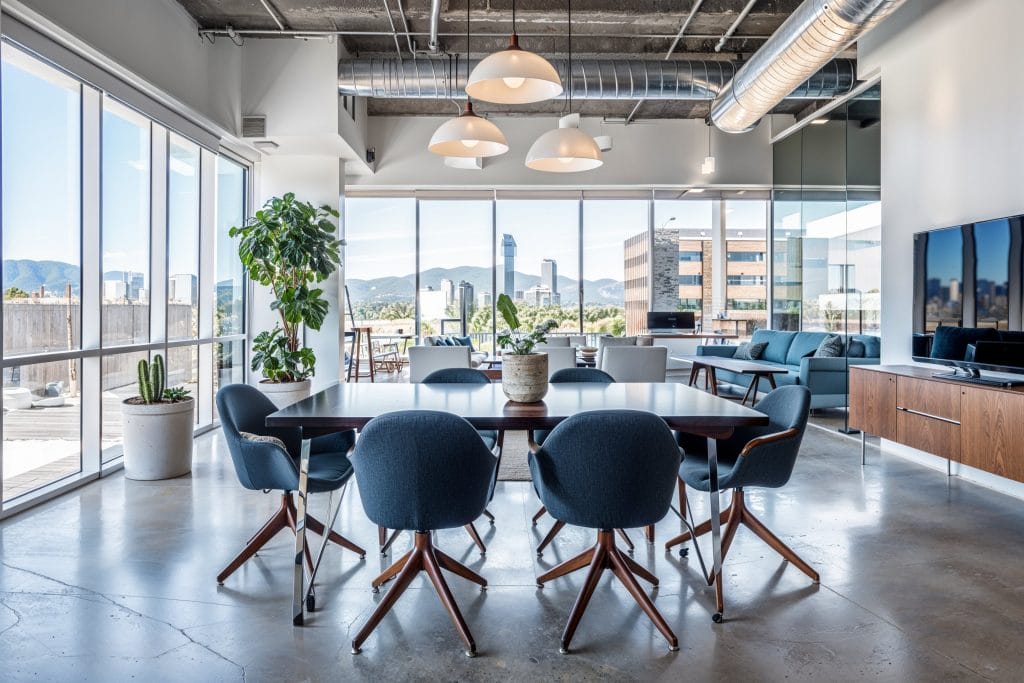
Contemporary workplace design trends treat variability as a design input. The key advantage of such layouts is that they hold their shape by accounting for fluctuation from the start.
Layouts stem from observed use patterns, allowing for zone shift in scale depending on the duration and type of occupancy. Designers shape acoustic fields by placing sound-absorbing materials around points of speech. Circulation lines are wider where arrival rates spike and narrow again where presence slows. Shared tables, meanwhile, sit away from presentation walls so that work can continue without interruption.
3. Activity-Based Working Zones
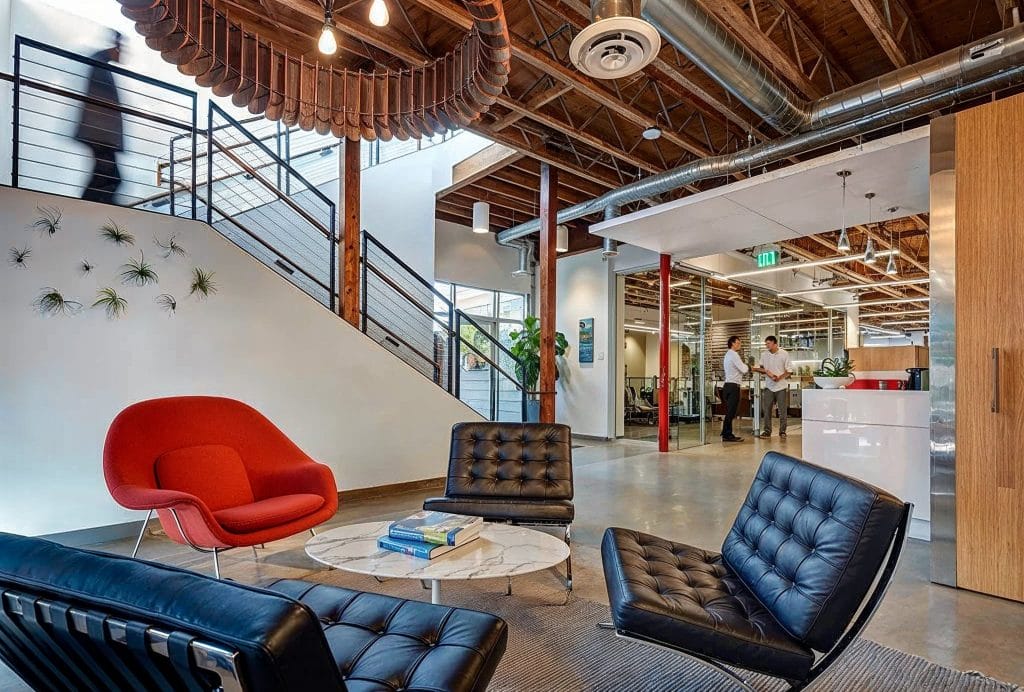
Forecasts indicate that the upcoming office design trends will increasingly adopt environments organized around activities over fixed functions. That means work settings designed to support the specific rhythms of flexible tasks and collaboration. Such adaptable workspaces can easily transition throughout the day, based on how people actually move and connect.
Interior designers are applying a diversity of zones into plans, from quiet nooks to shared stations or walled-off focus cubbies. Each sector is calibrated to support specific types of work, yet fully integrated into a cohesive whole. That way, spatial diversity supports smoother transitions between tasks by reducing the need for improvisation or adjustment.
4. Circular Biomaterials In Office Design Trends
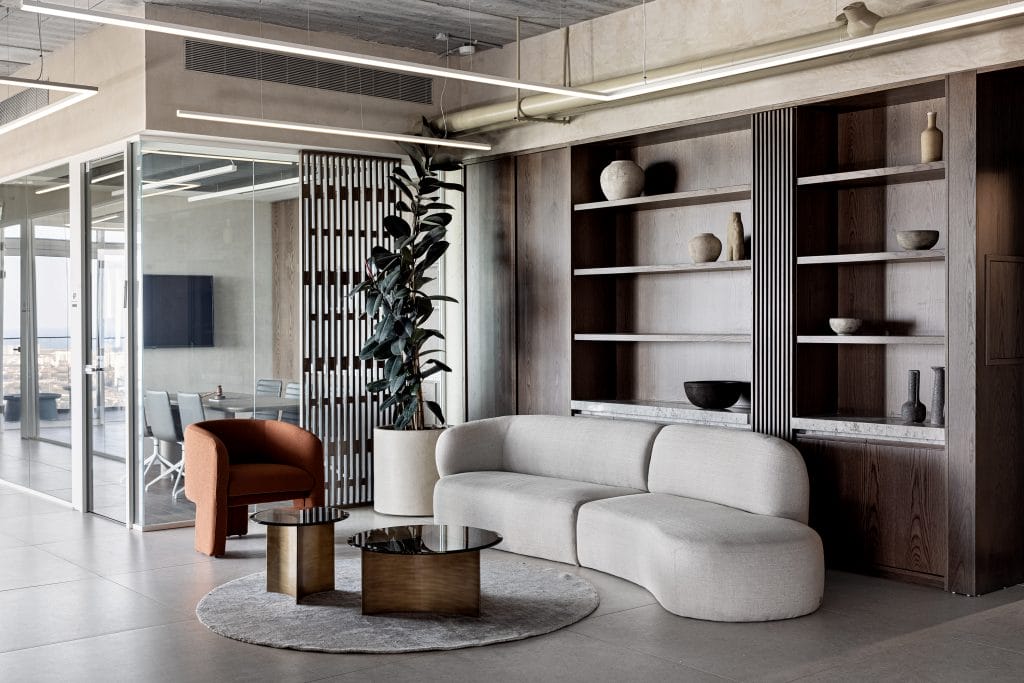
Biophilic concepts are omnipresent, from trending office decor to material development. They also affect the selection of materials, where a significant shift has become apparent. Both designers and manufacturers now pay attention not only to the source of each component but also to its path back into production. Designers also prioritize the uniformity of the substrate and simplicity of the finish. Assemblies are planned for access, with fasteners exposed or reversible. Moreover, across the forecasted 2026 office trends, fewer composites appear.
Materials stay in circulation longer and produce less waste at end-of-life. This lowers environmental impact while meeting regulatory goals at the same time.
5. Craft Revival With Material Integrity
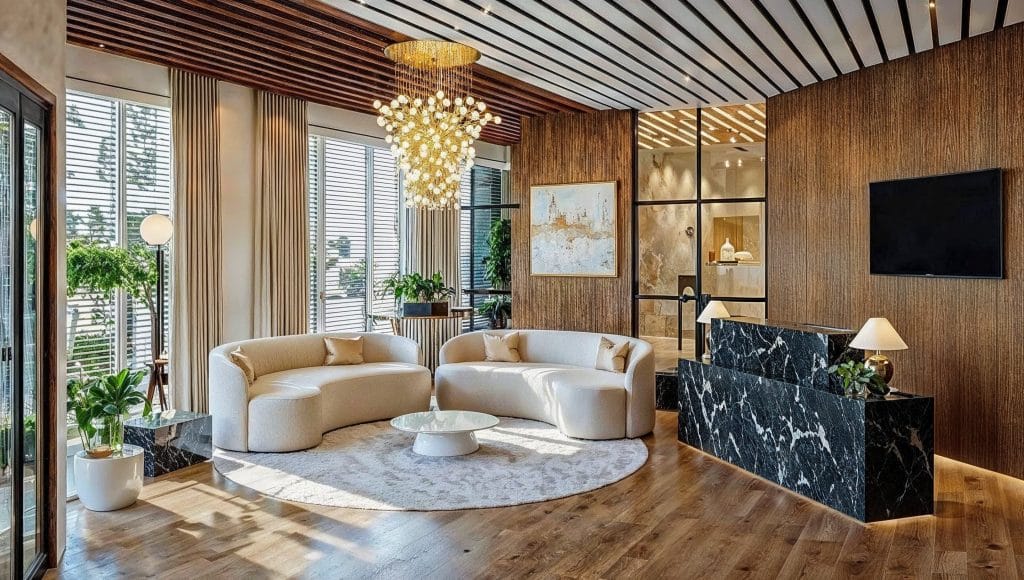
In 2026, commercial office furniture trends are embracing materials that show evidence of process. Visible grain, for instance, is no longer considered a flaw. Hand-finished edges and small-scale variations are coveted not only for their texture alone, but also to establish the origin and method. Artisanal decoration marks a shift in procurement, with a growing preference for local craftsmen and suppliers.
Veneers are selected from matched sets, and joinery is exposed where possible, even in modular units. Upholstery shifts from foam-backed composites to structured wool, jute, or leather, each selected for wear over time. As a result, spaces feel grounded and deliberate, which supports long-term use.
6. Design with Ethical and Cultural Depth
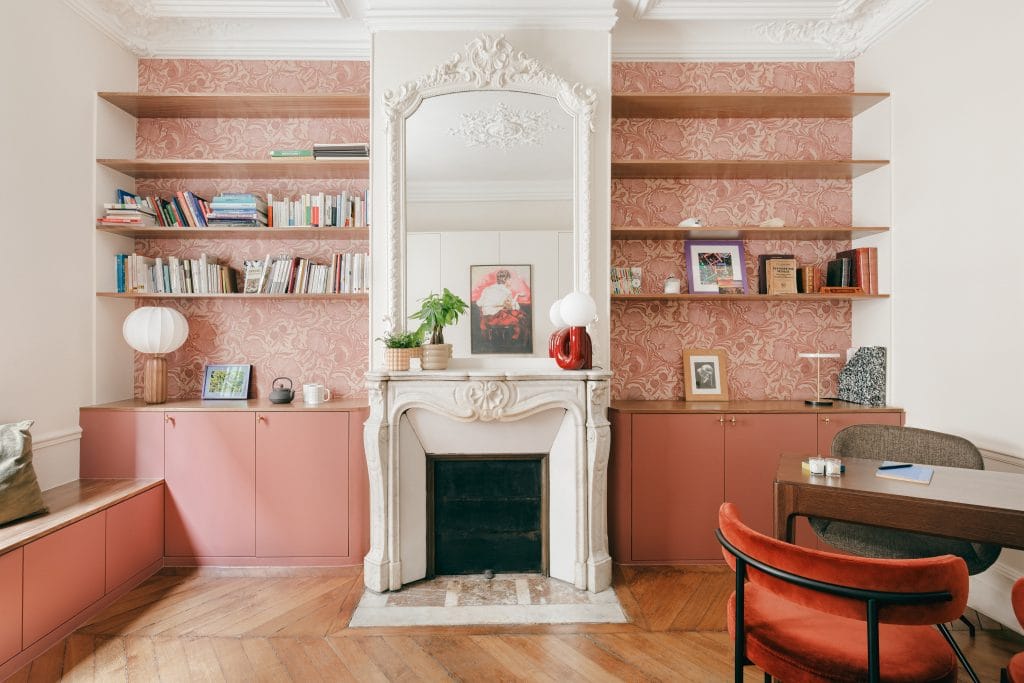
Office design trends in 2026 also impact frameworks that extend beyond performance and aesthetics. Projects incorporate materials and forms that speak to regional context, labor transparency, and cultural authorship. In addition, interior designers now gravitate more towards partnerships with local or indigenous makers and vendors who can trace their supply chain through multiple tiers.
Ethical design appears in the plan as much as in detail. Cultural depth is often introduced through scale and assembly—hand-thrown tile in lobbies, textile partitions produced in regional studios. The emphasis is on how parts hold together in a space that reflects where it’s built and who builds it.
7. Lighting That Supports Wellbeing
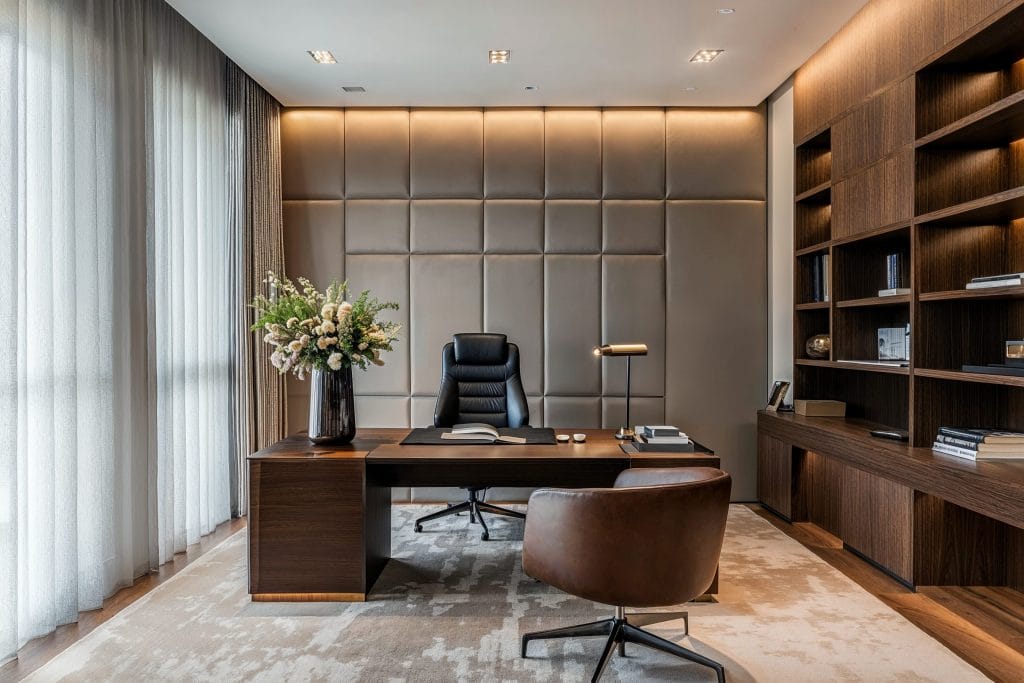
Certain office trends 2026 begin with the assumption that lighting shapes endurance. Fixture placement follows sightlines, with light levels adjusted by surface reflectance and proximity to the task. Separate calibrations are possible for screen work, conversation, meetings, and reading.
Manufacturers are also supplying fittings with dedicated spectral profiles so designers can match output to time-of-day exposure requirements. Systems run on fixed cycles mapped to daily occupancy, aiming to promote clear focus, especially in late-day work.
8. Data‑Driven Adaptability
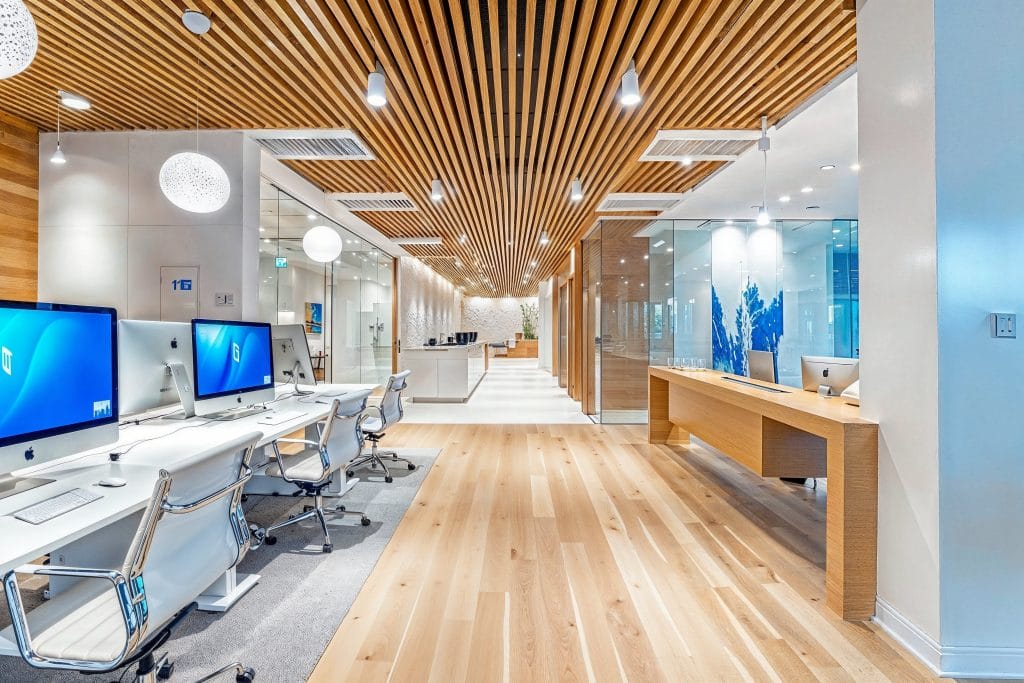
Technology has an immense impact on the future of workplace design. In commercial office design trends in 2026, it mostly revolves around systems that record use patterns over time.
Sensors embedded in task chairs and meeting tables track how long spaces stay occupied, and smart grids map how movement clusters across a floor. That information now drives full-scale layout revisions at set intervals. Design follows clear evidence, aligning layout with actual behavior.
Designer Favorite Trending Office Furniture & Decor
Why We Love Them
- Nappa leather upholstery over aviation-grade memory foam gives the Bolo chair a soft, contoured seat backed by a polished aluminum and steel frame. A Synchro-Tilt mechanism lets the backrest and seat recline independently, and the seven-position headrest adjusts to follow the curve of the neck.
- Reclaimed elm wood runs the length of this 72-inch Veil console table, framed by a gray layered concrete exterior that adds raw, industrial weight. The solid wood surface will develop natural cracks and shifts over time as it responds to temperature and humidity.
- Molded plywood gives the Elo its sculptural shell, with softly rounded arms and back wrapped in a light grey polyester-blend upholstery. Medium-density foam and Pirelli webbing sit beneath the seat, keeping the curvy profile slim.
- Hand-painted iron in a compact frame, the Furnas lamp runs cordless for easy placement on a nightstand or side table. The finish varies across the collection, from high-gloss clear to plated and painted options, each with a traditional Arts and Crafts sensibility.
- Cordell shelf’s gold-finished iron A-frame supports an Indian hardwood desktop with visible grain running across the surface. Two open shelves with divided compartments and a single pull-out drawer stack below the work surface, keeping storage vertical and the footprint tight.
- Flat-cut white oak veneer, cracked before finishing and layered in a two-tone saddle brown and anthracite black, gives this Hooker Furniture Hill Country managers desk the patina of a countryside antique. A drop-down front opens to a full writing surface backed by ten dovetailed drawers.
Looking to update your workspace with current office design trends?
Partner with our professional office designers to create a welcoming and productive space for your team. Book your Free Online Interior Design Consultation to start your project today!

Comments