


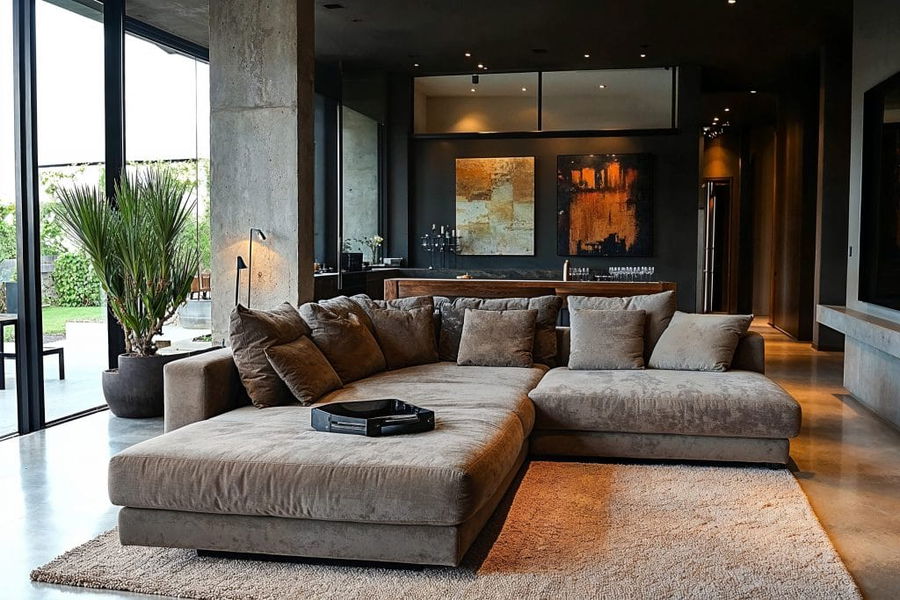
What makes industrial design so appealing? Is it the exposed brick, the steel beams, or the mix of raw and polished textures? Industrial elements bring quite a distinctive character into a space, whether you live in a converted warehouse or a suburban home.
1. Lighting, The Foundation of Industrial Aesthetics
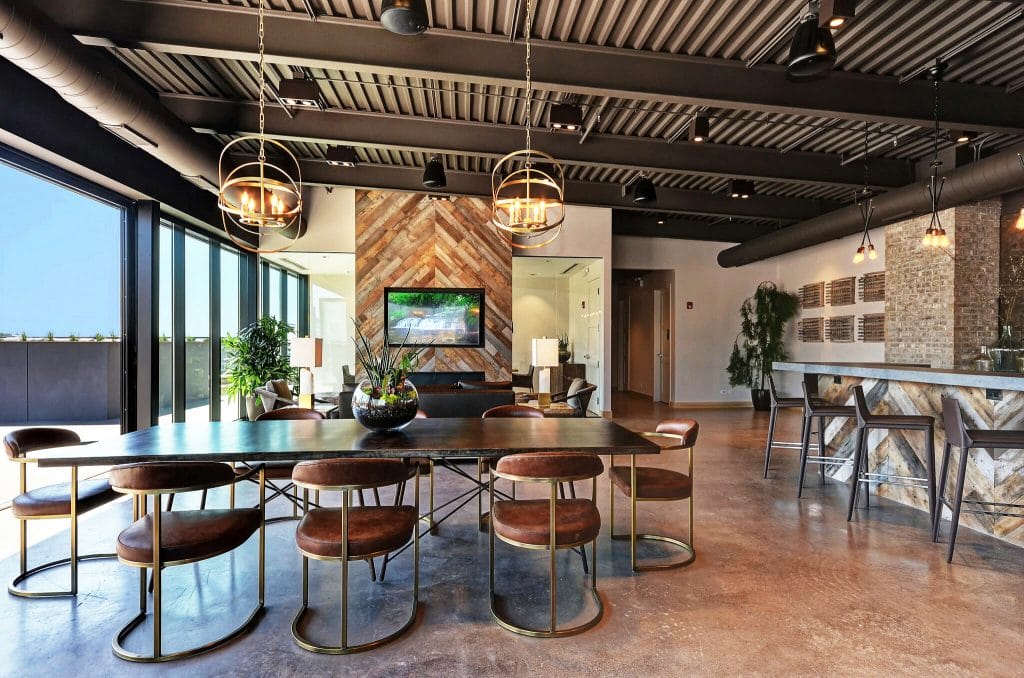
Factory-style lighting defines industrial interior design schemes. Metal pendant lamps with aged finishes, bare Edison bulbs, and caged sconces give a space that stripped-down, functional look. These fixtures often feature black or aged bronze finishes, reinforcing the industrial character. Adjustable scissor-arm sconces or pulley-style pendants add movement and make lighting feel like an extension of the architecture.
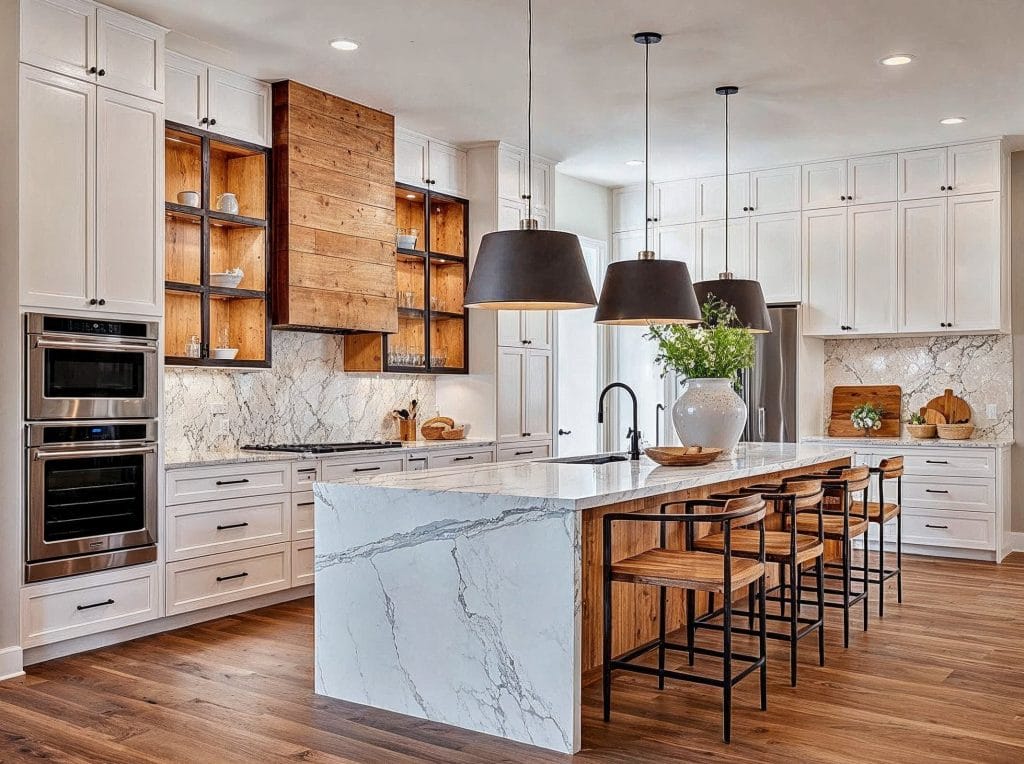
Pro Tip: For an unexpected industrial chic design contrast, blend in softer elements like linen shades or wood accents.
Looking how to put together industrial elements into a cohesive, stylish interior design? Try our Free Interior Design Style Quiz to discover your ideal style today!
2. Raw Materials, Metal, Wood, and Concrete
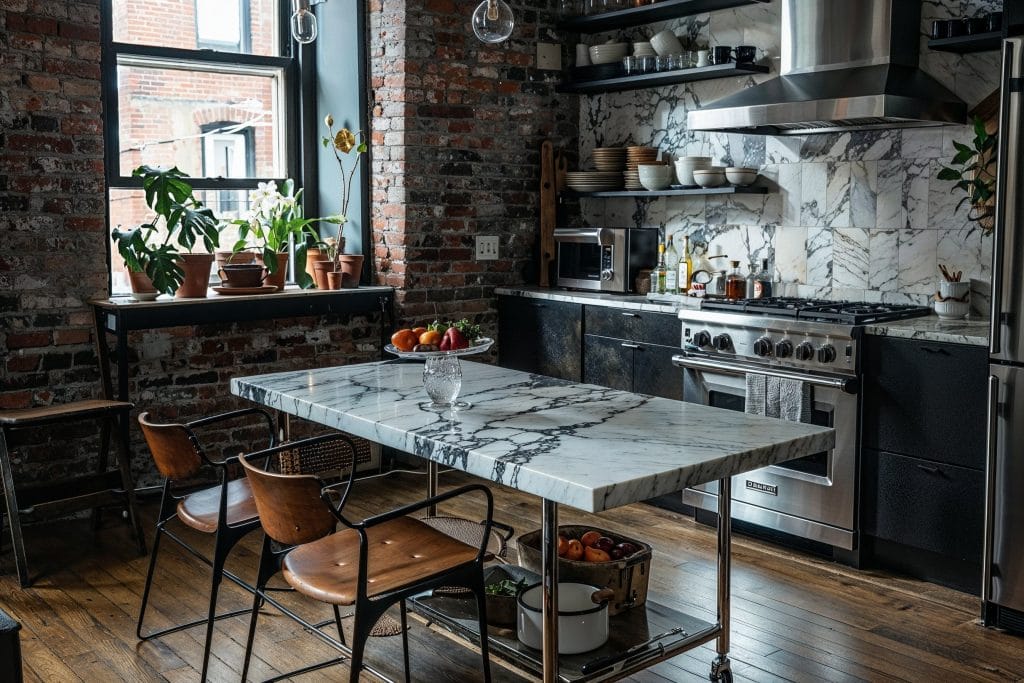
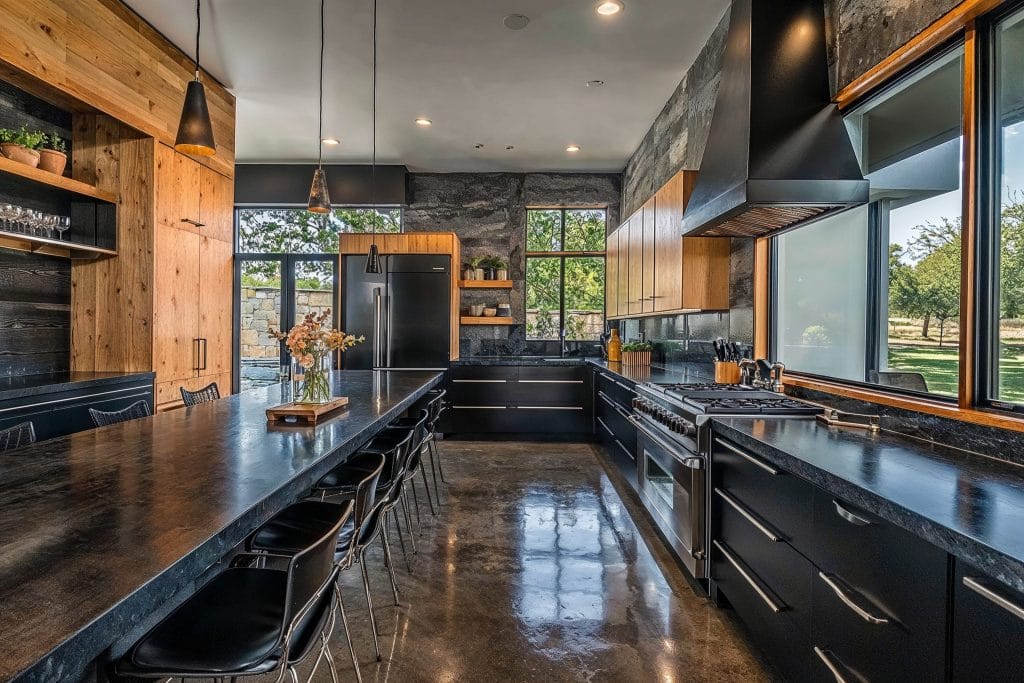
Industrial elements rely on materials with depth. A coffee table with a steel base and a reclaimed wood top, exposed ductwork, or a concrete kitchen island immediately adds an industrial presence. Moreover, concrete flooring gives a room a sleek, factory-like edge, whether polished or raw. Alternatively, opt for a wood floor with a matte finish if concrete feels too cold for your taste.
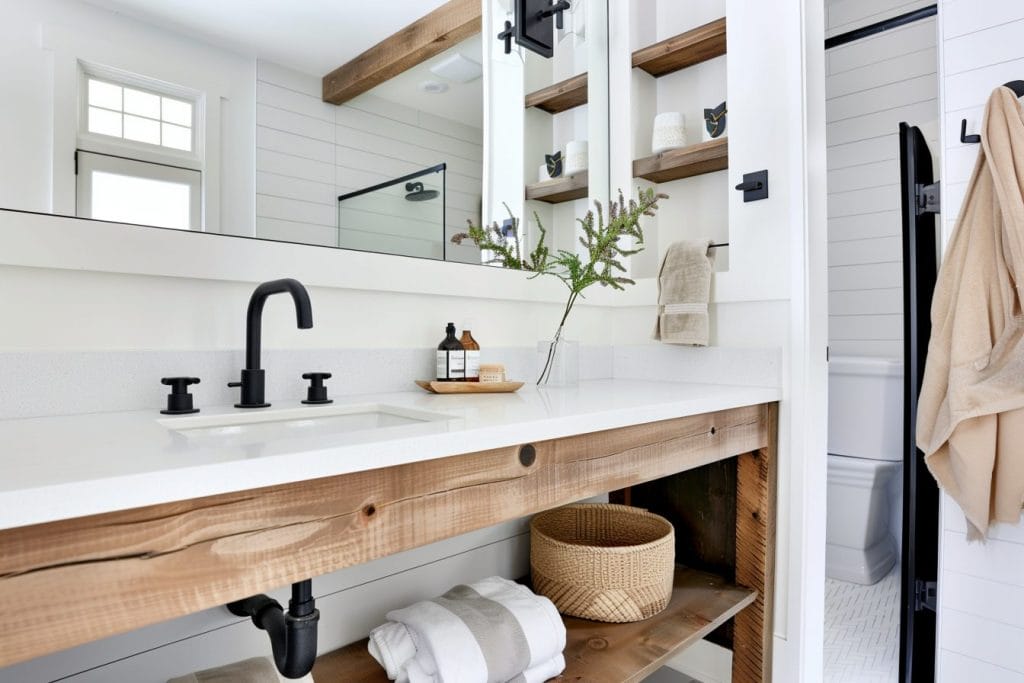
Pro Tip: If real concrete isn’t an option, look for microcement coatings, which create the same effect without the weight and cost of poured concrete.
3. Exposed Brick: Authentic or Faux?
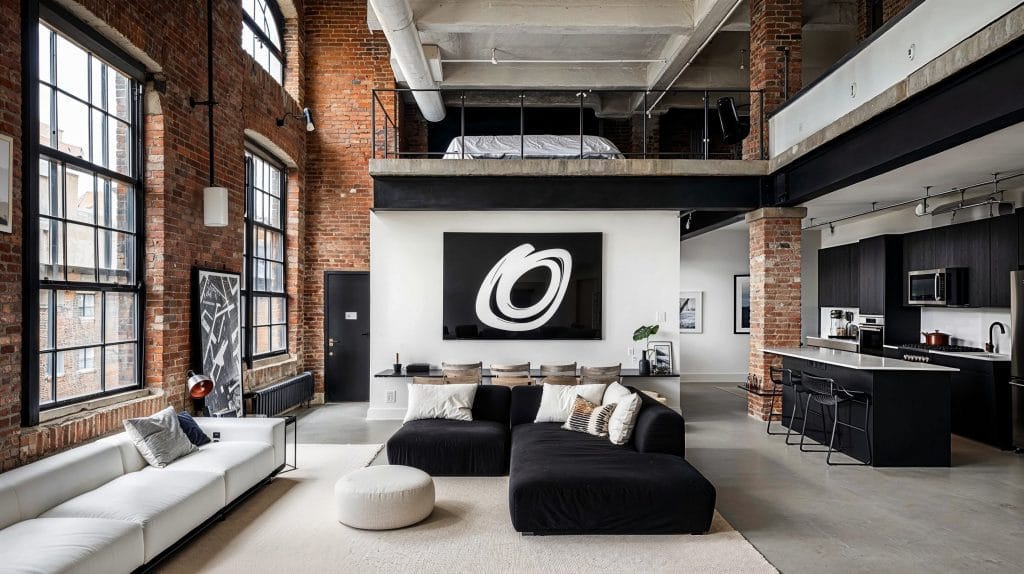
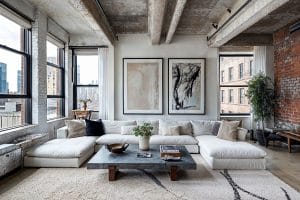
Brick walls immediately anchor a room with industrial character. Aged bricks with uneven coloring look best, but a painted brick wall can work, too. For a cleaner approach, consider whitewashed brick that brightens a space while preserving texture. A matte sealant will prevent dust without giving the bricks an artificial sheen.
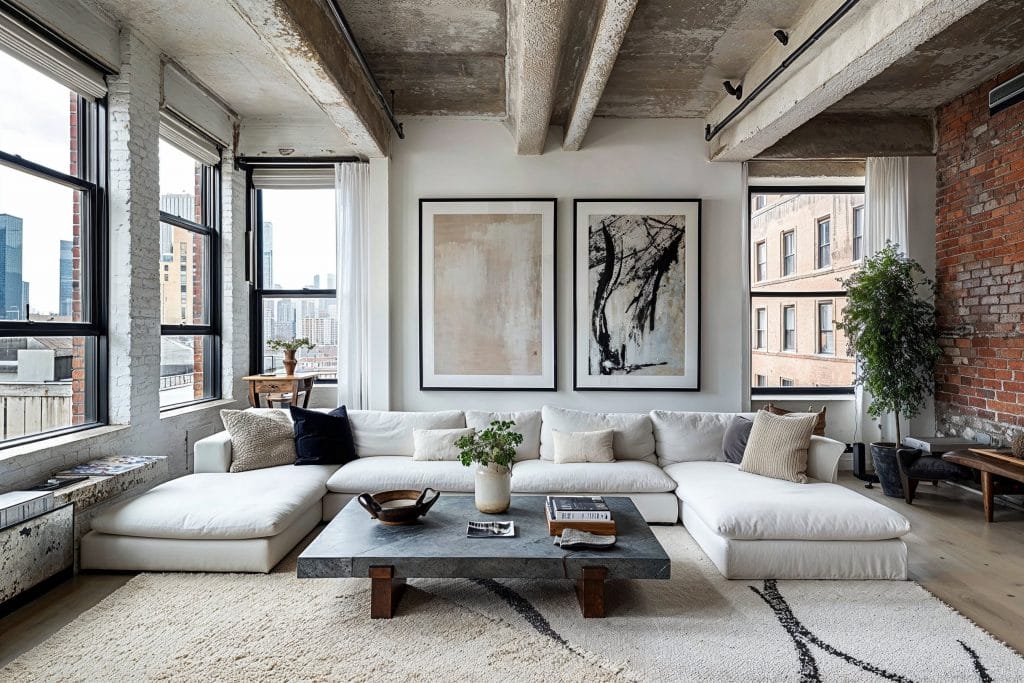
Pro Tip: If using faux brick, mix in real industrial elements like steel furniture or reclaimed wood to keep the look authentic.
4. Factory Windows as Industrial Design Elements
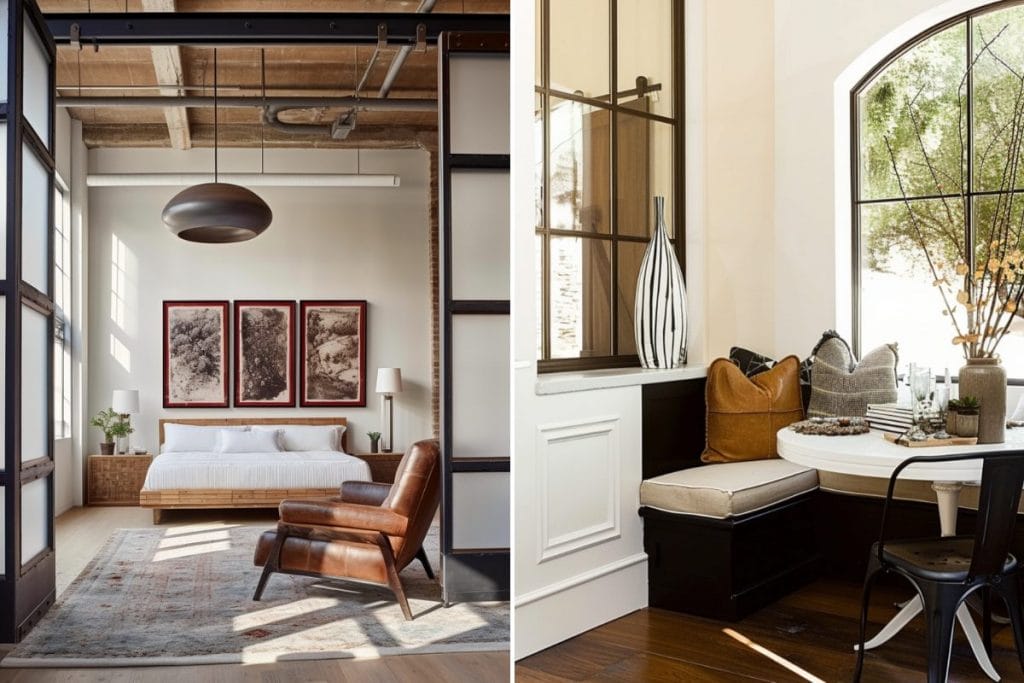
Steel-framed windows with a grid design define industrial interiors, but full metal casement windows aren’t the only option. A room divider with black-framed glass panels mimics the effect, separating spaces without blocking light. Similarly, a shower enclosure with a grid pattern gives a bathroom an industrial structure. If replacing windows isn’t feasible, use black window trim or gridded window film to create the illusion of steel-framed glass without a full renovation.
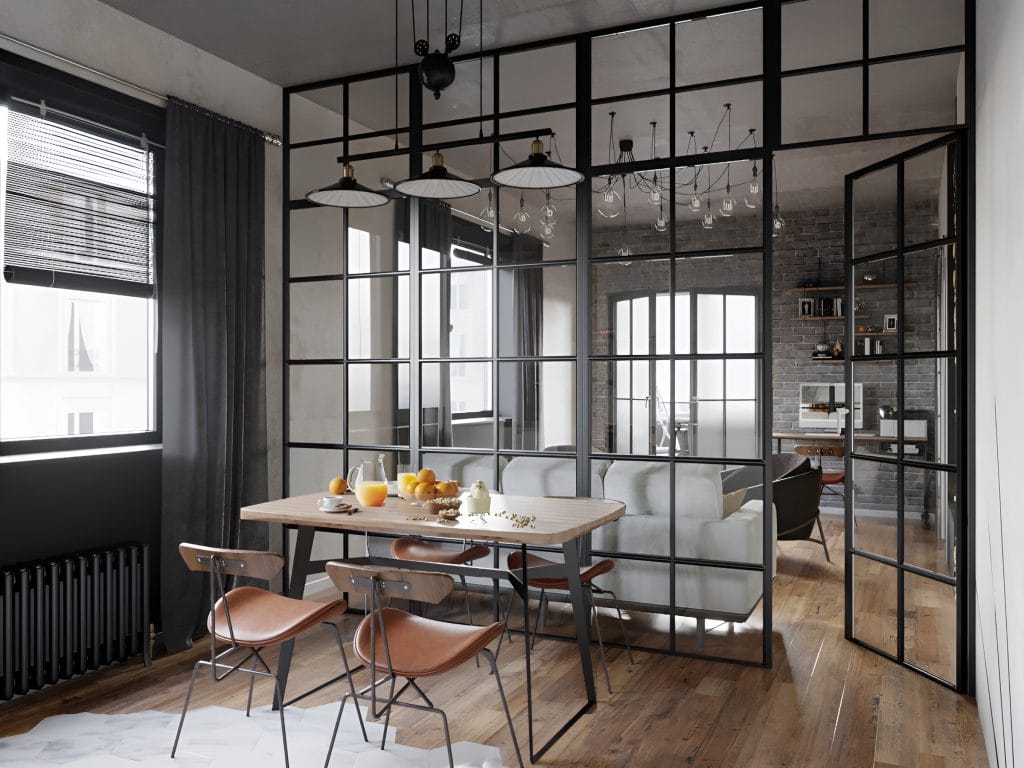
Pro Tip: Avoid typical home decor mistakes and use matte black paint for window frames instead of glossy—industrial elements should look worn.
5. Strength in Simplicity: Industrial Furniture
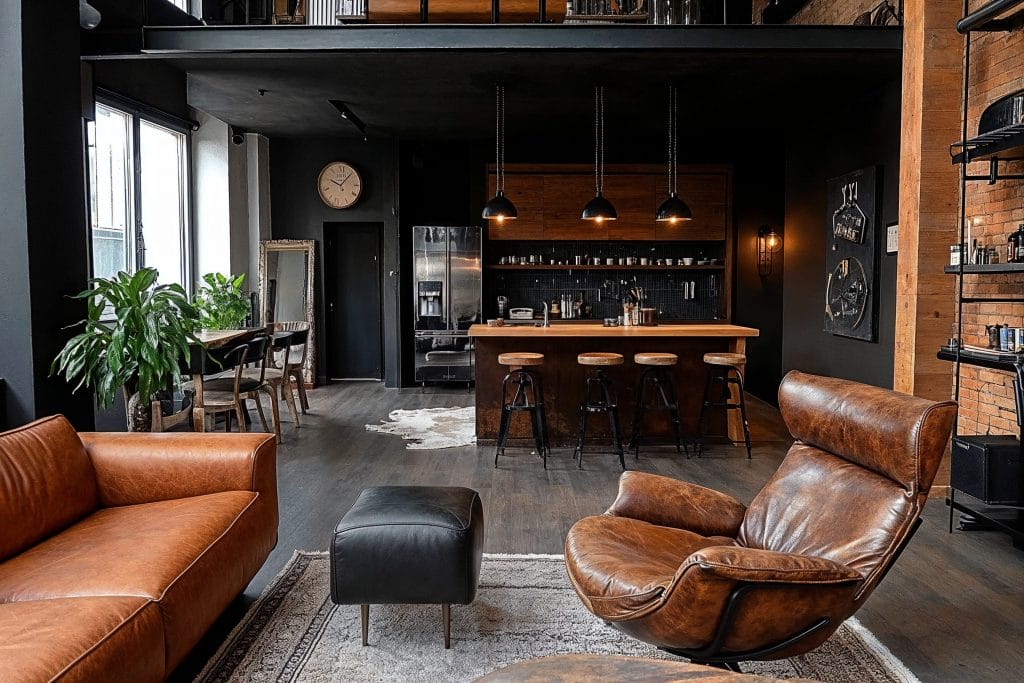
Industrial design elements emphasize function over decoration. Metal-framed dining chairs, steel-legged tables, and wire shelving units reflect this principle. The best pieces look as if they were built for a factory or workshop—workbenches as kitchen islands, metal lockers as storage, or old drafting tables repurposed as desks. Leather also works well in industrial spaces, but avoid overly tufted or decorative styles.
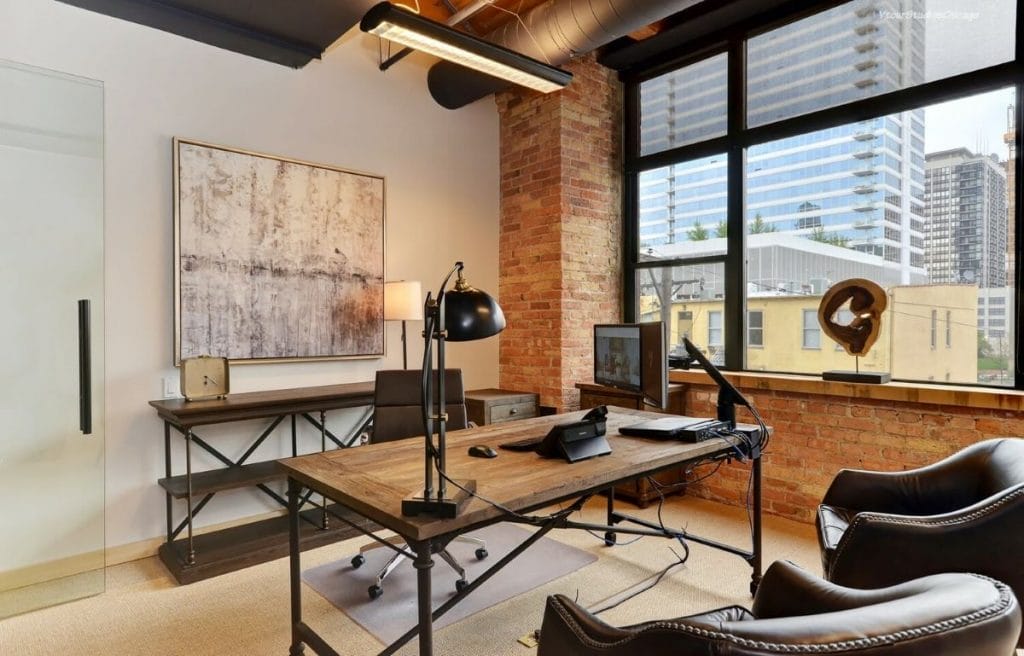
Pro Tip: Look for secondhand industrial furniture at flea markets or salvage yards—authentic wear adds more character than factory-made distressing.
6. Reclaimed and Repurposed Pieces
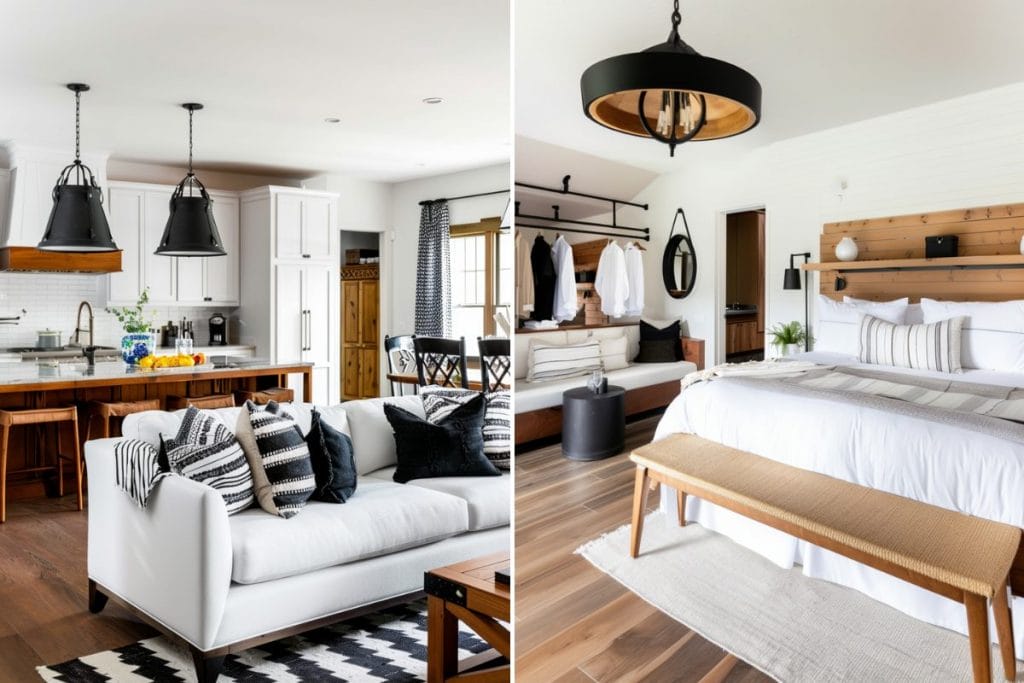
Industrial design should feel like they’ve evolved over time. Hence, the goal is to mix raw materials with purpose, not just for aesthetics but for function. Think objects with a past—old gears as wall art, factory molds as sculpture, or a metal workbench as a sideboard. Salvaged wood beams, repurposed doors, or factory carts turned into coffee tables also reinforce this lived-in quality.
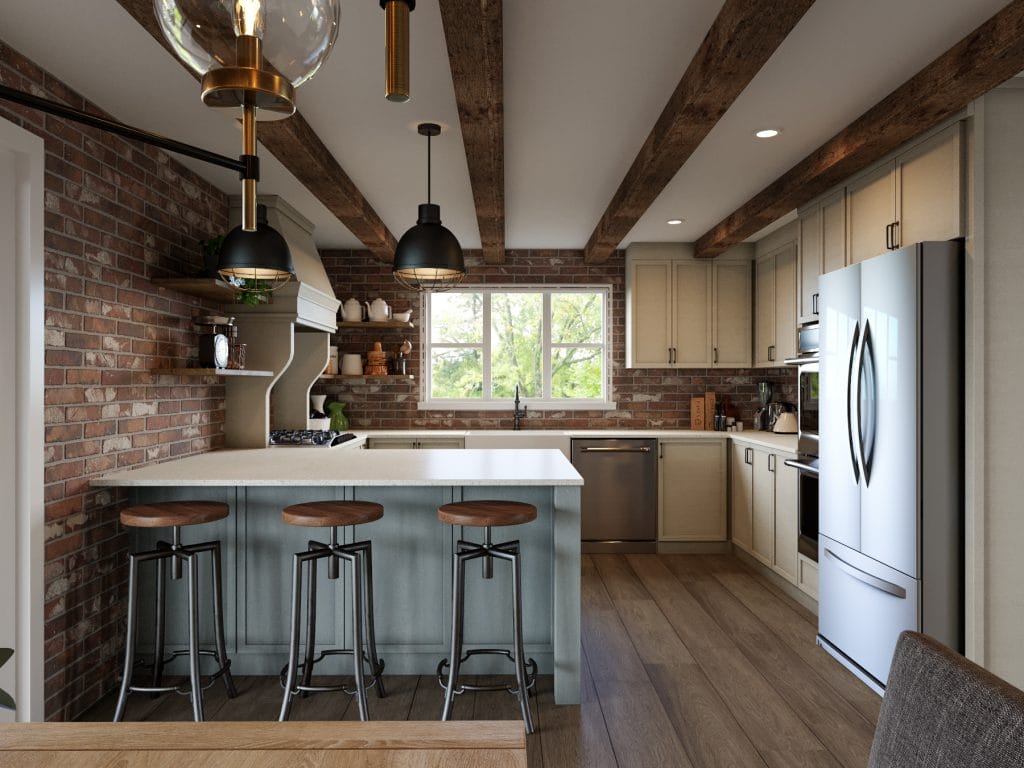
Pro Tip: Search for industrial salvage shops in your area—often, they have metalwork, reclaimed wood, and old fixtures for a fraction of retail prices.
7. Open and Exposed Utilitarian Storage
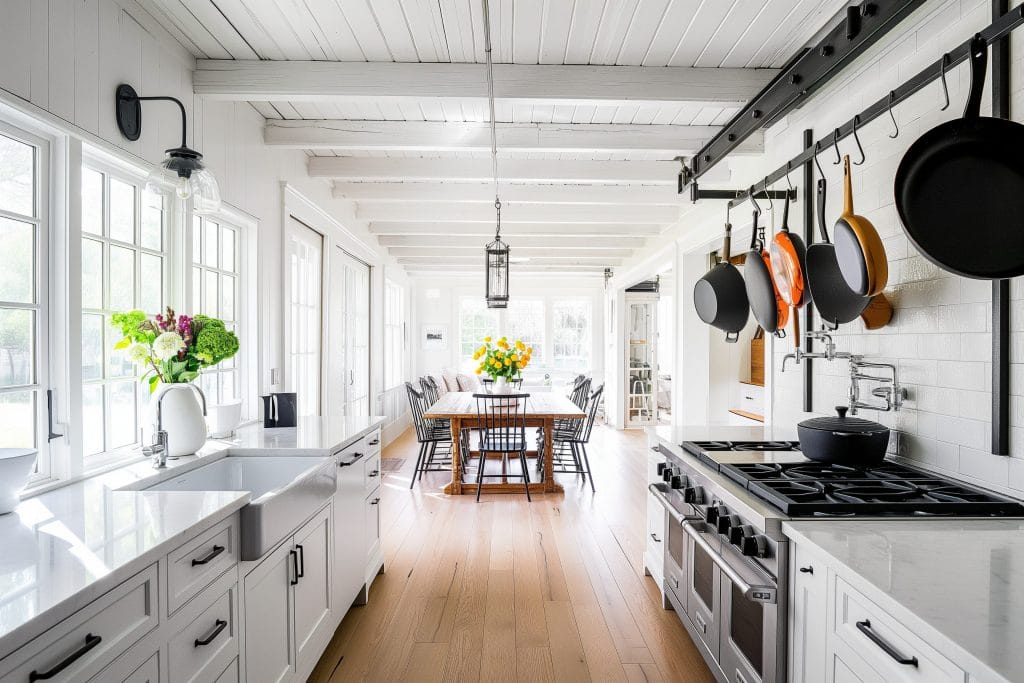
Industrial interiors don’t hide function. Keep storage visible with open shelving, wire baskets, and metal lockers, emphasizing structure over concealment. Kitchen storage works especially well in this style: wall-mounted pot racks, exposed dish shelving, and glass-front cabinets fit seamlessly into the industrial aesthetic. For a modern take, mix industrial storage with warm elements, like a metal shelving unit against a wood-paneled wall.
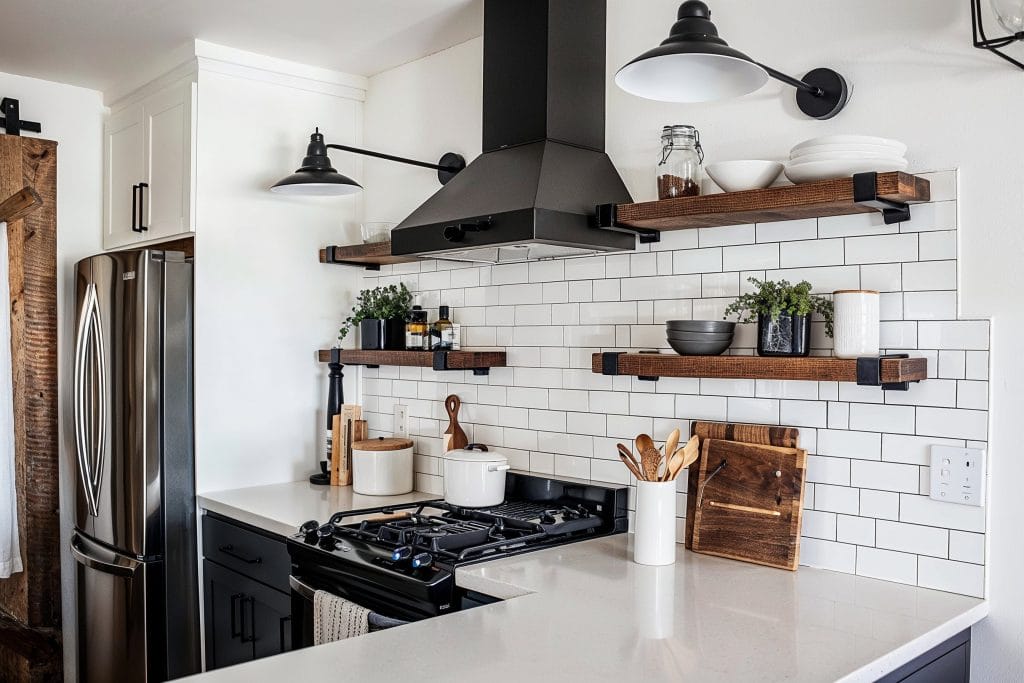
Pro Tip: If using open shelving, keep items neatly arranged. Industrial doesn’t mean messy; on the contrary, clutter disrupts the balance of raw materials and clean lines.
8. Cool, Muted, and Balanced Industrial Colors
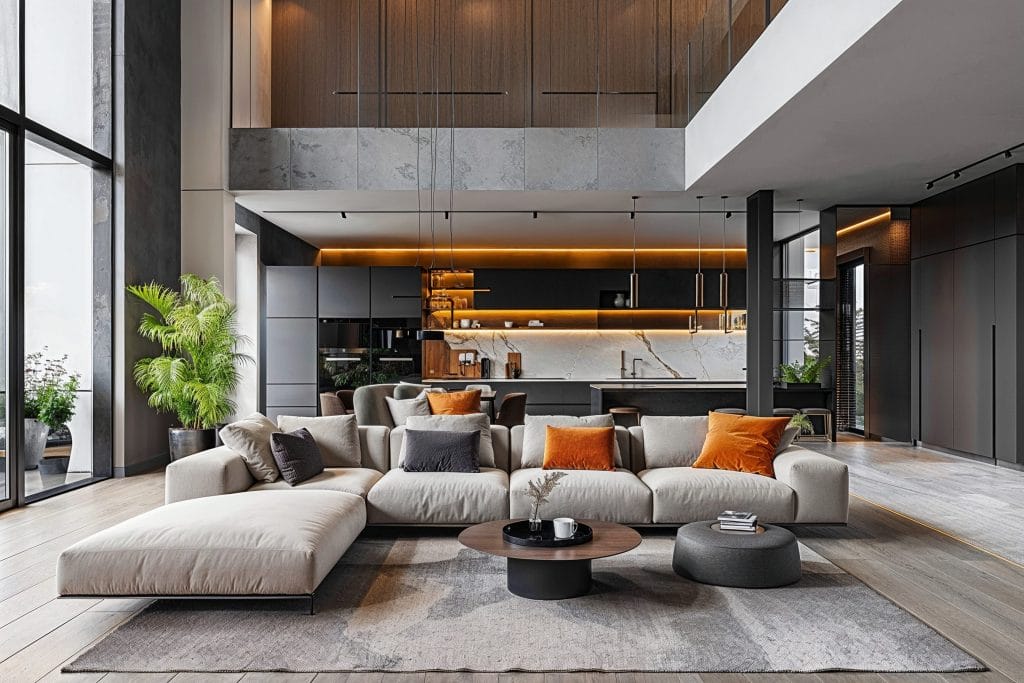
Charcoal, slate, and gunmetal anchor the look of industrial elements, while browns from leather and wood keep the layout from feeling too stark. Accent colors can be bold but used sparingly—an oxidized green chair, a rust-red stool, or mustard-yellow cushions, for example. As for the wall colors, soft gray, off-white, or muted blue-green work well. If using darker tones, balance them with plenty of light to prevent the space from feeling heavy.
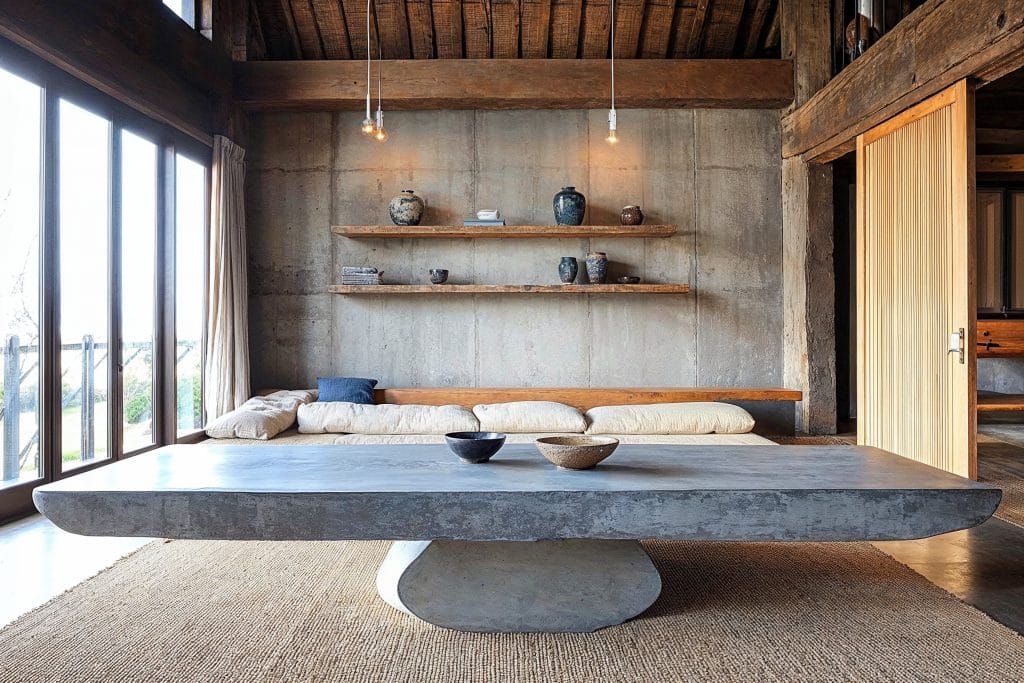
Pro Tip: Matte finish absorbs light, reinforcing the depth industrial interiors thrive on.
9. Minimalist Decor with Maximum Impact
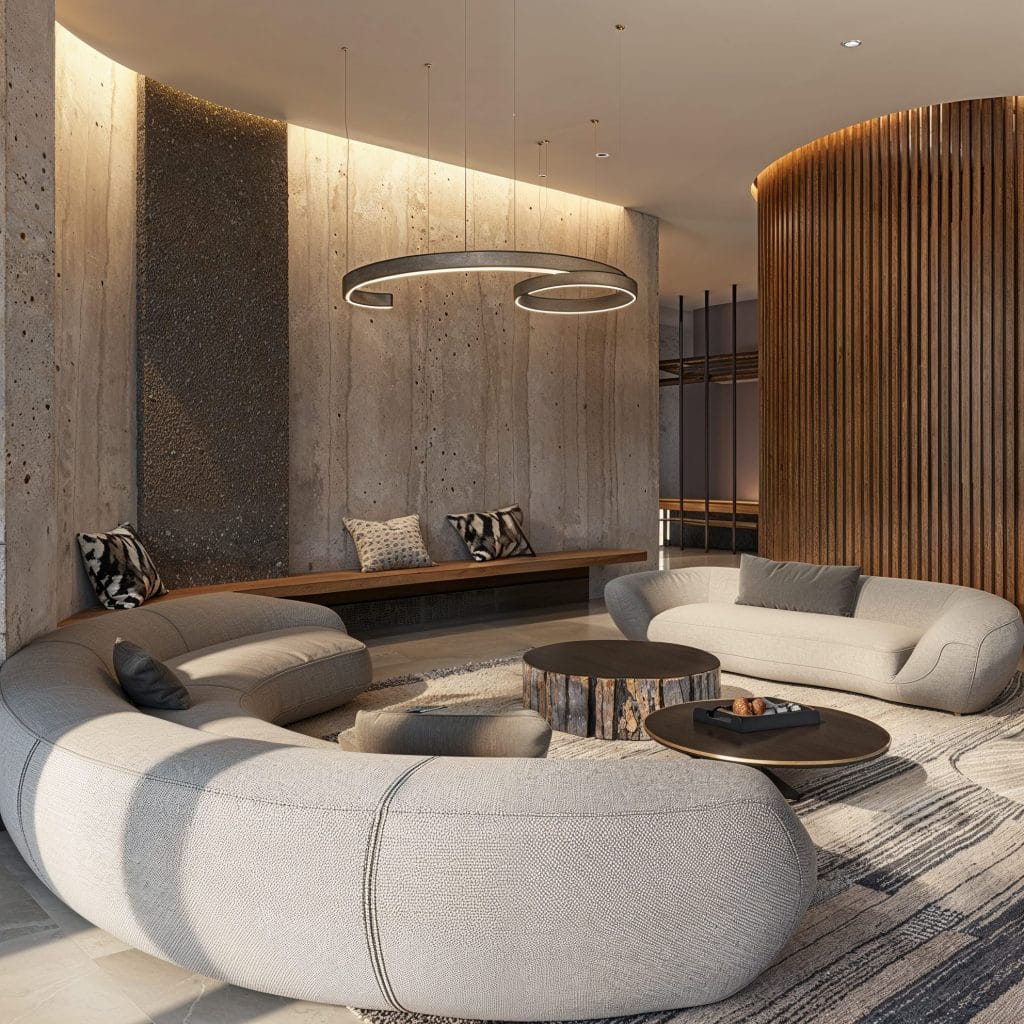
Industrial decor elements serve a purpose—clocks with oversized numbers, vintage factory signs, or black-and-white photography framed in metal. Use mirrors framed in steel or reclaimed wood to reflect light while staying true to the industrial aesthetic. Similarly, wall art should complement the raw materials in the space, not overpower them. Vintage maps, old architectural drawings, or abstract art with bold geometry are some of the no-brainers when it comes to industrial spaces.
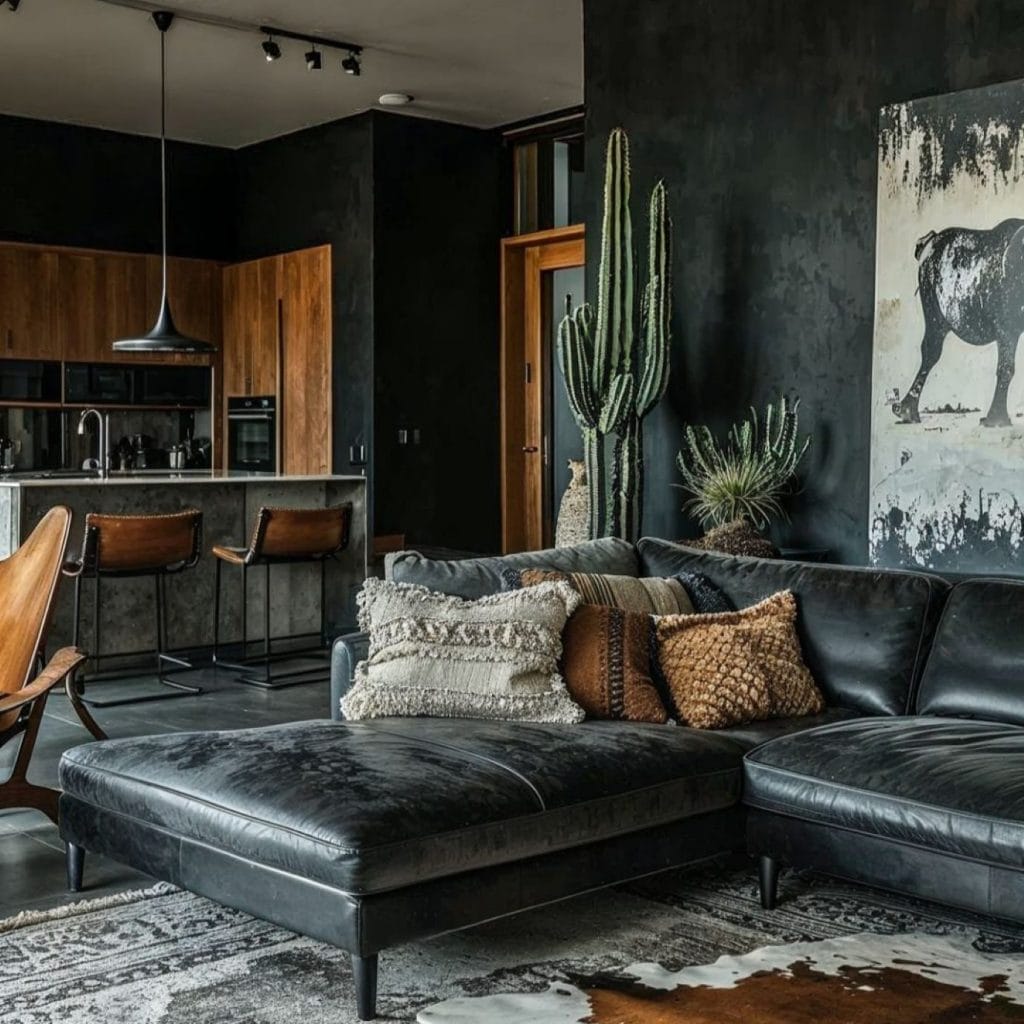
Pro Tip: Keep decor choices intentional. Too many pieces can make industrial interiors feel more staged than natural.
10. Texture and Contrast
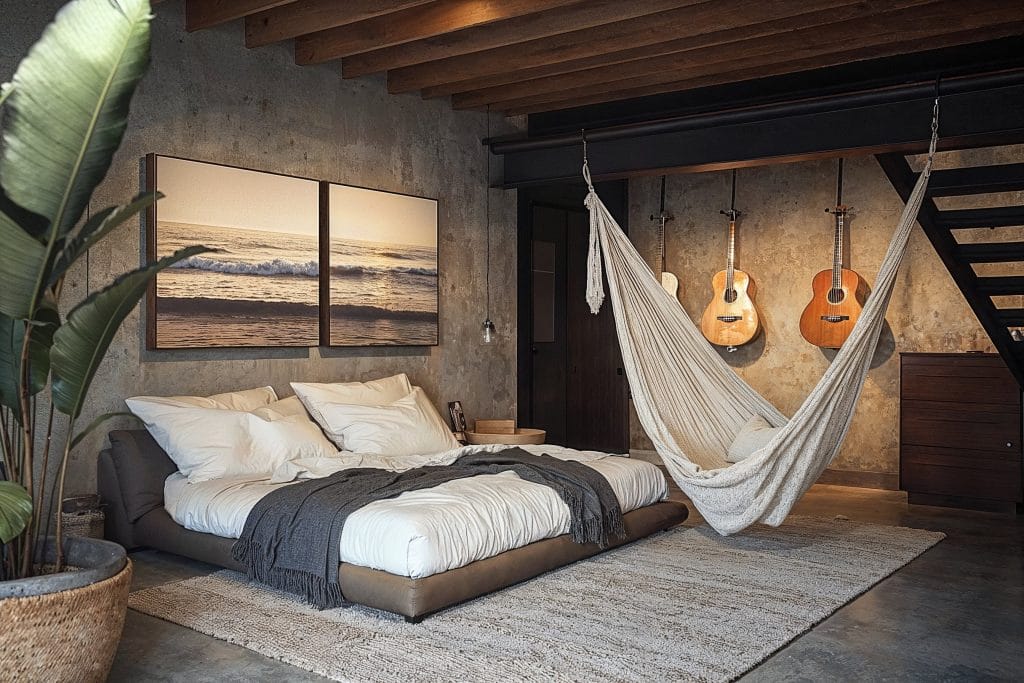
Industrial design elements rely on contrasts of hard and soft, old and new, rough and smooth. Soft lighting, tactile fabrics, keep industrial elements from looking sterile, and so does natural greenery. A concrete floor feels more inviting with a woven wool rug, while a metal chair becomes warmer with a linen cushion. An iron-framed coffee table paired with a soft leather sofa also balances structure with comfort.
Pro Tip: Layer textiles sparingly but purposefully. The goal is a space that feels lived-in as much as styled.
Industrial Elements Our Designers Like
Industrial decor brings factory-born materials indoors, from exposed brick and concrete to visible ducts and furniture with a utilitarian edge. It works best when the room keeps that raw structure legible, then tempers it with softer elements so it feels lived-in.
Why We Like Them
- Sixteen drawer fronts repurposed from old bread loaf pans sit in Wilton’s reclaimed mango wood body. The baker’s-chest origin fits the industrial decor with bonus points for sustainability.
- The Lakara is made of reclaimed wood and shaped to hold eight tealights in a row. Its unfinished surface fits the industrial preference for materials left close to their original state.
- Round woven pouf comes with a stamp across the face, referencing the stenciled markings found on shipping crates and factory sacks. It is low enough for extra seating or a footrest beside a leather armchair.
- A 20-inch Incana features a wooden wheel with wear marks from a previous functional life. On a mantel or shelf it reads as a salvaged mechanical component, which is core industrial territory.
- Gunmetal iron frame with genuine brown leather seat and back defines Stratton with two materials that age visibly with use. The exposed metalwork and worn-in leather are foundational industrial decor materials.
- Light brown wood on the Steinbec’s iron frame is 61 inches wide, enough surface for a laptop and open notebook. Exposed metal joinery and raw wood finish are textbook industrial construction.
- Solid acacia panels are set in a metal frame at 71 inches tall, with varied cut-out shapes across the surface. Both the iron-and-wood combination and geometric cut-outs reference factory partitions.
- Peel-and-stick white faux-brick texture: one accent wall sets the exposed-brick backdrop that industrial interiors are built on.
- The Siriano is an iron candelabra with oil-rubbed bronze exterior and antique brass interior. The darkened iron finish and candelabra form bring warehouse-era lighting into a residential ceiling.
Need help pulling all industrial elements together?
Work with an interior designer who knows how to balance industrial character with everyday comfort. Book your Free Online Interior Design Consultation to get started today!


Comments