


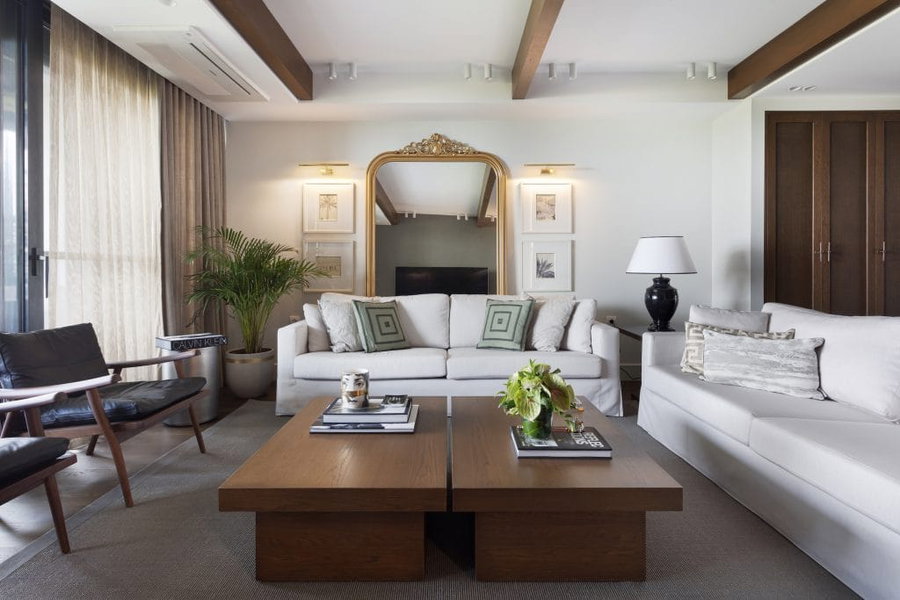
Are you torn between classic elegance and modern trends in home design? How do you bring a traditional home up to date when you still love much of what’s in it? The transitional interior design style is the ultimate blend of present and past favorites, a golden ground between classic and contemporary looks.
The tricky part is that balance is also where the style becomes harder to pin down. This guide looks at those relationships, with practical advice on choosing finishes and arranging each room.
What is Transitional Interior Design?
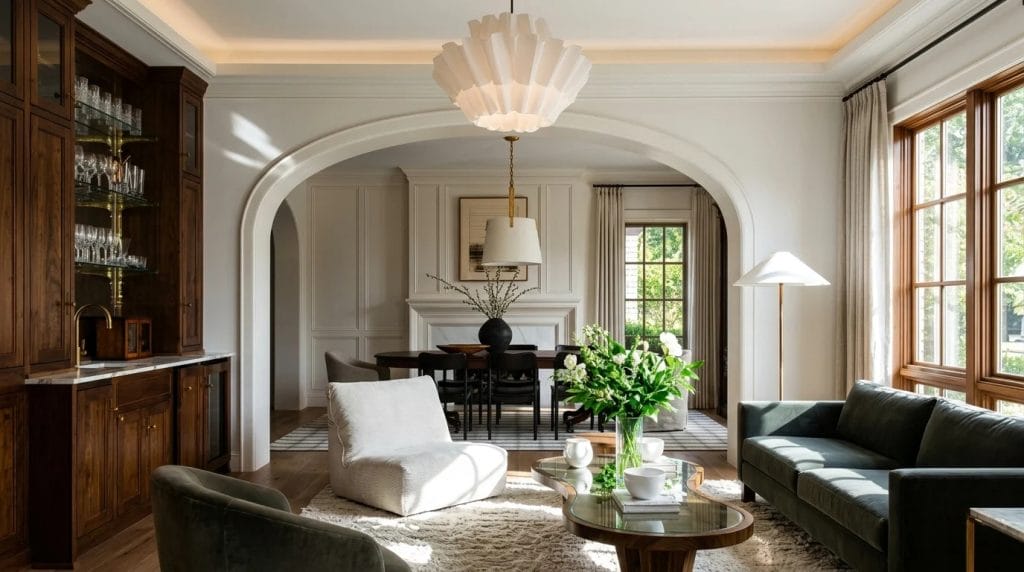
Before we explore the charm of transitional interior design, let’s get clear on what it really is. Above all, it’s a thoughtful blend of eras that bridges traditional elements and modern simplicity, offering a vast playground for mixing and matching. It retains comfort and balanced arrangements, while reducing ornament and allowing more space between furnishings.
Another thing that sets transitional interior design apart is its dynamic nature, continually adapting to evolving trends. This design philosophy never feels dated while bridging the gaps, and the emphasis shifts with the home’s architecture and the owner’s preferences.
The distinction from modern and contemporary interior design also helps clarify the term. Modern design has roots in a historical movement, while contemporary design changes with the present. The transitional design style combines traditional influences with elements from either, using a consistent palette and compatible proportions to bring them together.
Not sure if transitional interior design is right for you? Take our Free Interior Design Style Quiz to help discover what style really feels like you!
It takes less than two minutes.
Key Characteristics of Transitional Style
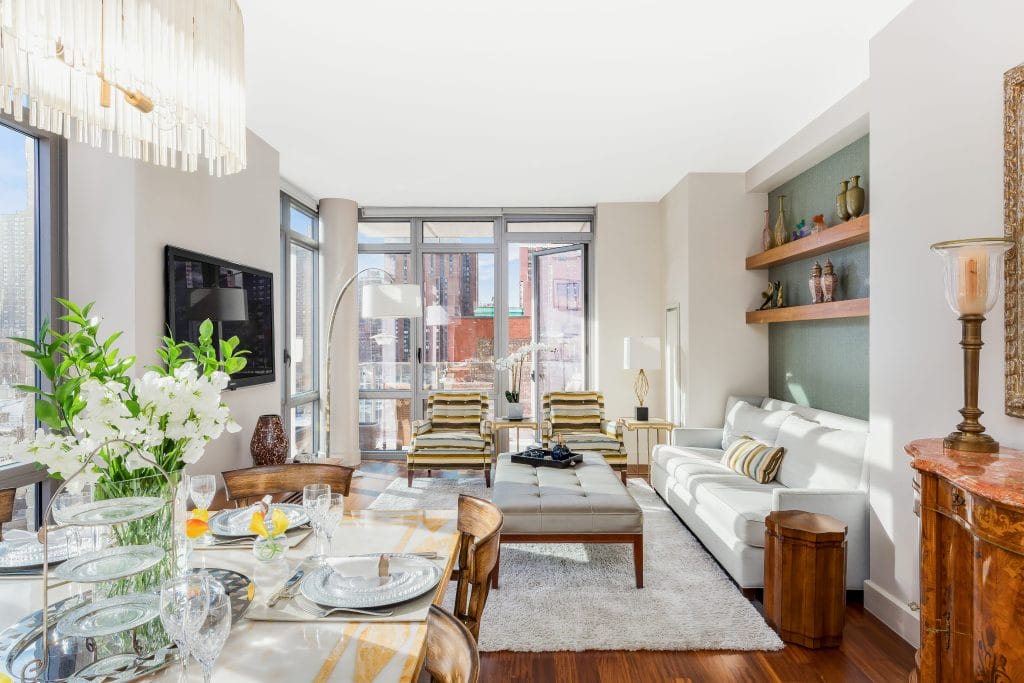
In a traditional interior, decorative detail often extends across the room, from architectural moldings to furniture profiles. Transitional design is more selective about where that detail appears. Elaborate architecture may carry most of it, leaving the furnishings simpler. In a plain room, on the other hand, curated traditional furniture can introduce the missing character.
Neutral Color Palettes
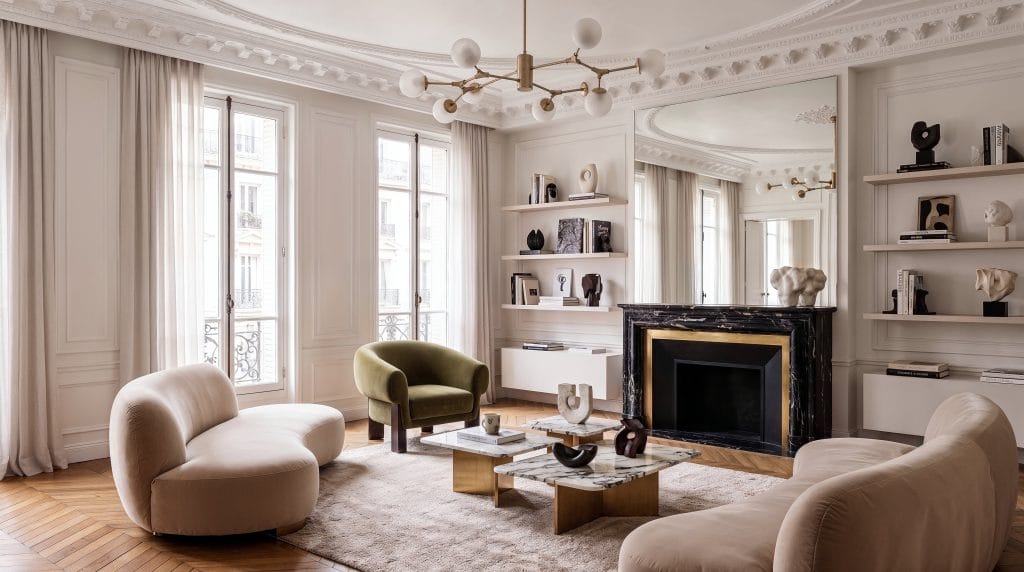
Color usually forms a continuous background in transitional interiors. Warm whites through taupe allow differences in furniture shape to become more apparent, while warm neutrals typically shift the look to cozier. Depth comes from varying the tones across the room. Darker accents give pale furnishings definition, so even a largely neutral scheme has contrast.
Mixed Materials
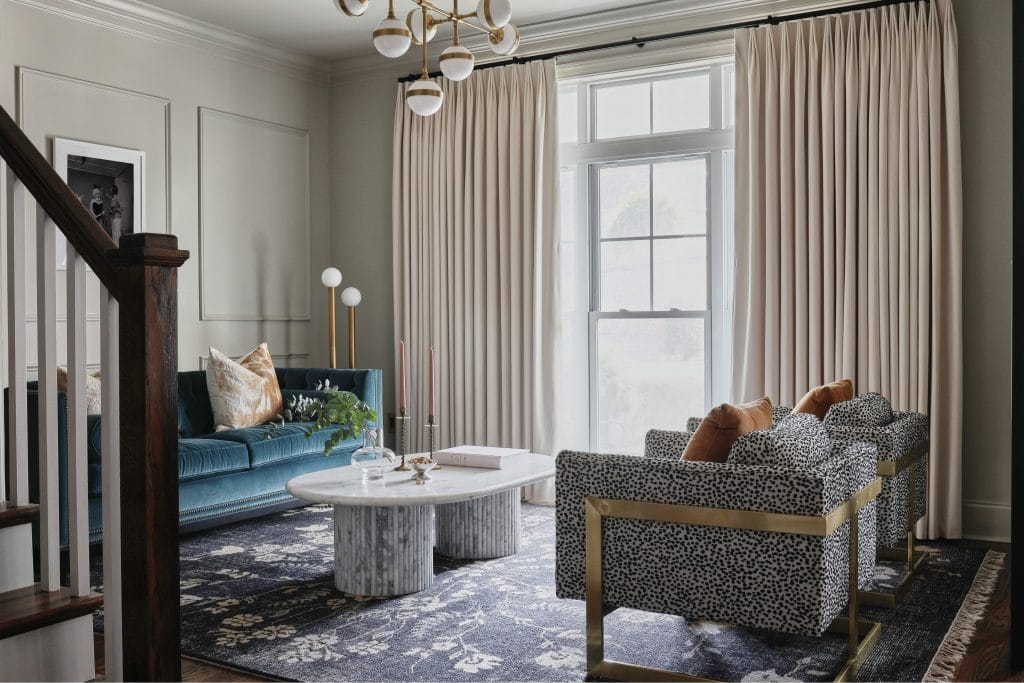
This variation gives a restrained palette enough substance to support relatively little pattern. Texture carries much of the decoration. Upholstery often has a visible weave, and wood contributes grain across larger surfaces. Against these, stone or metal introduces a smoother finish that changes how light moves through the room.
Clean Lines with Soft Edges
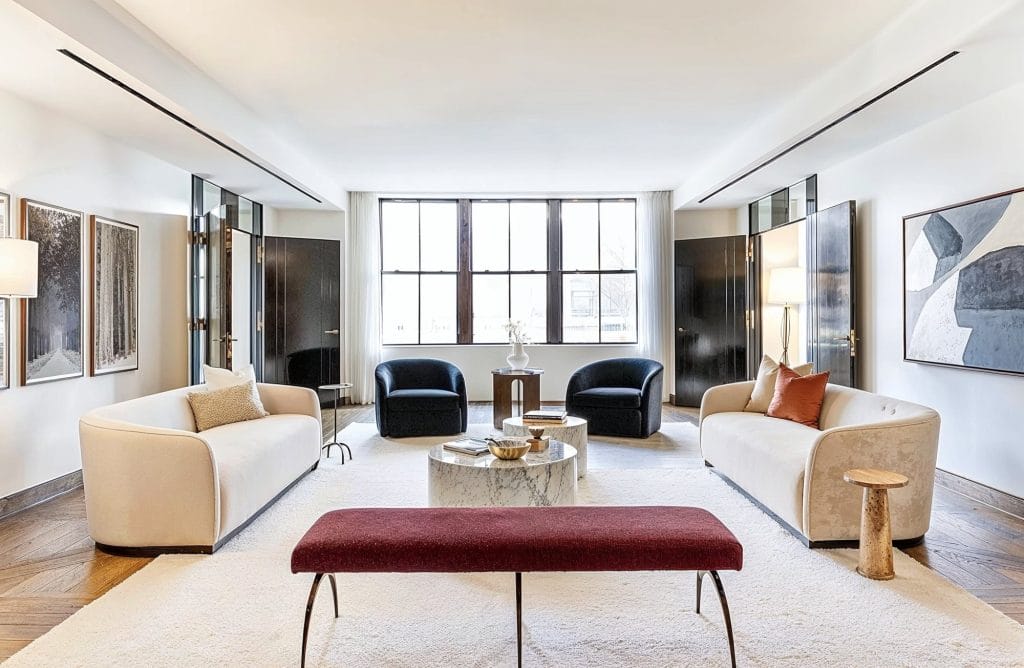
Transitional furniture can easily carry the curves and cushioning associated with traditional pieces. Both, however, are commonly expressed through simpler outlines. Arms become less bulky, bases lose some ornament. The balance is visible in the silhouette before fabric or color enters the picture. Upholstery follows the frame closely; tufting can still belong, although it generally occupies a smaller part of the design.
Layered Lighting
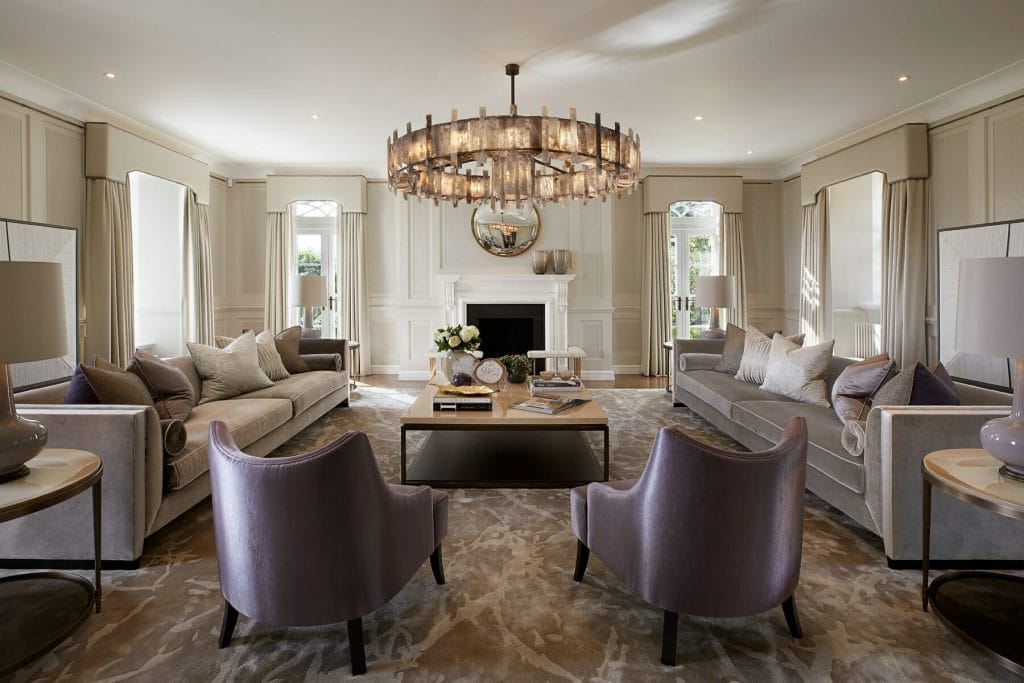
A chandelier is a part of a transitional room. Depending on the rest of the layout, it’s either a visual statement or shows a simplified traditional outline with plainer shades or fewer decorative elements. Below the central fixture, lamps create smaller pools of light around the seating, while accent lighting draws attention to art or architectural details.
Curated Accessories
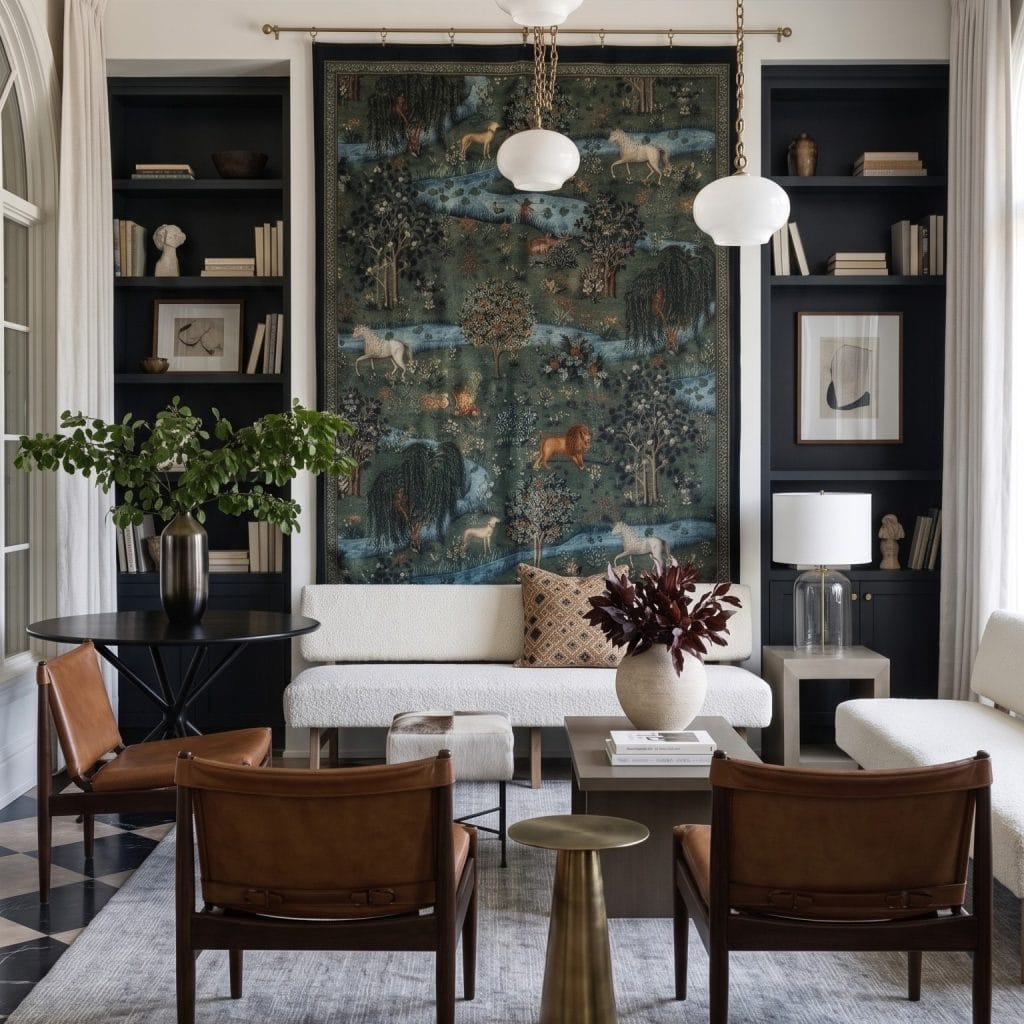
Transitional decor accommodates personal collections, but display tends to be concentrated in a few areas, with enough space around each grouping to see its shape. Decoration is curated. Art can introduce a more contemporary influence, particularly against traditional paneling. Meanwhile, closed storage keeps everyday necessities from determining the appearance of every surface.
Need help putting all these elements together in the right measure? Work with an expert Decorilla designer who knows how to tailor them to your rooms and lifestyle!
Transitional Interior Design Color Palette
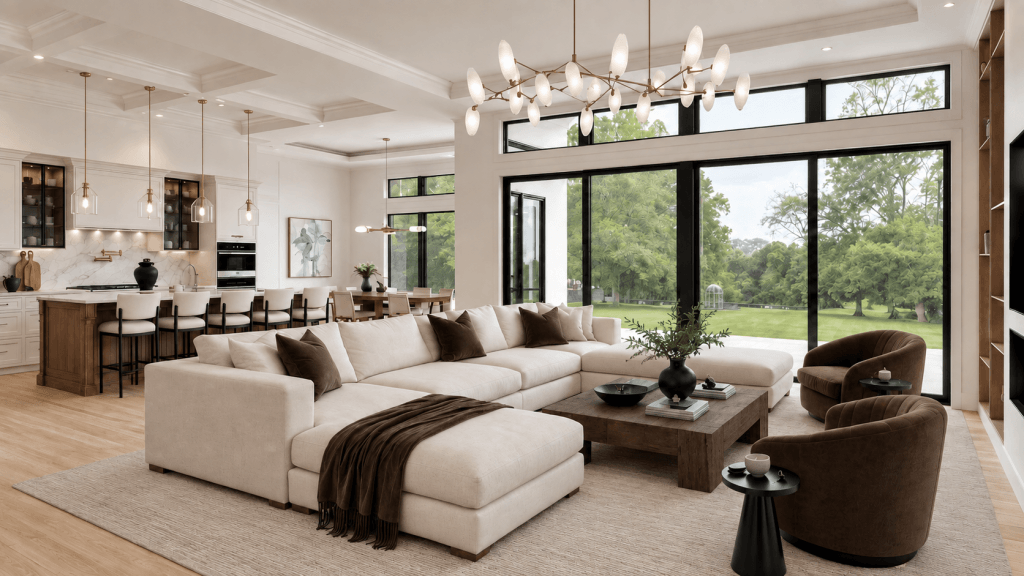
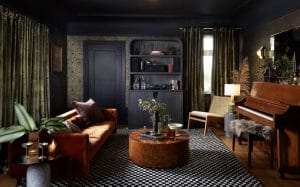
Colors in a transitional style home draw from the classics: grey, sand, and white. This is mainly because neutral palettes add to the stately traditional side of transitional interiors. However, bold dark shades, like midnight blue, charcoal, and black, are right on trend in a more masculine transitional decorating style.
A palette becomes easier to build once the fixed finishes are accounted for. Flooring and cabinetry occupy substantial areas, so their undertones provide a useful starting point for wall color. Compare paint beside those surfaces before introducing new fabric selections.
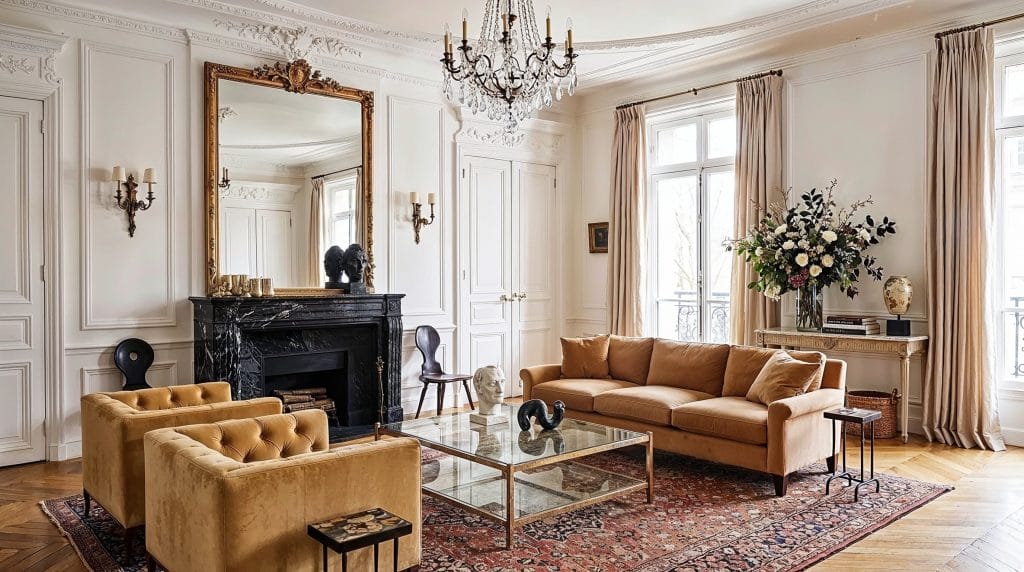
For a warm transitional style, sample something like Sherwin-Williams Alabaster SW 7008 or Accessible Beige SW 7036. Benjamin Moore White Dove OC-17 and Pale Oak OC-20 are also good, fail-proof options. Alongside the wall color, introduce a mid-tone through the largest upholstered pieces, then a deeper shade in smaller areas to give the room definition.
A cooler palette follows the same progression, using blue-gray or muted blue across fabric and balancing it with off-white. Wood remains useful in either direction, with its finish selected alongside the textiles. Warm and cool describe the palette’s emphasis; both can contain a mixture of undertones.
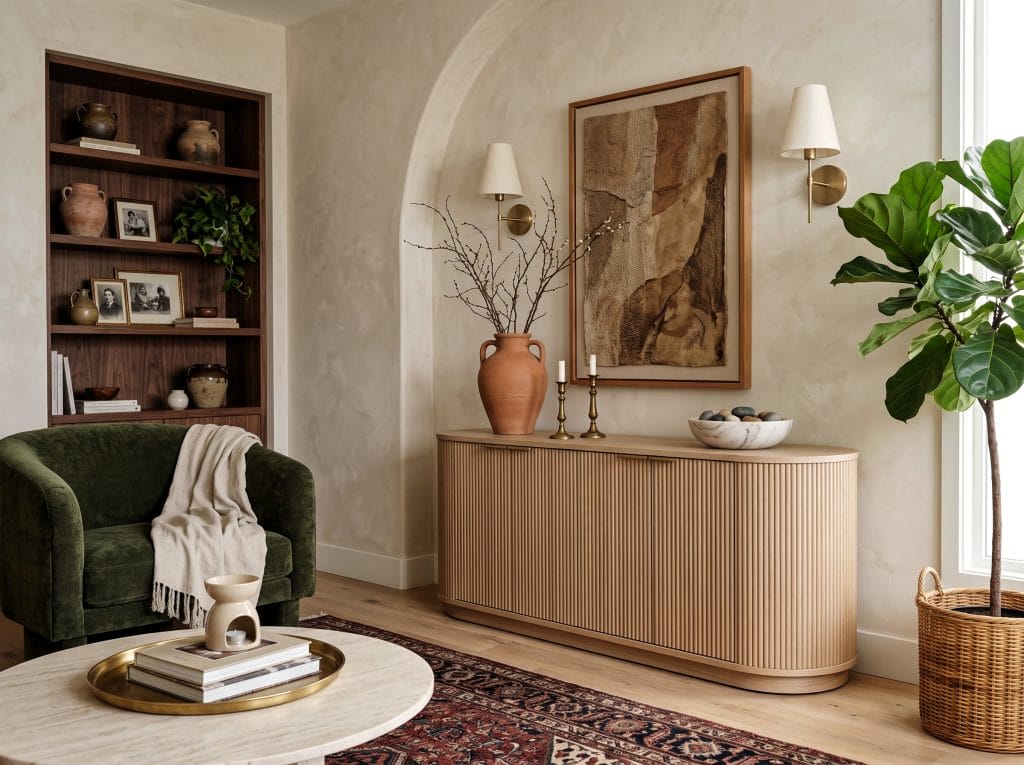
For stronger pops, choose a hue that can recur in different proportions. Accessories offer an easy starting point, while painted cabinetry gives it more permanence. View samples through the day and under evening lighting before committing.
Pro Tip: Choose two neutral base colors, then introduce a curated accent—like a deep olive or rich rust—in small elements like door trims or cabinetry for subtle intrigue. – Joyce H., lead Decorilla designer
Transitional Furniture & Decor
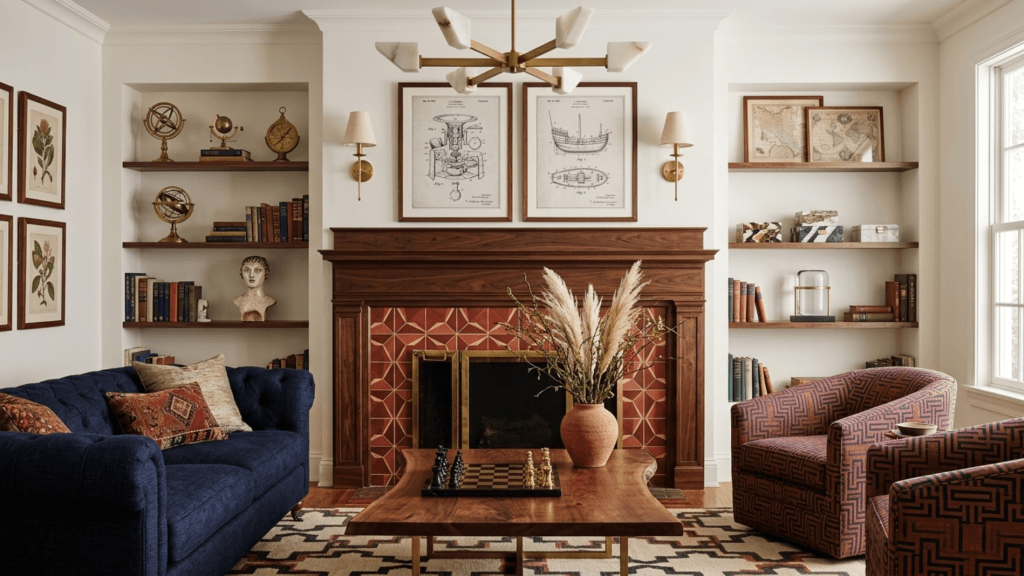
Choosing transitional furniture starts with deciding how much traditional detail the room already contains. In a home with substantial millwork, furniture with simpler frames will let the architecture stand out better. This is also a no-brainer approach to avoid the trap of creating excessive visual noise, unless you’re intentionally going for maximalism.
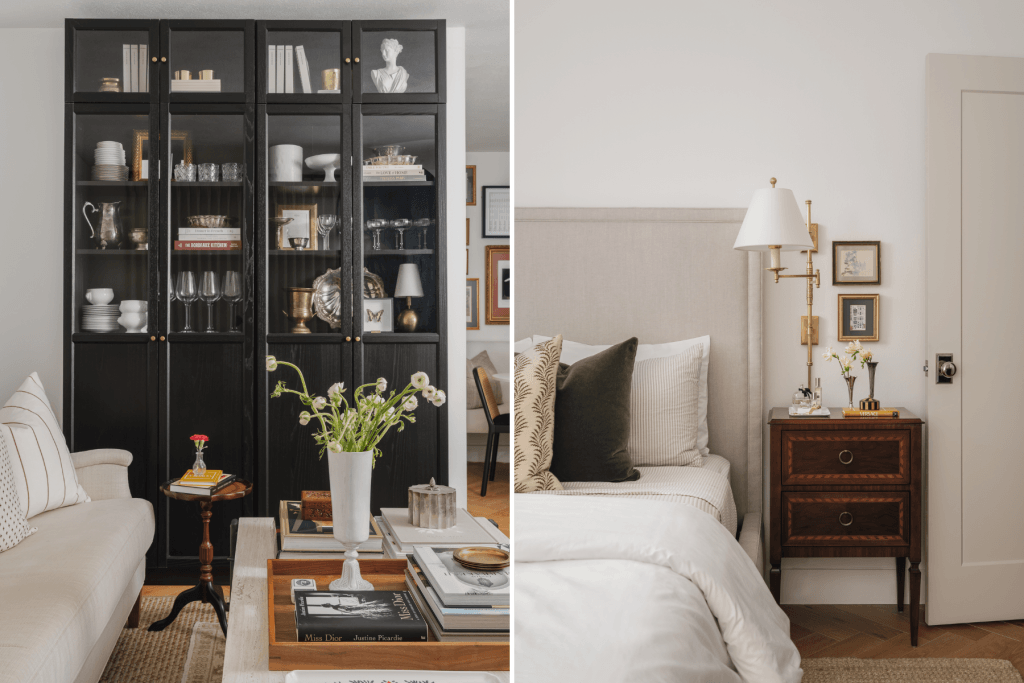
Upholstered sofas are particularly useful here, since their outline and fabric can pull in different directions. A traditional profile in plain linen looks more restrained, while a straight frame gains softness from a fabric with visible texture. Parsons chairs work similarly around a detailed dining table: their continuous upholstery introduces a broad, quiet surface beside the wood.
Use finishes to establish a relationship between pieces from different sources. Wood tones can vary, provided their undertones sit comfortably together; metal hardware can echo a finish already present in the lighting. Repetition helps a mixed collection feel cohesive and intentional.
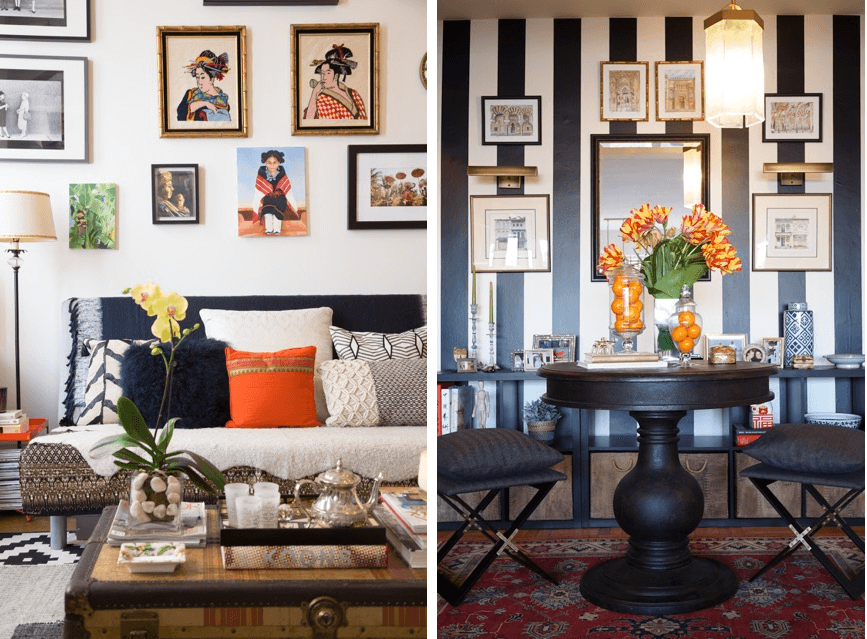
Along with repetition comes symmetry, which also gives the furnishings a common structure. Paired pieces can frame a focal point while surrounding objects remain varied. Keep this in mind when planning to integrate inherited pieces and personal artwork within an arrangement; it will help keep it composed. This is also one of the moments when online interior design services become particularly handy.
Pro Tip: Opt for odd-numbered groups when placing cushions, three or five per sofa, to create a dynamic, lived-in feel. Also, mix oversized with smaller, structured cushions for contrast. – Anna T., lead Decorilla designer
Transitional Living Room Ideas
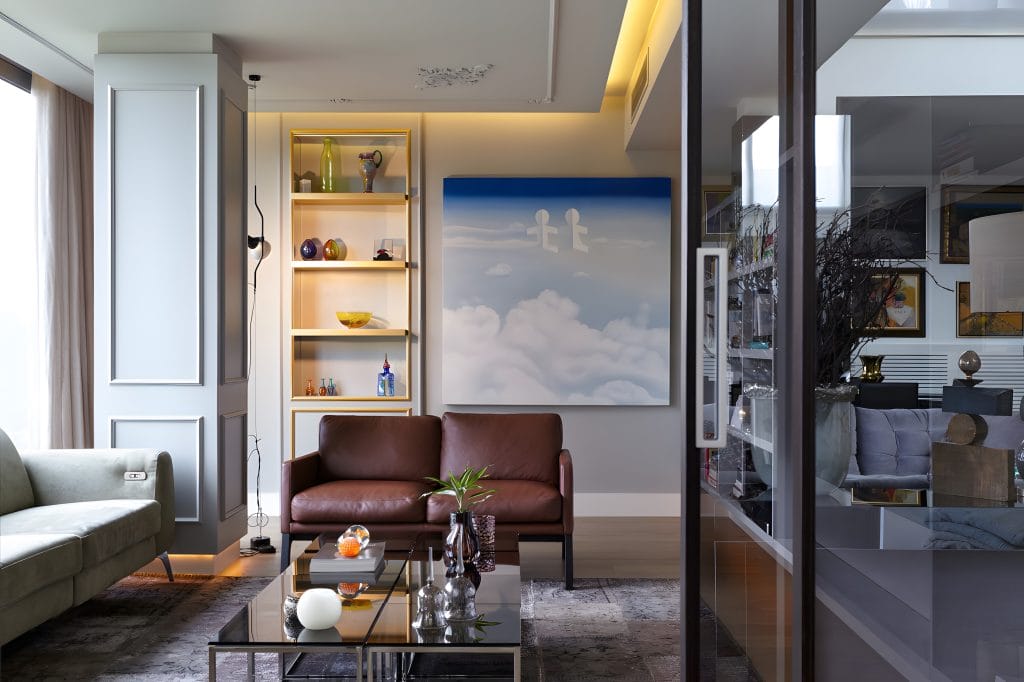
Transitional-style living rooms first gained popularity in the 1950s as a refreshing alternative to the more rigid modernist and mid-century styles. This space needs particular attention, since it’s often where existing or inherited furniture has to accommodate the greatest range of daily activities.
Furniture Layout & Sofa Selection
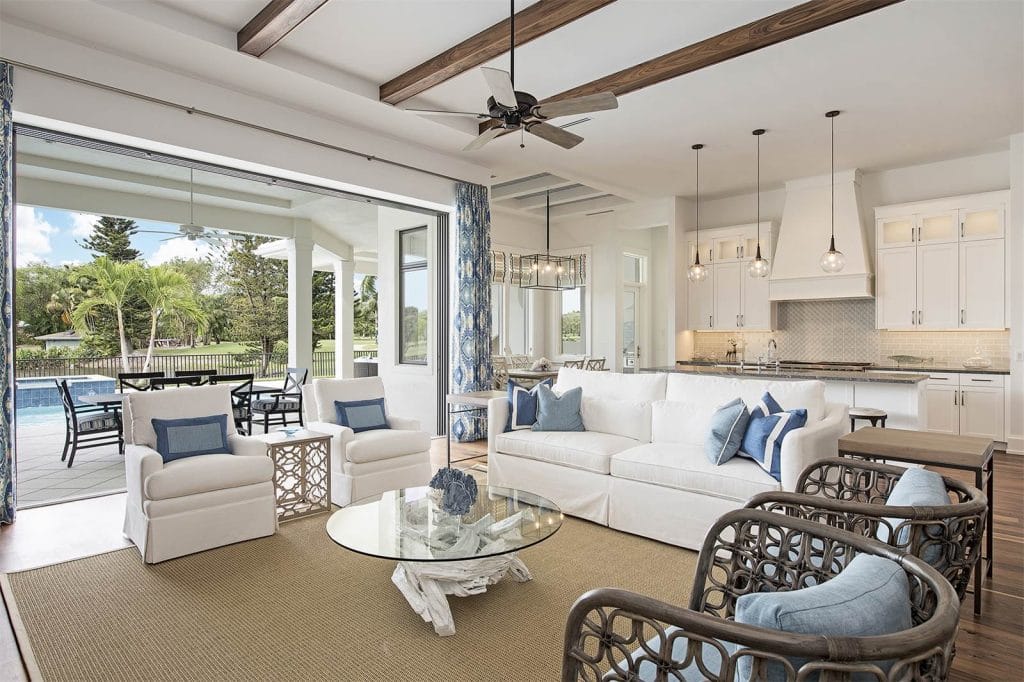
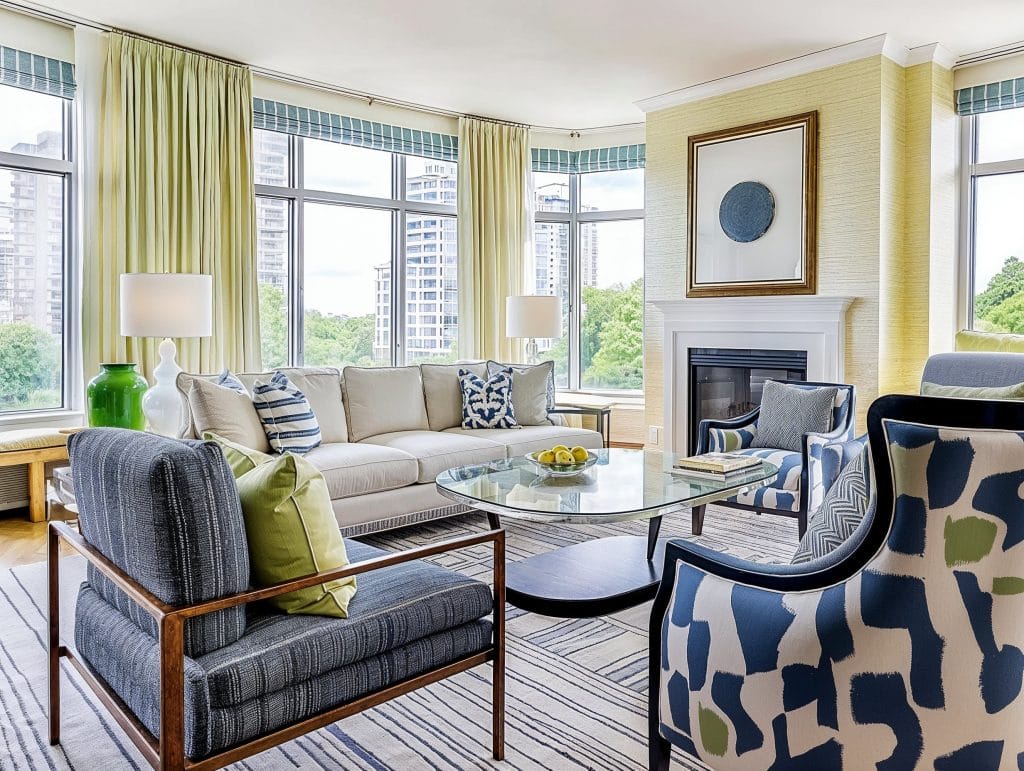
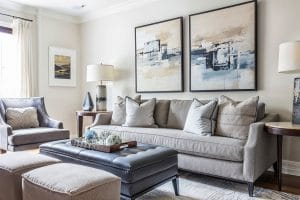
In a transitional living room, the seating group brings the style into focus. Its scale establishes the room’s degree of formality, while the table and surrounding textiles determine how strongly traditional influences come through.
A classic sofa facing two chairs creates a conversational arrangement with a clear center. It also allows the chairs to introduce a different profile, which helps when the sofa is the most traditional piece. Similar seat heights keep the group comfortable to use, even when the frames differ.
A sectional gives the room a more relaxed emphasis. Look for a defined back and arms proportionate to its length; these details preserve the tailored appearance associated with transitional style. Position the return so it marks the seating area while leaving the route to adjoining rooms clear.
In either layout, the fireplace or principal view provides an architectural reference for the group. Furniture can face that feature while turning slightly toward the other seats. Farther from the center, a reading chair with its own lamp creates a second use for a larger room.
Coffee Table & Accent Pieces
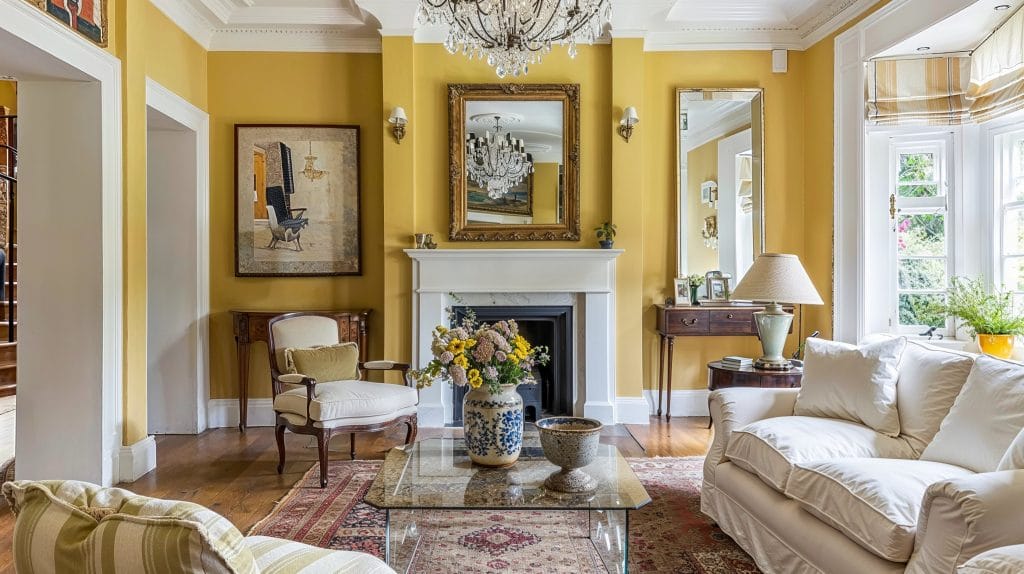
The coffee table is an opportunity to adjust the balance established by the seating. With a traditional sofa, a simple table base introduces a contemporary line at the center of the room. A marble top contributes surface variation; glass allows more of the rug to remain visible beneath it.
Choose its proportions from the seating footprint, leaving enough room to move around it while keeping drinks within reach. Substantial upholstery often benefits from a table with open space beneath the top. Conversely, a solid wood piece can give a group of slender chairs more presence.
Tabletop decoration should leave room for use. A low arrangement keeps conversation sightlines open, and a personal object gives the room a point of interest beyond its furniture. Carrying one finish into a nearby side table helps connect the center to the room’s edges.
Pro Tip: Play it bold with an old-world statement piece by juxtaposing it with something ultra-modern, like a sleek acrylic side table or minimalist artwork nearby. Choose which piece will stand out while the other complements without competing. – Joyce H., lead Decorilla designer
Window Treatments
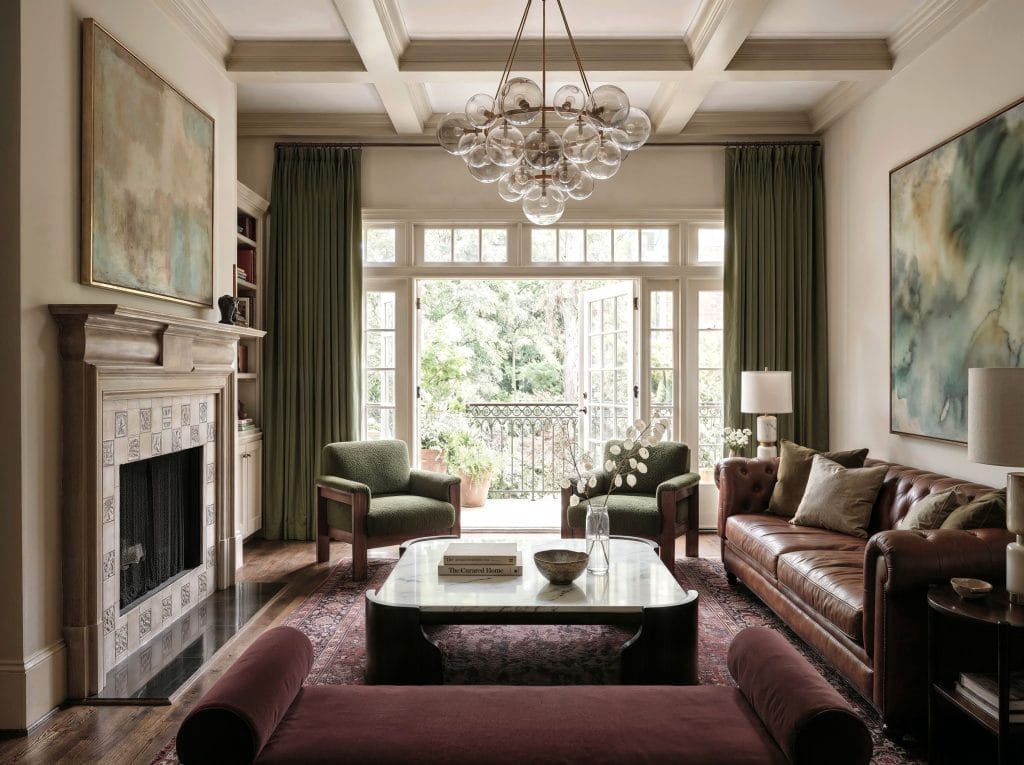
Full-length curtains introduce the vertical folds associated with traditional interiors. Plain fabric keeps the effect restrained, especially around windows with decorative trim. Linen offers texture, while a narrow border provides definition when the curtain color is close to the wall.
Allow the panels to stack beyond the glazing where space permits. For smaller windows or areas crowded by furniture, Roman shades retain a tailored finish with less fabric. Lining should reflect the room’s privacy needs.
Rugs
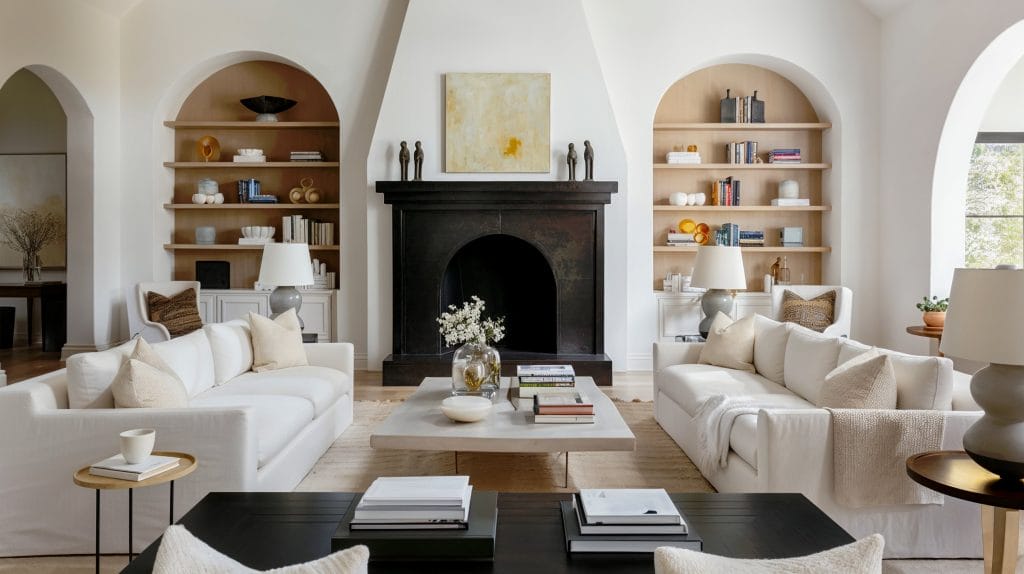
The rug connects the separate furniture profiles across one surface. A neutral ground with a subdued traditional pattern gives simpler upholstery some decorative context. Where furniture already carries detail, tonal texture may be enough.
Its size matters as much as its design: bringing the front legs of the main seats onto the rug helps the group feel settled. Pulling an accent color from the pattern into upholstery also creates continuity across the room.
Pro Tip: Experiment with layering rugs. Place a patterned, thinner rug over a plush neutral carpet and make your floor a standout feature. – Joyce H., lead Decorilla designer
Art in Transitional Rooms
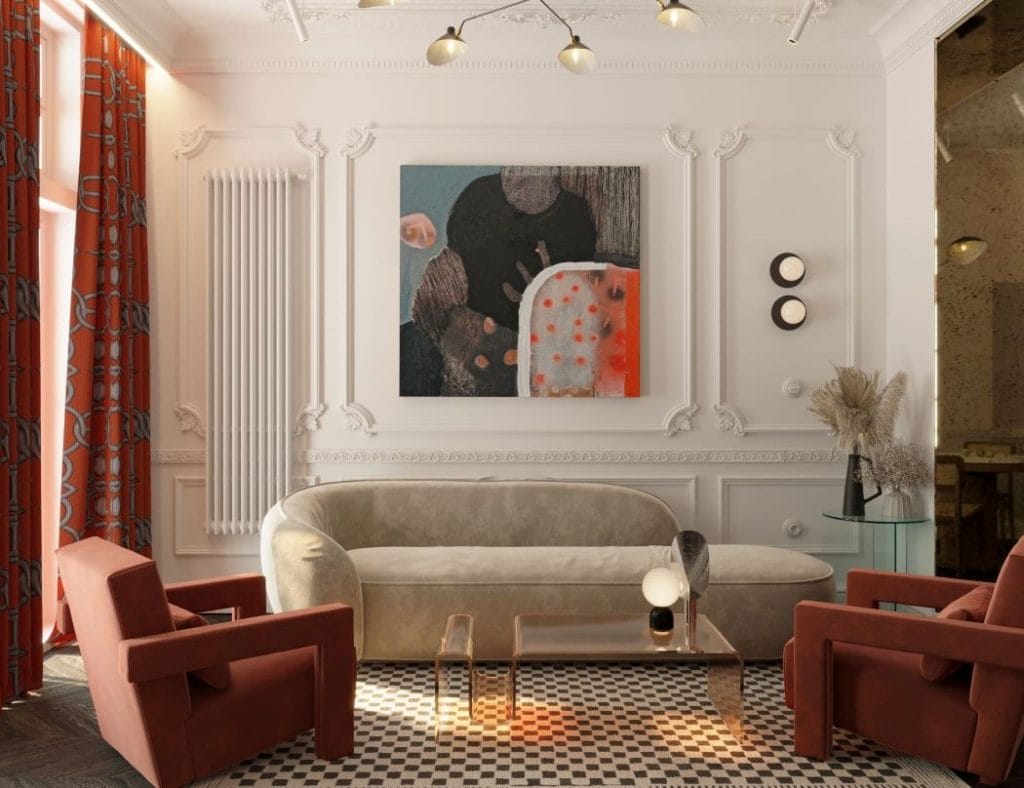
A transitional style home is very focused on accents, and it is the details that conduct a transitional contemporary style interior shift. Choose your favorite contemporary artwork to create a striking focal point. Also, less is more here, so try not to overdo the look, unless you’re intentionally going for a maximalist or more traditional look.
Pro Tip: Consider leaning a large contemporary art piece against the wall or placing it on the floor for a laid-back, gallery-like vibe that disrupts tradition. – Anna T., lead Decorilla designer
Transitional Style in Other Rooms
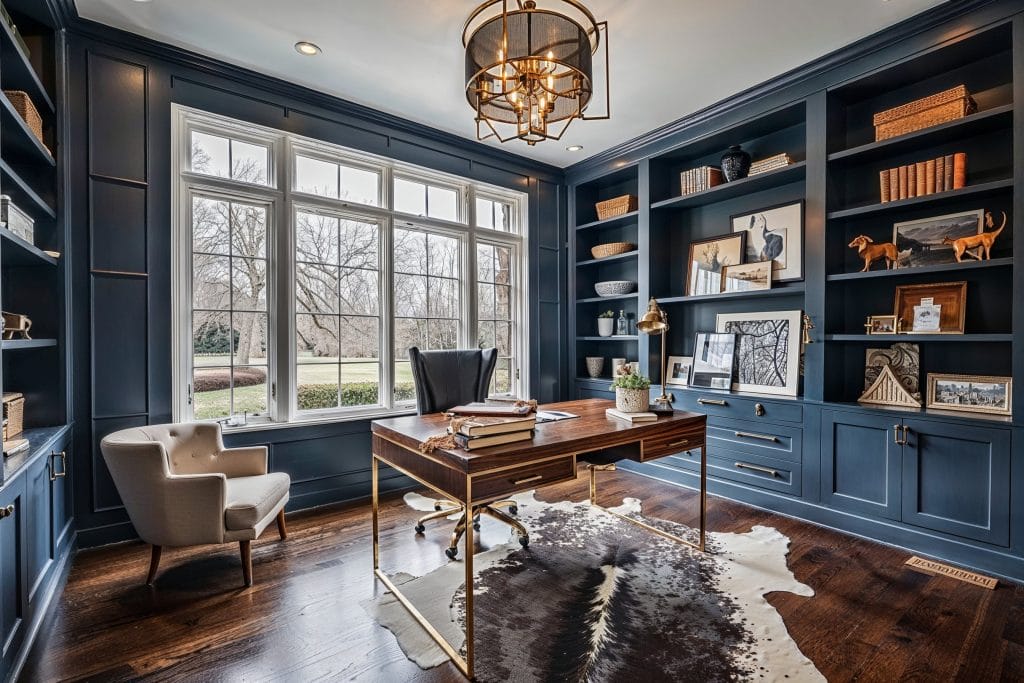
A transitional home can develop as your needs change. Once the larger pieces relate to the architecture, a new fabric or a different light fixture can shift the emphasis. That flexibility makes the style useful when some furnishings are staying, and others will be purchased over time.
Transitional Bedroom
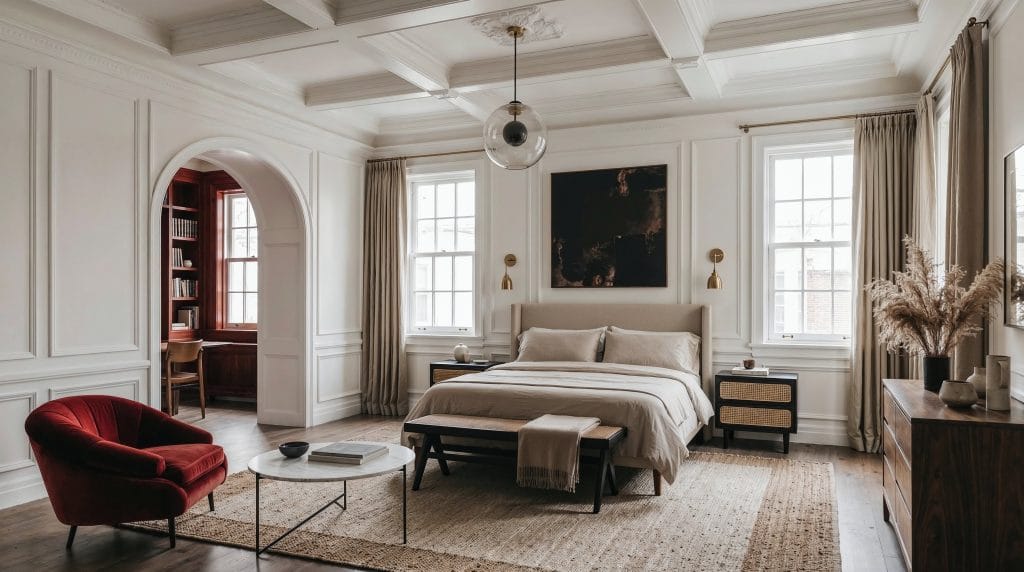
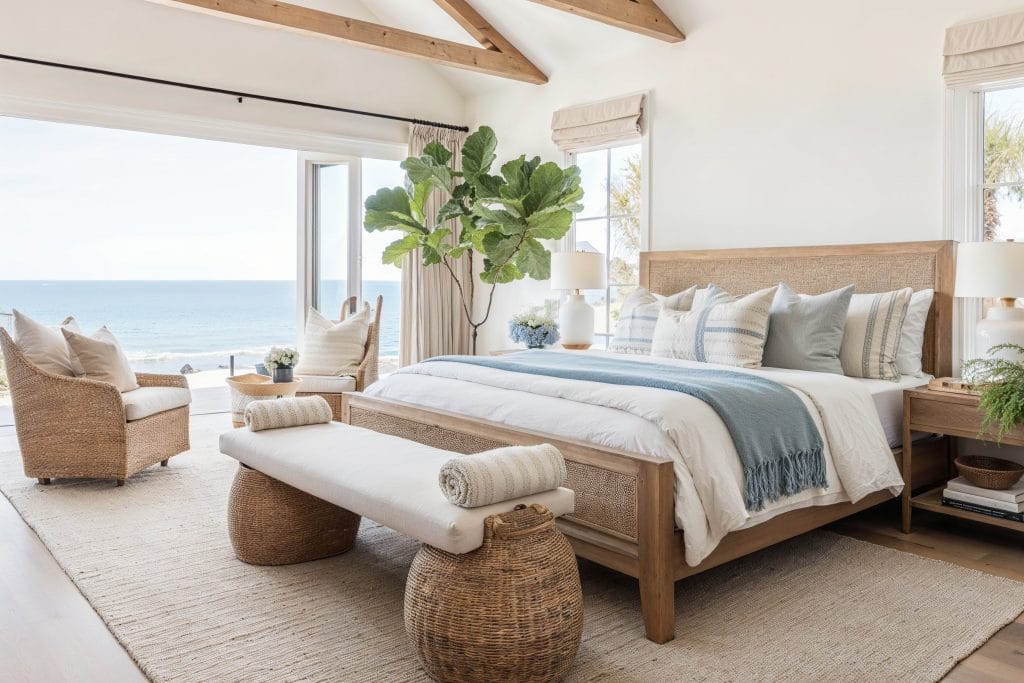
Transitional bedrooms often take their structure from the bed wall. An upholstered headboard establishes the central form, with bedside furniture arranged symmetrically around it. Tufting introduces traditional detail, so simpler bedding lets its pattern remain visible. A folded blanket gives the lower part of the bed some substance.
Elsewhere, wood furniture adds a different surface to the upholstered elements. A dresser can vary from the bedside finishes while sharing their proportions. The hotel influence comes through in coordinated lighting and generous bedding, adapted to the storage needed at home.
Transitional Kitchen
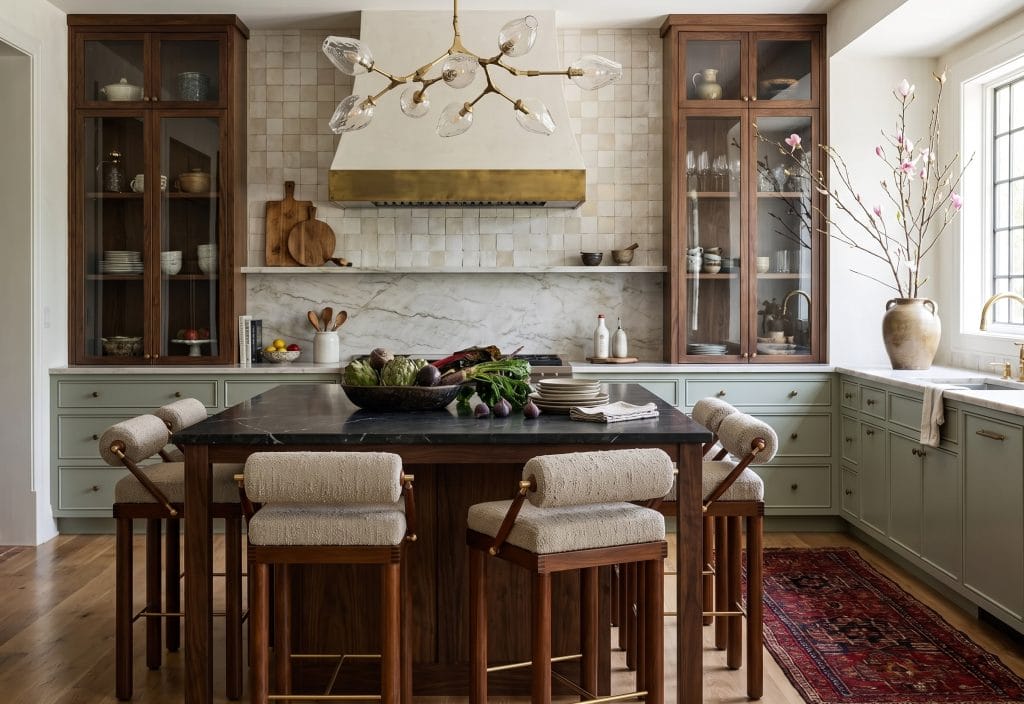
Shaker-style cabinetry gives transitional kitchens a familiar framed construction with relatively little ornament. That makes the door profile compatible with contemporary hardware and straightforward countertop edges. Quartz is one option; subtle veining leaves more room for pattern in the backsplash, while pronounced veining needs consideration across adjoining surfaces.
Mixed metals work best when their placement follows a consistent logic. Cabinet pulls might share one finish, while pendants introduce another across the island. A wood island or bank of cabinetry can bring material variation into a kitchen dominated by painted surfaces.
Transitional Dining Room
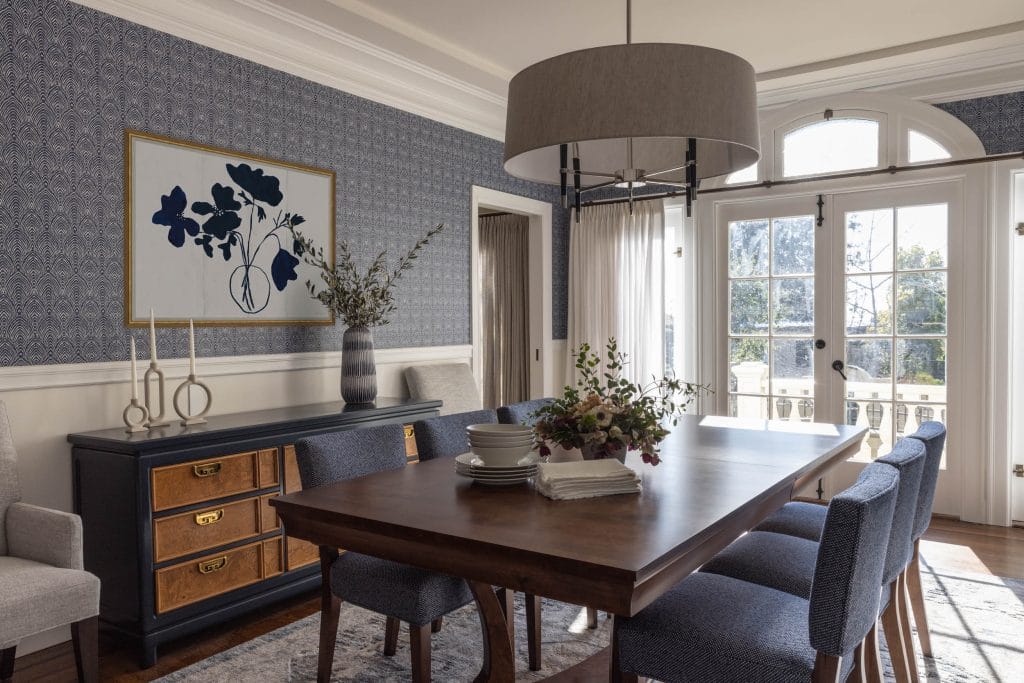
The dining table usually carries the greatest visual weight, which makes it a useful starting point for a transitional makeover. Upholstered chairs soften a substantial wood table and allow a simpler profile around its edge. Round or rectangular, the table should leave enough space for seated guests and movement behind them.
Above it, a contemporary chandelier can shift the room’s emphasis while traditional furniture remains. A sideboard then gives serving pieces a practical home. Its top offers space for a smaller display, leaving the dining surface available for meals.
How to Achieve the Transitional Look on Any Budget
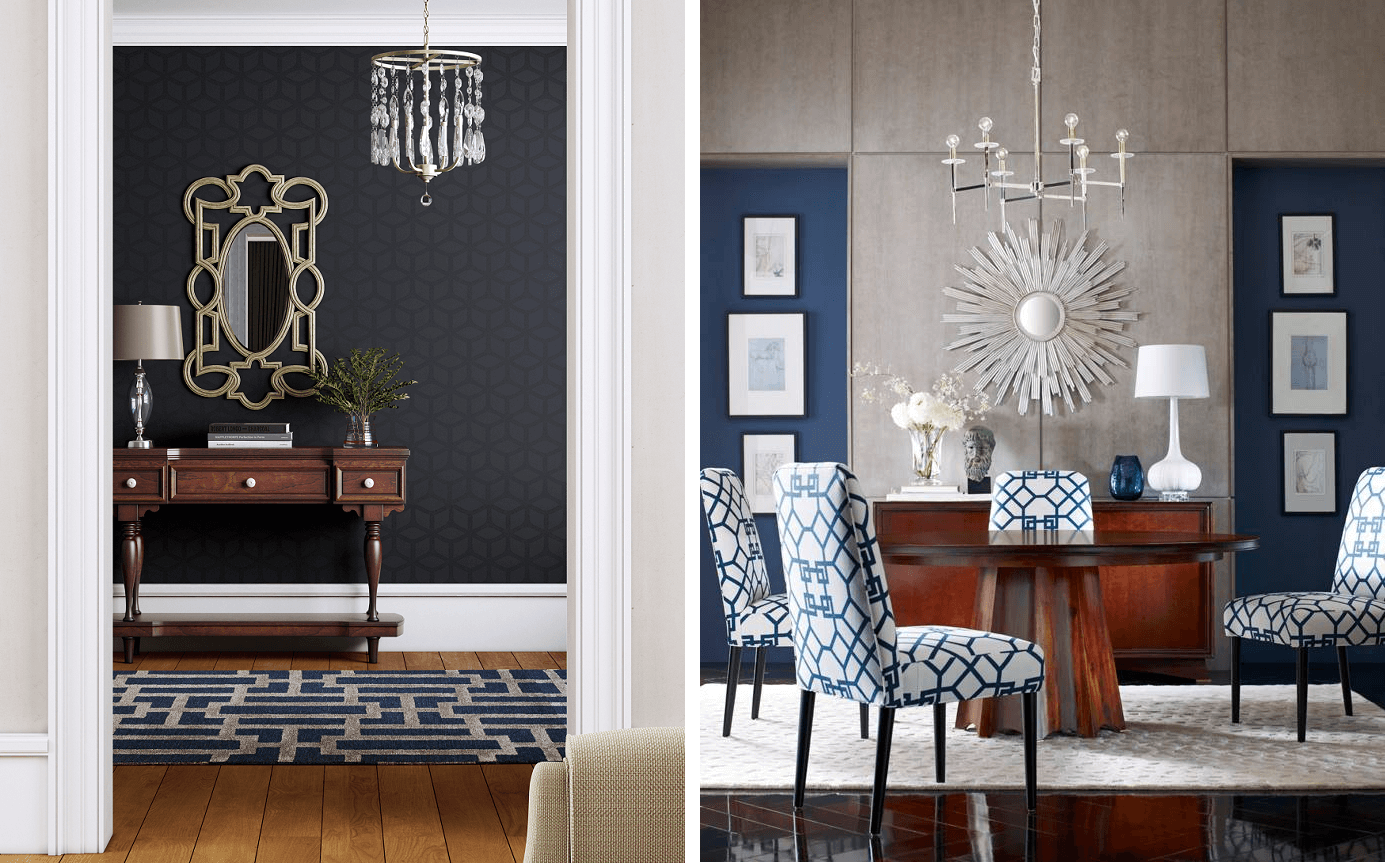
The most useful first step in a transitional makeover is identifying what makes the current room feel too traditional or too contemporary for your taste. That diagnosis determines which change will have an effect. A strongly patterned rug occupies far more of the view than a cushion, so replacing it may shift the room further than several small purchases.
Start with an edit, moving accessories aside to see the main furnishings clearly. Then direct the budget toward the mismatch: updated lighting can change the emphasis over traditional furniture, while textured fabric can soften an austere seating group. Cushion covers are useful when the larger elements already work together.
For bigger purchases, prioritize seating used every day. Check construction and upholstery care before spending on decorative extras. An existing chair may justify reupholstery if its frame is sound and its proportions already suit the room.
Transitional Interior Design FAQ
The key is moderation. Avoid leaning too heavily into one style over the other. Use clean-lined, contemporary pieces alongside a few traditional elements, like a vintage mirror or a classic armchair, to keep the look cohesive yet interesting.
While neutrals are the foundation of transitional design, you can absolutely incorporate bold colors. Use them strategically—through accessories like cushions, artwork, or a statement piece of furniture—to maintain the sophisticated balance between old and new.
Opt for modern, statement-making light fixtures that contrast traditional elements in the room. Layering is essential, so include a mix of ambient, task, and accent lighting, and ensure the fixtures blend sleek contemporary finishes with more classic forms.
Find the right balance for your transitional design
Get matched with a designer who can develop transitional interior design ideas around your real rooms and the pieces you want to keep. A considered plan will show how those choices work together before you commit to the larger purchases. Schedule a Free Interior Design Consultation for expert assistance today!


Comments
3 Comments
Most Voted
7 years ago
[…] if you like traditional design but you feel it’s kind of too much for your home, transitional interior design may be the solution for you. By pairing elements of a traditional style with more modern […]
7 years ago
[…] the space and – as a consequence – was just never using it. But Decorilla came to rescue with a transitional online living room design that gave this living room a whole new […]
7 years ago
[…] I love the Modern bar stools mixed just across from the Traditional table lamp. […]
[…] if you like traditional design but you feel it’s kind of too much for your home, transitional interior design may be the solution for you. By pairing elements of a traditional style with more modern […]
[…] the space and – as a consequence – was just never using it. But Decorilla came to rescue with a transitional online living room design that gave this living room a whole new […]
[…] I love the Modern bar stools mixed just across from the Traditional table lamp. […]