


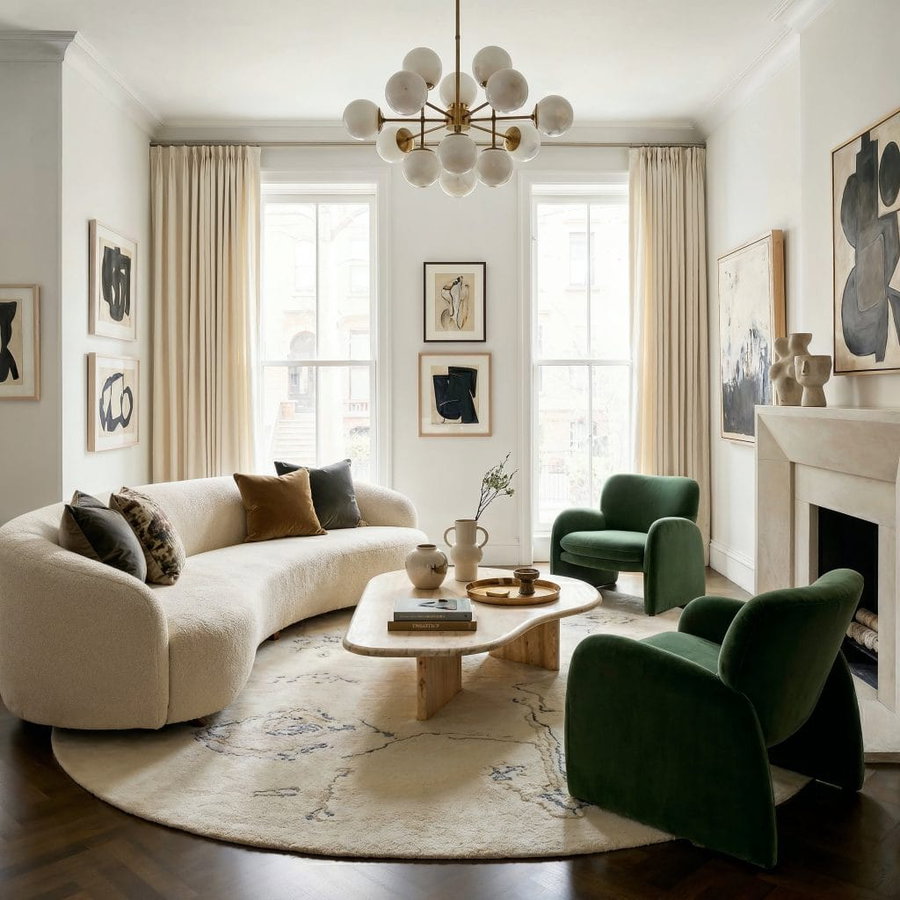
If there’s one place at home where we all spend a lot of time is the living room. Watching TV, hanging out with family, entertaining…it all happens in the living room! This level of daily use is also part of why it resists quick fixes. On the other hand, most questions about how to decorate a living room come down to sequence. Which means it might be way easier than you think.
Designers work from the bones of the room outward, settling layout and large pieces before anything decorative takes place. This guide follows the same order, starting with what you already own and ending at the styling layer most people rush. Keep reading for our top living room design ideas!
How to Decorate a Living Room: Designer Secrets to Know
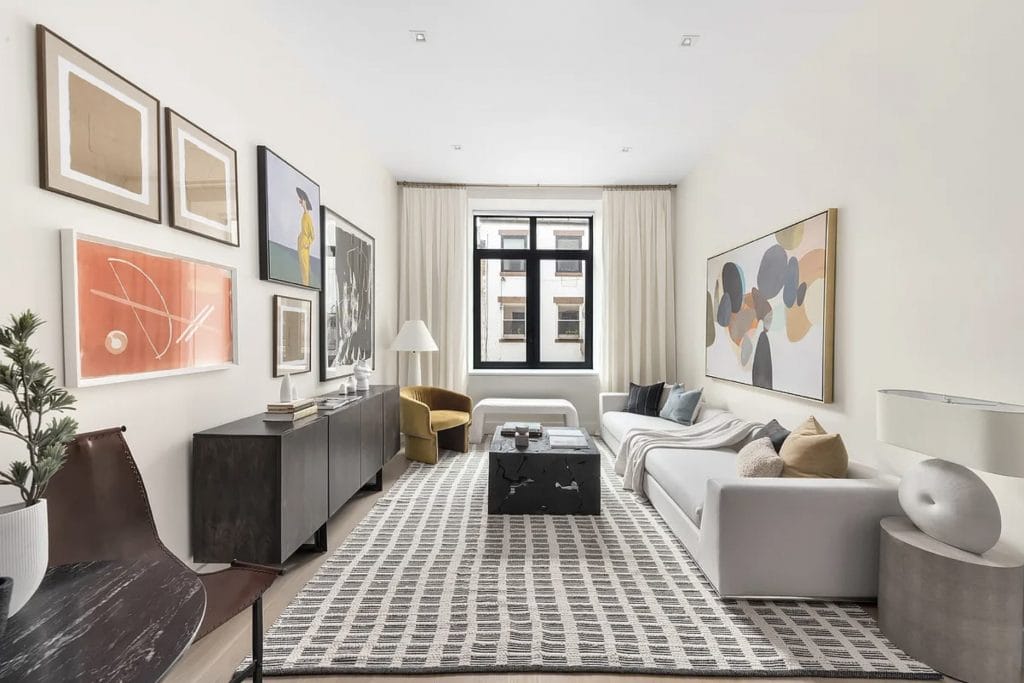
- Buy the sofa and rug first. The reason: they set the scale and palette that every later choice has to answer to.
- Size the rug so the front legs of every seat rest on it. The reason: a rug that floats in the center makes the whole room read smaller.
- Hang art to the furniture beneath it, with the center of the piece around 57 to 60 inches from the floor. The reason: hung higher, art can drift up the wall on its own.
- Pull seating in off the walls. The reason: a conversation area works when people can talk at a normal volume, which usually means seats no more than eight feet apart.
- Layer light at several heights. The reason: a ceiling fixture covers general brightness, while table and floor lamps add mood and shadow.
Still deciding which direction to take your living room? Take our Free Interior Design Style Quiz to pin down your style before you buy anything.
1. Start With What You Have
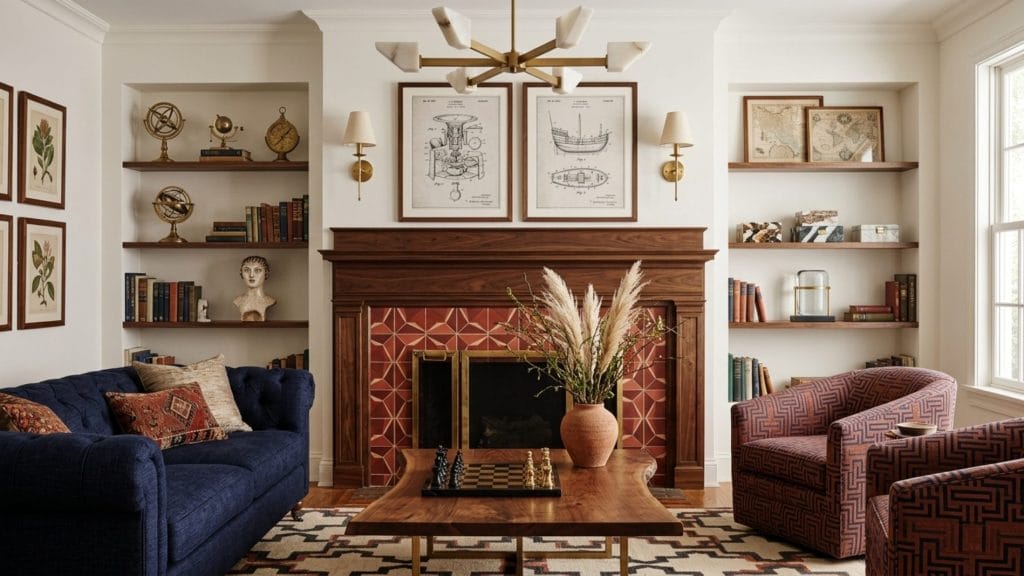
Unless you’re decorating your very first home (and if this is the case, congratulations!), you probably have some pieces of furniture or accessories you want to keep in your new living room decor. Repurposing is always a great idea; it’s sustainable and also makes design more affordable. Look at the large pieces first, since a sofa or rug in good condition sets a constraint worth designing around. Assess each piece on two counts: its condition and its scale relative to the room. A well-built sofa in a dated fabric, for instance, is often worth reupholstering.
2. Think About Function Before Decorating Your Living Room
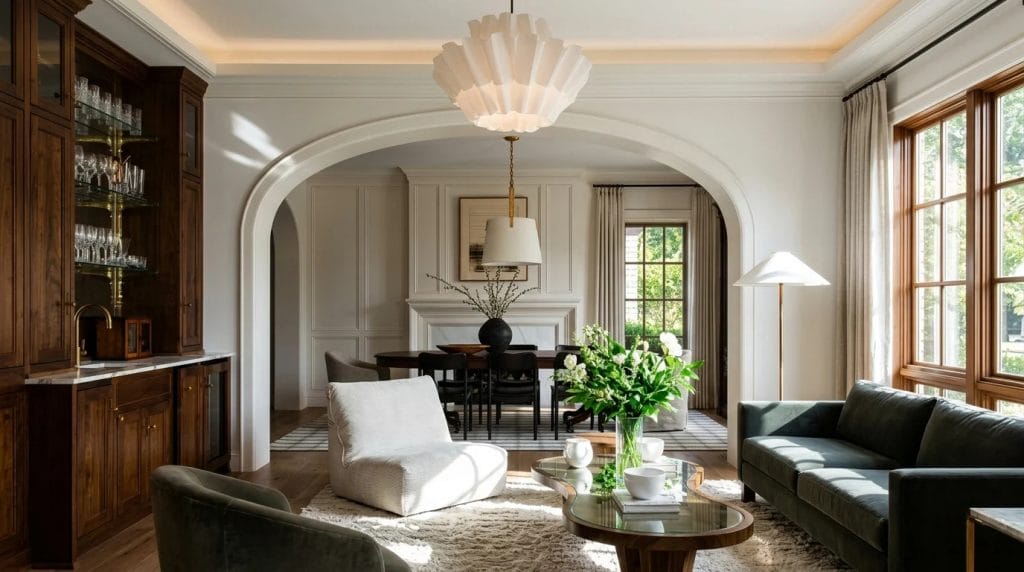
Do you have plenty of friends over all the time? Or are you and your significant other the only people in the house? Do your kids do their homework in the living room? And do you have pets? The way a room gets used should decide its layout before any furniture is chosen.
Count how many people typically sit there at once, and note whether your beautiful living room doubles as a workspace or a play space. A household that entertains often needs seating that faces inward for conversation, while a room built around the television wants sightlines that keep the screen visible from every seat. Traffic matters too. Keep at least three feet of clear path through the main walkway so people can move through comfortably.
3. Build the Color Palette Around One Fixed Element
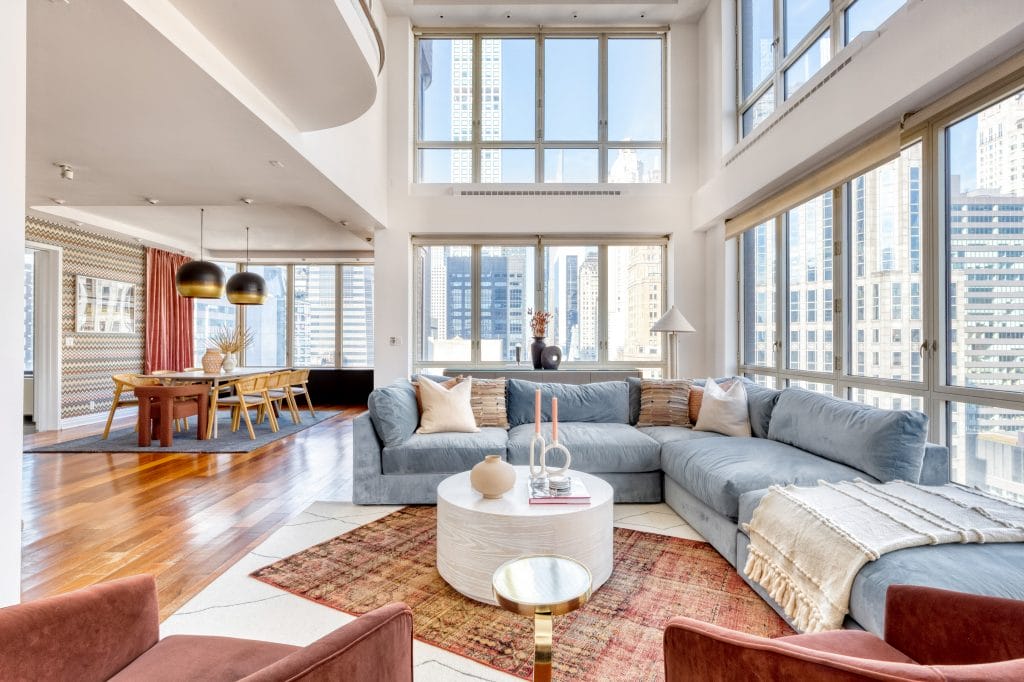
A palette holds together when it grows out of something already present, like a rug you are keeping or a large piece of art. From there, a rough 60-30-10 ratio keeps the balance right. What that means in practice: one tone should dominate the walls and largest pieces, with a second color supporting it across accent seating or curtains. The boldest shade belongs in small doses, carried by cushions and a few smaller objects. Pay attention to undertone, since two grays that look similar on a chip can clash on the wall when one leans blue, and the other leans brown. Test any paint color in the actual room across a full day, because north light and afternoon sun pull it in different directions.
And if choosing a color palette gets overwhelming, you can always enlist some interior design help as well.
4. Define Zones Within the Room
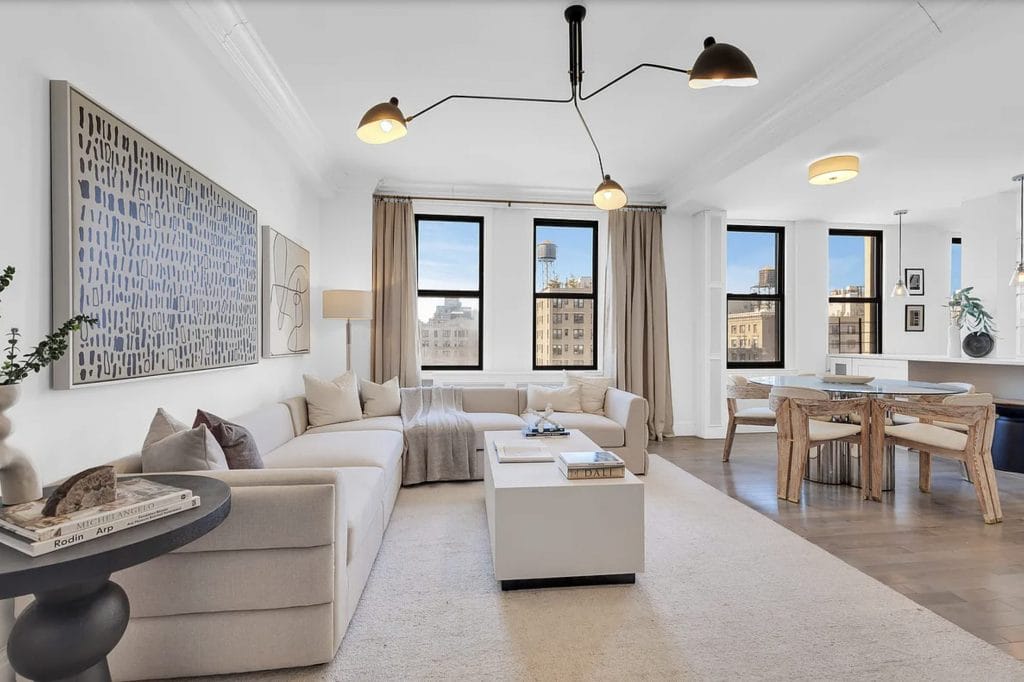
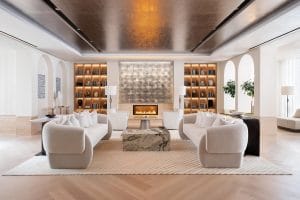
Most living rooms hold more than one activity, and each requires a defined zone. The core is, of course, the conversation area. Seating there should be arranged close enough for easy talk, usually within about eight feet. A rug marks where this zone begins and ends, so size it to reach under the main pieces. Other zones follow the same logic. A pair of chairs and a small table by the window make a reading corner; a desk and a bookshelf signal work. In an open-plan space, the back of the sofa often does the work of a wall between the seating and the dining side, so you can pair it with a console to mark the walkway clearly.
5. Get the Scale Right
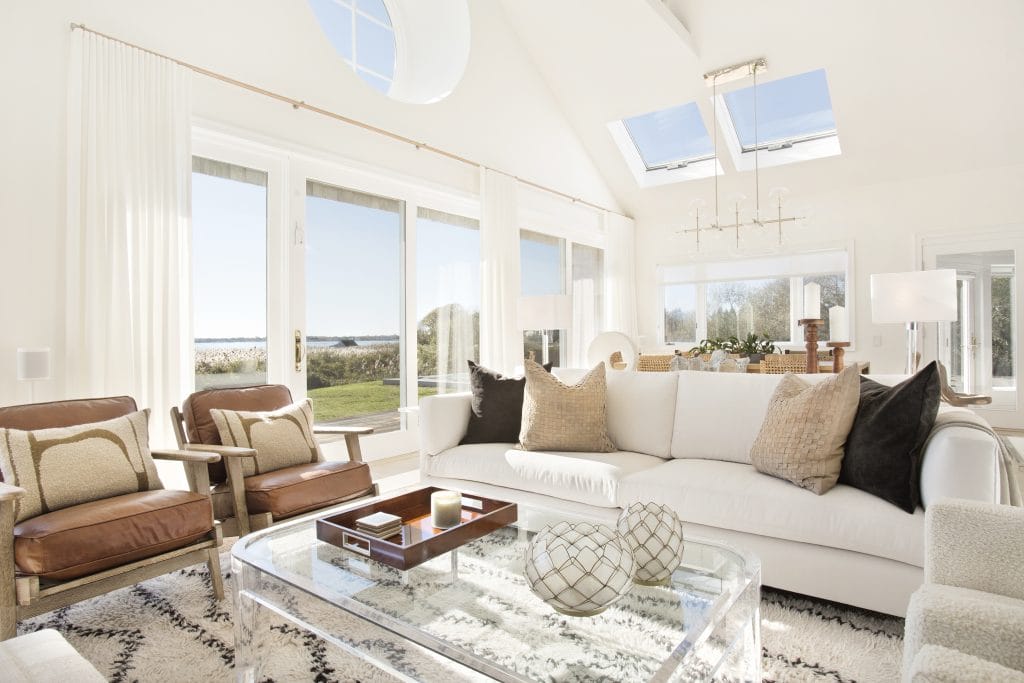
Now, this might be a tricky one, as our clients often mark it as such. Scale is where beginner rooms most often go wrong, usually by choosing pieces a size too small. A sofa dwarfed by the wall behind it makes the whole room feel unresolved, and a rug that only touches the front edge of the seating has the same shrinking effect.
Some working proportions help here. When a piece feels slightly too big in the store, it is usually the right size for the room. A coffee table should run about two-thirds the length of the sofa and sit within easy reach of the seats. Artwork above a sofa looks right when it spans roughly two-thirds to three-quarters of the sofa’s width, hung so its center falls around eye level.
6. Invest Where It Takes the Most Wear
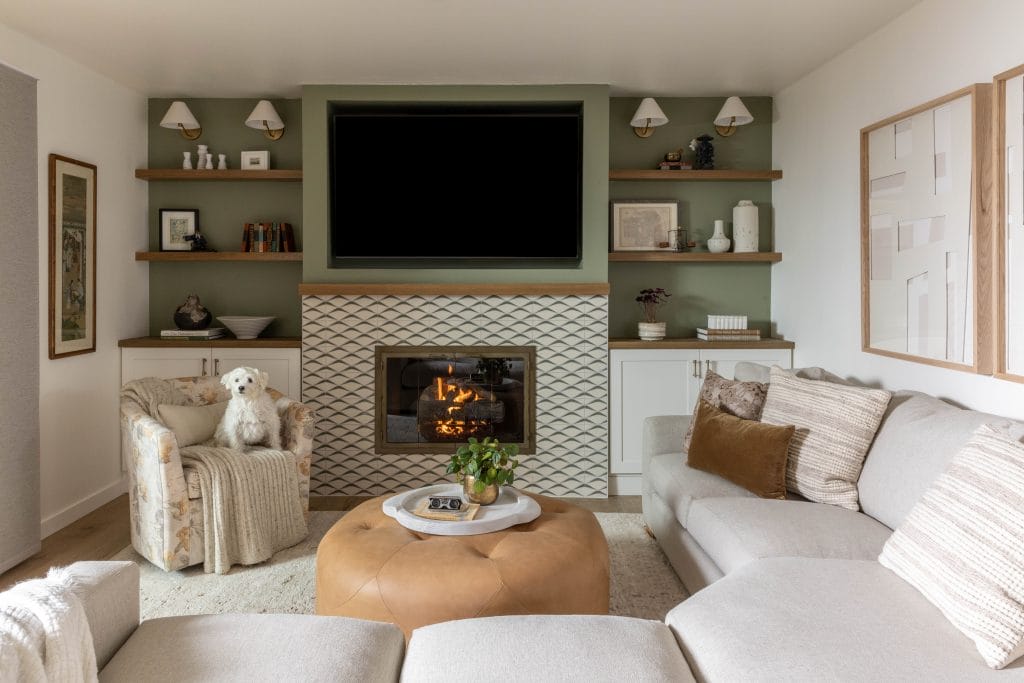
Living room makeover budget goes furthest when it is weighted toward the pieces that get the most use and are the hardest to replace. The sofa earns the largest share, since it takes daily wear, yet a good frame can last for decades. Seating and a quality rug come next in priority. These are the bones of the room, and they justify spending more for construction that holds up.
Choosing classic shapes and durable materials for the expensive pieces keeps them in rotation long after a particular color has fallen out of favor. Conversely, trend-driven decorating ideas and items belong at the other end of the budget, where cushions and seasonal accessories let you shift the look cheaply as your taste moves.
7. Light It Up. In Layers.
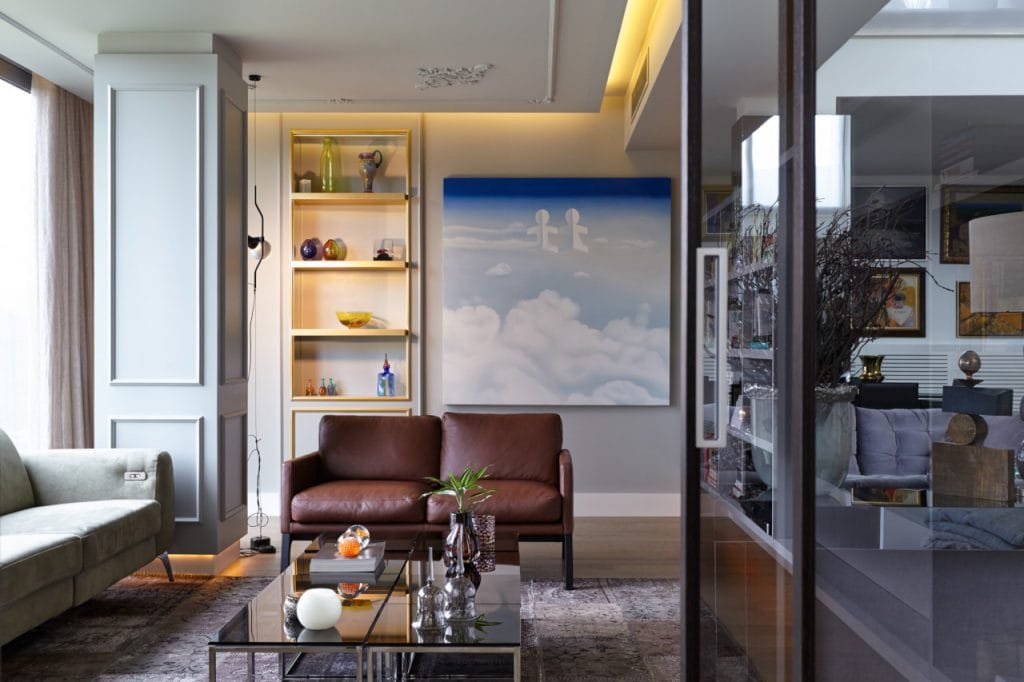
A single ceiling fixture leaves a room flat and evenly lit, which is why designers build light level by level. Each layer does a different job:
- Ambient light sets overall brightness, usually a central fixture on a dimmer.
- Task light serves a specific activity, like a floor lamp angled over a reading chair.
- Accent light draws the eye to art or a textured wall.
- Decorative fixtures, like a sculptural pendant, work as objects in their own right.
Spread these sources around the room at different heights so the light feels even from wherever you sit. Keep the color temperature warm, around 2700K, for the tone most people associate with a relaxed living room. Put every fixture you can on a dimmer, as it will let you shift the room’s mood and function in an instant.
8. Accessorize & Style Your Living Room
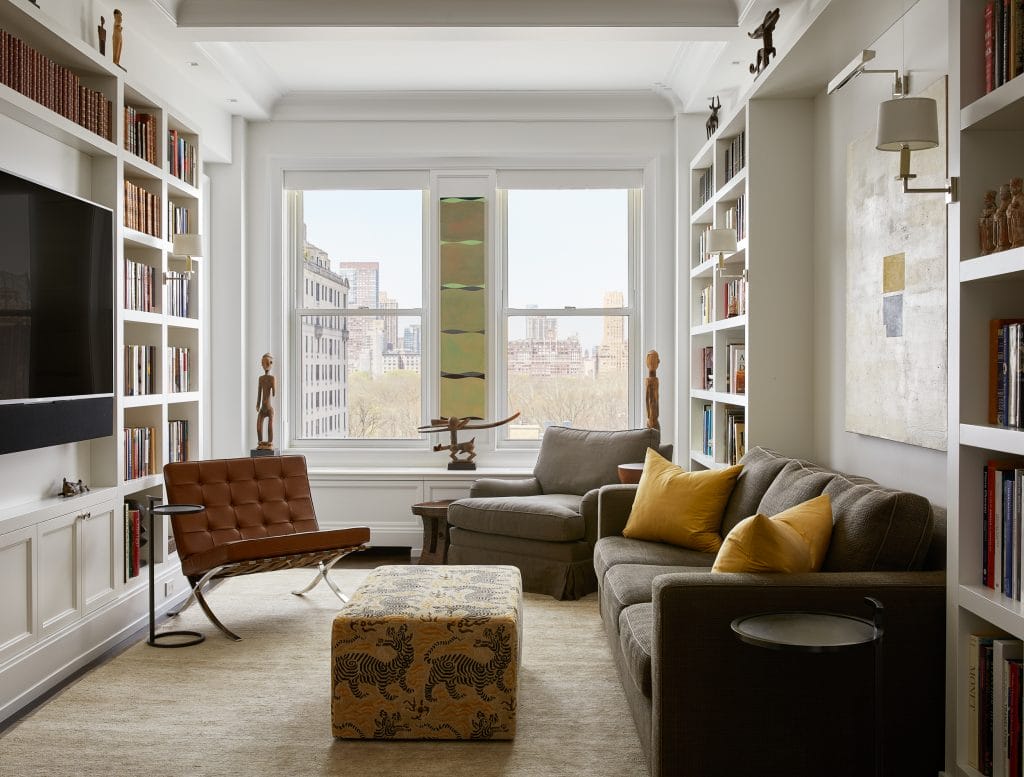
The finishing layer is what makes a room feel lived in, and it works best once everything larger is settled. What’s most important to know here is that good styling rewards restraint and a few reliable habits.
Vary height when you group objects on a shelf or table, letting a tall stem or lamp play against lower stacked books. Group in odd numbers, which the eye reads as more natural, but leave space around a grouping so each piece registers. On the sofa, choose feather or down inserts sized an inch larger than the cover for a full, soft look. Swapping these small elements is also the cheapest way to refresh a room when the season or your mood changes.
Decorate a Living Room FAQs
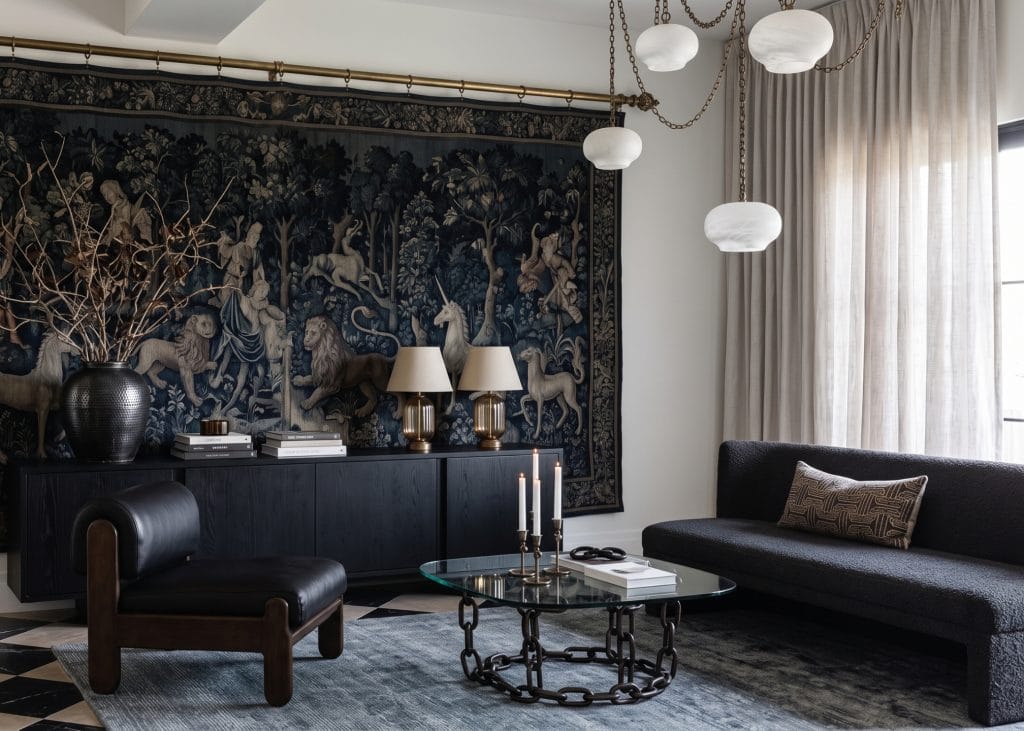
Start with what you already own and the way you use the room. Identify the large pieces worth keeping, then settle the layout around how the space actually functions before you shop for anything new.
The sofa and rug. They set the scale and palette that every other piece has to work with, and they take the most daily wear, so they justify the largest part of the budget.
Put your money into the pieces that are hard to replace, and buy classic shapes that will not date. Keep the budget for trend-led items low, since accessories like cushions and art can be swapped cheaply as your taste shifts. Repurposing what you already own stretches the budget furthest.
Work from the largest, most permanent decisions toward the smallest. Layout and large furniture come first. Rugs and lighting follow, then paint and window treatments, with styling saved for last. Following that sequence keeps early choices from being undone by later ones.
Want help decorating your living room like a pro?
Work with a top designer and get a space you’re guaranteed to love. Schedule a Free Interior Design Consultation with Decorilla experts today!


Comments
1 Comment
Most Voted
6 years ago
[…] If there’s one place at home where we all spend a lot of time is the living room. Watching TV, hanging out with family, entertaining…it all happens in the living room! It goes without saying that getting your living room decor right is essential, and we’re here to answer to the big dilemma: “where should… Read more » […]
[…] If there’s one place at home where we all spend a lot of time is the living room. Watching TV, hanging out with family, entertaining…it all happens in the living room! It goes without saying that getting your living room decor right is essential, and we’re here to answer to the big dilemma: “where should… Read more » […]