


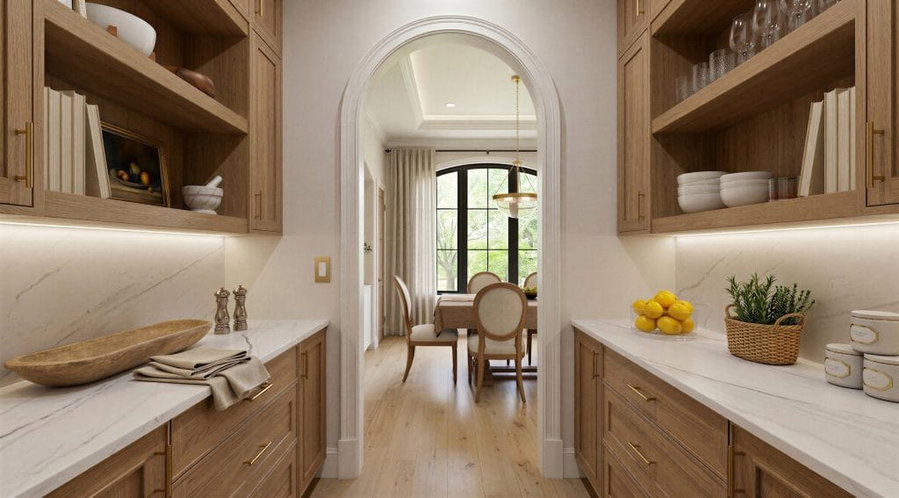
How much design attention should utility rooms really get in a whole-home renovation? In this phase of the project, our designer extended the kitchen’s oak cabinetry and brass detailing into every working space for a seamless sense of continuity. The butler’s pantry mirrors the kitchen almost exactly, while the scullery and mudroom reinterpret the same palette to meet the demands of daily use.
The Challenge: Three Utility Rooms
This third phase of the project addressed the home’s utility rooms—spaces the client’s brief identified as secondary in budget priority. The designer had already locked in the transitional vocabulary across the first floor and primary suite. These utility spaces needed to function harder than the main rooms while still reading as part of the same house. Among the specific interior design challenges Marine needed to address:
- Design a scullery adjacent to the kitchen that supports daily cooking prep and cleanup
- Source tiles for all wet utility areas, preferably from Sherwin-Williams
- Plan a mudroom layout connecting the garage entry to the kitchen hallway
- Coordinate utility room design finishes that stay consistent with the first floor’s material palette at a lower price point
- Ensure the butler’s pantry cabinetry works at the standard 24-inch depth on both sides
- Specify elevations and finishes detailed enough for the builder to execute from the documentation package
Pro Tip: Wondering what could be the right aesthetics for your own utility rooms? Try our Free Interior Design Style Quiz to discover your ideal style today!
Design Inspiration: Stylish Yet Functional Utility Spaces
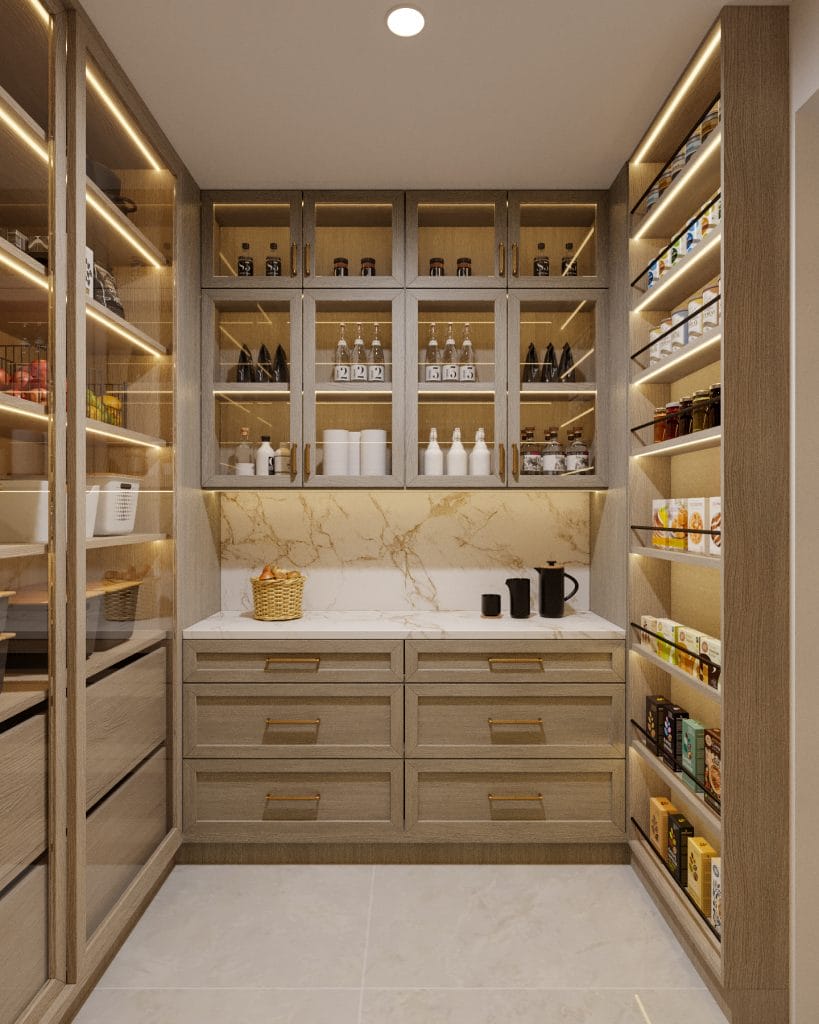
The client’s saved utility room references focused on pantries and sculleries that performed like professional prep kitchens. LED-lit shelving in warm oak appeared across most of the images, paired with glass-front upper cabinets and marble work surfaces. Several saved examples also included wire produce baskets built into base cabinetry and divided drawer systems for dry goods. These utility spaces functioned as extensions of the main kitchen, and the client’s selections suggested they wanted the same material quality in rooms that guests might never see.
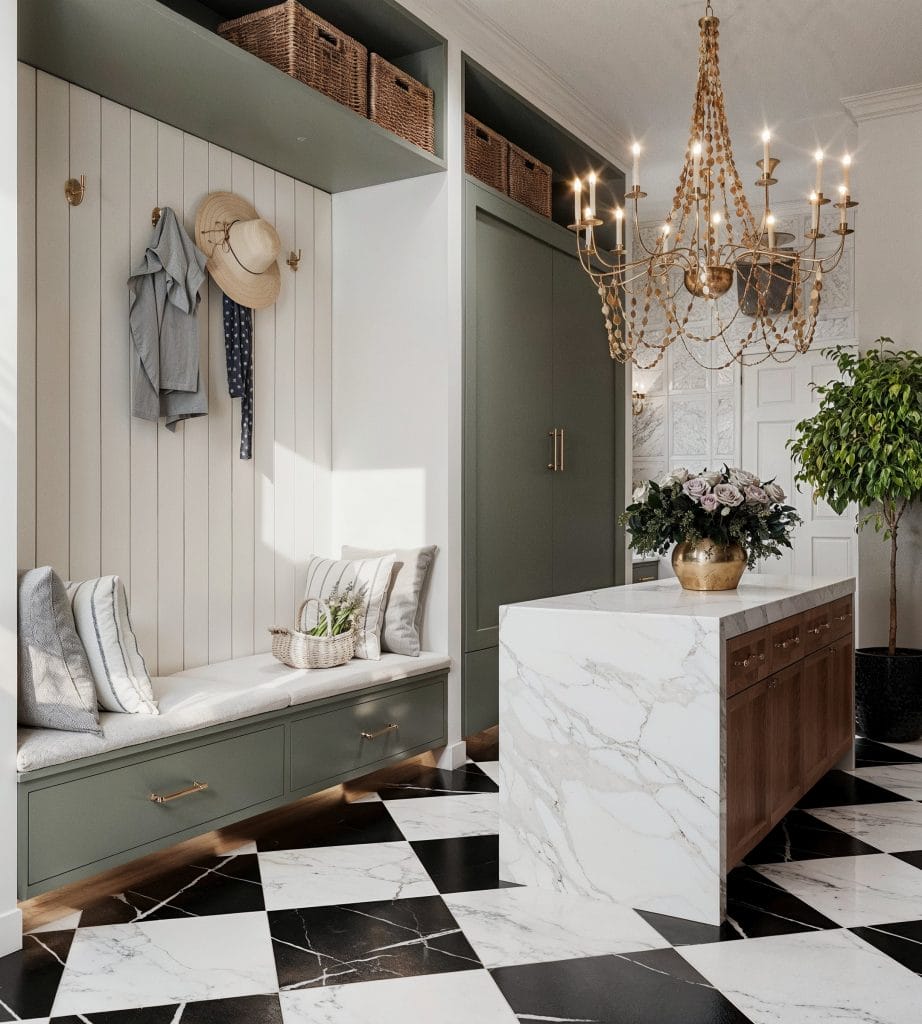
Expectedly, entry hall and mudroom ideas also remained close to the neutral scheme established elsewhere in the house. Built-in bench nooks with slatted wood back panels and flanking storage cabinets showed up repeatedly. Cream-painted millwork framed the oak interiors, matching the kitchen’s two-tone cabinetry approach. Open cubby systems for baskets replaced traditional closed doors, prioritizing speed of access over concealment.
Initial Concepts: Finding the Right Designer
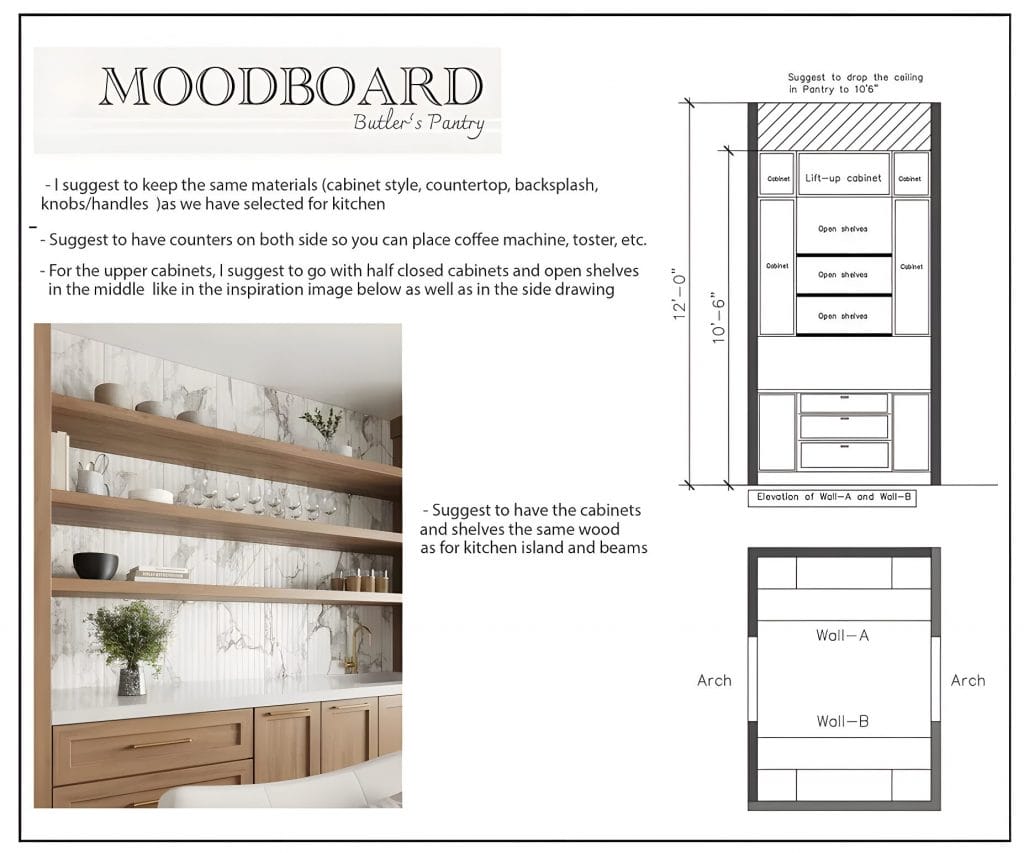
Decorilla typically presents two designer concepts for each project phase. Since Marine H. had already established the design language across the first floor and primary suite, the client continued with her for the utility rooms.
Marine’s butler’s pantry moodboard proposed matching the kitchen’s materials exactly, with the same cabinet style, countertop, backsplash, and hardware. She suggested dropping the ceiling to 10’6″ and running counters on both sides for appliance staging. The internal organization ideas featured a mix of closed cabinets, a lift-up cabinet, and open shelving, all in the same oak used on the kitchen island.
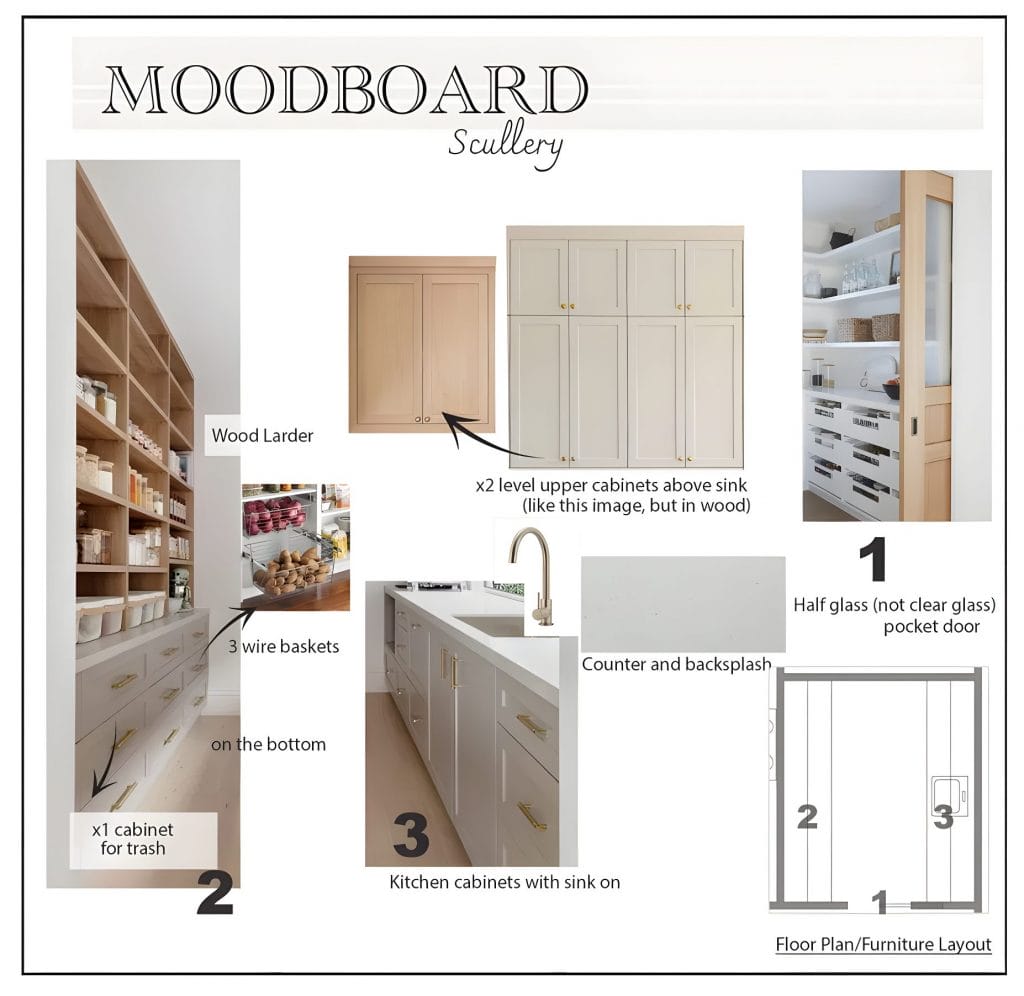
For the scullery, Marine planned a more utilitarian layout behind a half-glass pocket door. One wall held a full wood larder with open shelving and wire produce baskets at the bottom, plus a dedicated trash cabinet. The opposite wall positioned kitchen-matched cabinets with a sink and two-level uppers. Brass hardware carried through from the main kitchen. The pocket door’s frosted glass kept the scullery visually connected to the hallway while concealing the working mess inside.
Transitional Home Interior Design Series
This whole-home design project moved through several phases, beginning with the open plan interior of the living area. Each phase built on the same material and spatial logic established on the first floor, carrying finishes and proportions forward as new rooms came online.
- Transitional Open Floor Plan Interior Design
- Elegant Primary Suite Design
- Welcoming Guest Suite Design
- Covered Lanai and Open Terrace Design – Coming Soon!
Results Revealed: Utility Rooms With Character
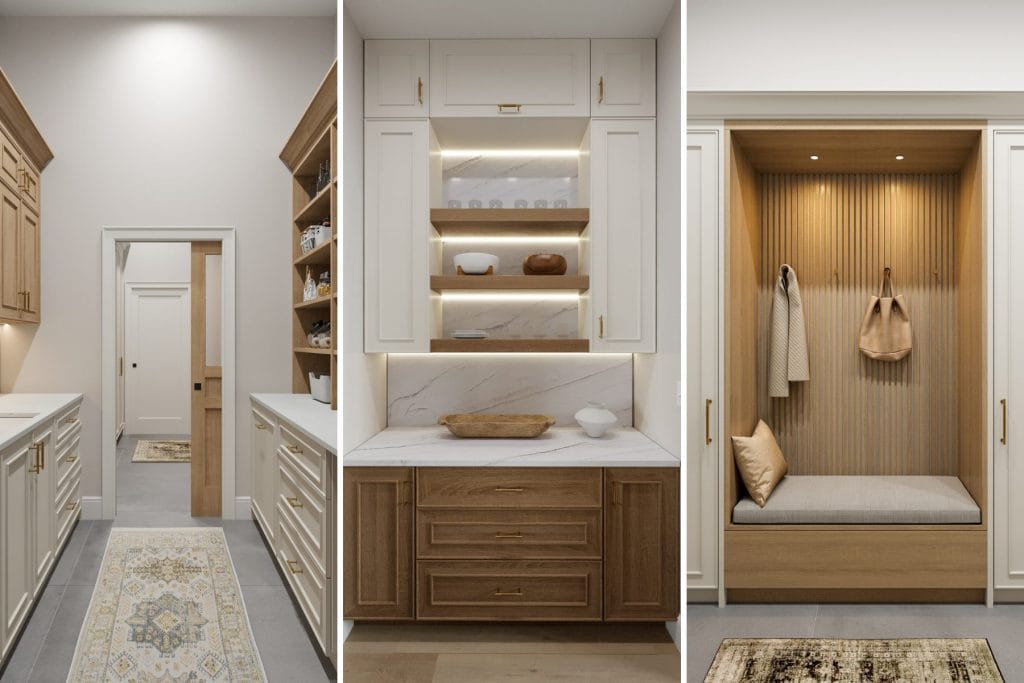
Marine’s utility room design extended the previously established transitional language into spaces that prioritize function. Each room received its own material emphasis, calibrated to how hard the surfaces would work. Cabinet profiles and brass hardware stayed consistent with the main living areas, while finishes shifted to match each room’s practical demands. The result is a set of utility spaces that feel genuinely connected to the rest of the house.
The Scullery Interior
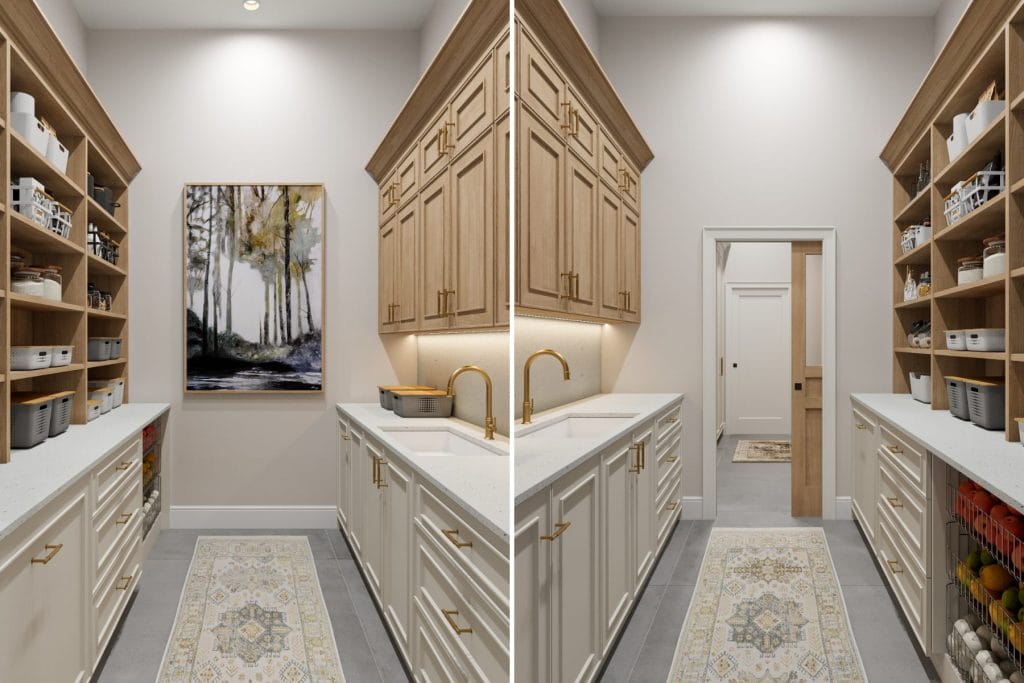
A round of consultation followed the initial proposal. Marine submitted revision renderings for the scullery during the final documentation phase, and the client approved them promptly.
This design occupies a narrow galley footprint adjacent to the kitchen, accessed through the half-glass pocket door specified in her moodboard. The room runs counters on both sides at standard 24-inch depth, a dimension the client verified with Marine during the build phase. Gray tile covers the floor, consistent with all wet utility spaces in the house.
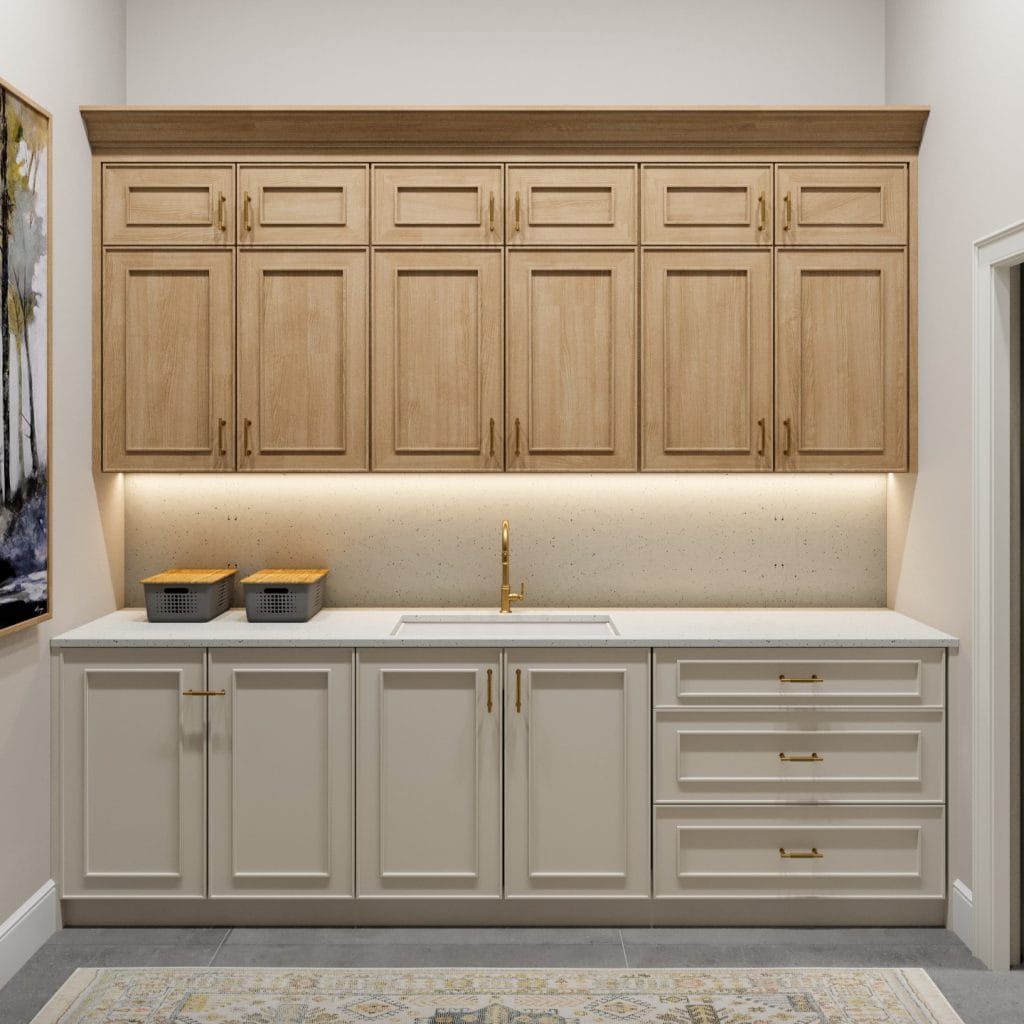
Cream-painted base cabinets with brass pulls line both runs. The material read stays close to the kitchen, which matters because the scullery handles daily prep and cleanup that the main kitchen’s clean counters can absorb later.
The sink wall carries oak upper cabinets with raised-panel detailing and LED strip lighting underneath. A brass gooseneck faucet matches the kitchen’s island fixture. White quartz countertops provide a durable work surface on both sides, and the backsplash behind the sink uses a speckled quartz slab that sits quieter than the kitchen’s marble.
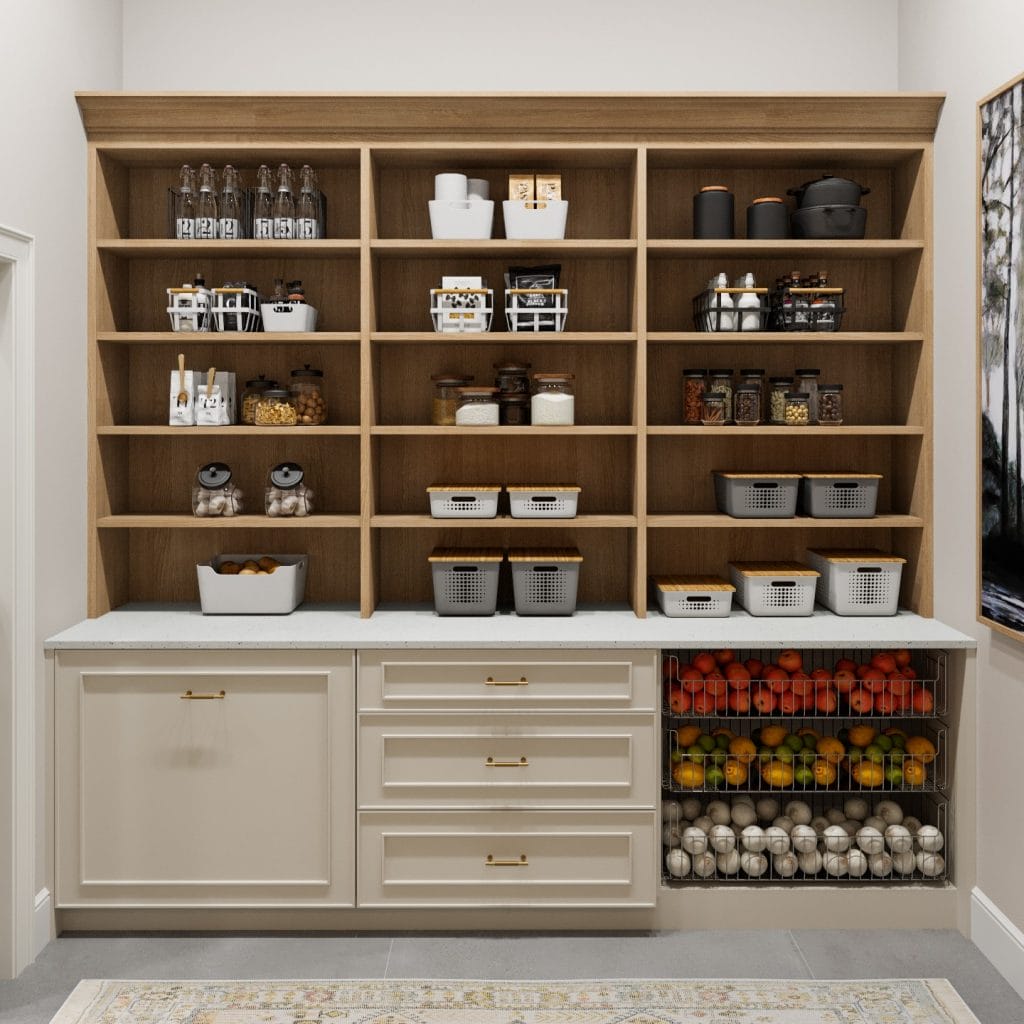
Across from the sink, open oak shelving stacks floor to ceiling in a larder configuration. This side of the scullery functions as a walk-in pantry storage, keeping bulk items out of the main kitchen’s cabinets. The shelves offer plenty of space for dry goods in containers and glass jars. Wire produce baskets sit at the lowest level, built into the base cabinet frame. A dedicated trash cabinet occupies one end of the lower run.
During the build phase, the client had questioned whether one side of the countertop should be wider than the other, given some leftover space. Marine confirmed the adjustment.
Keeping an Eye for Detail
A framed landscape painting hangs on the far wall between the two counter runs, visible through the pocket door from the hallway. A traditional runner in muted teal and cream meanwhile softens the tile floor. These details are unusual for a utility room and reflect the client’s broader philosophy: even secondary spaces received considered finishes. The scullery’s pocket door, when closed, conceals the working interior. When open, the oak shelving and brass fixtures read as part of the hallway’s material language.
Butler’s Pantry Layout
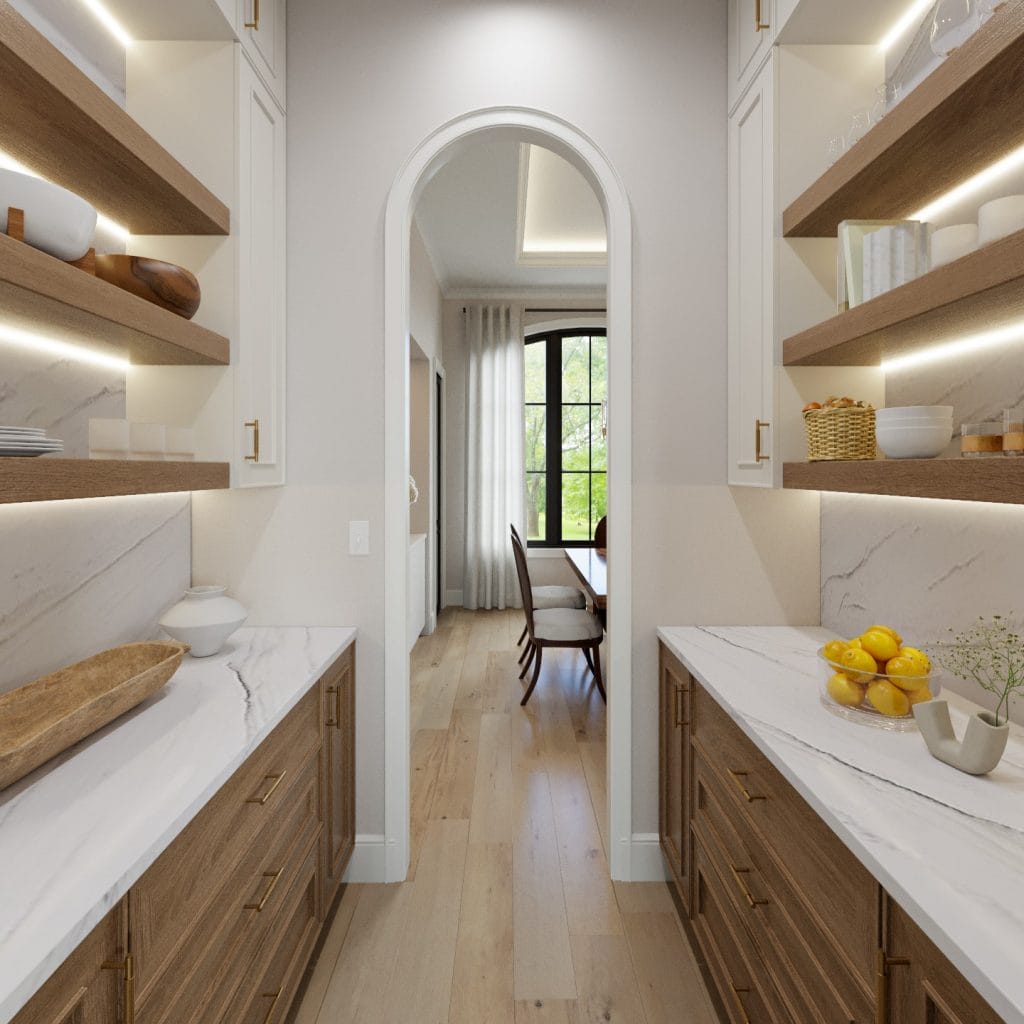
The butler’s pantry sits between the kitchen and dining room, framed by arched openings at both ends. Through the far arch, the dining room’s dark wood table and arched windows are visible, connecting this narrow working space to the formal rooms on either side.
Counters run on both sides, providing staging surfaces for coffee machines and small appliances. Oak floating shelves with LED strips sit between white shaker upper cabinets, and the backsplash marble matches the kitchen’s slab.
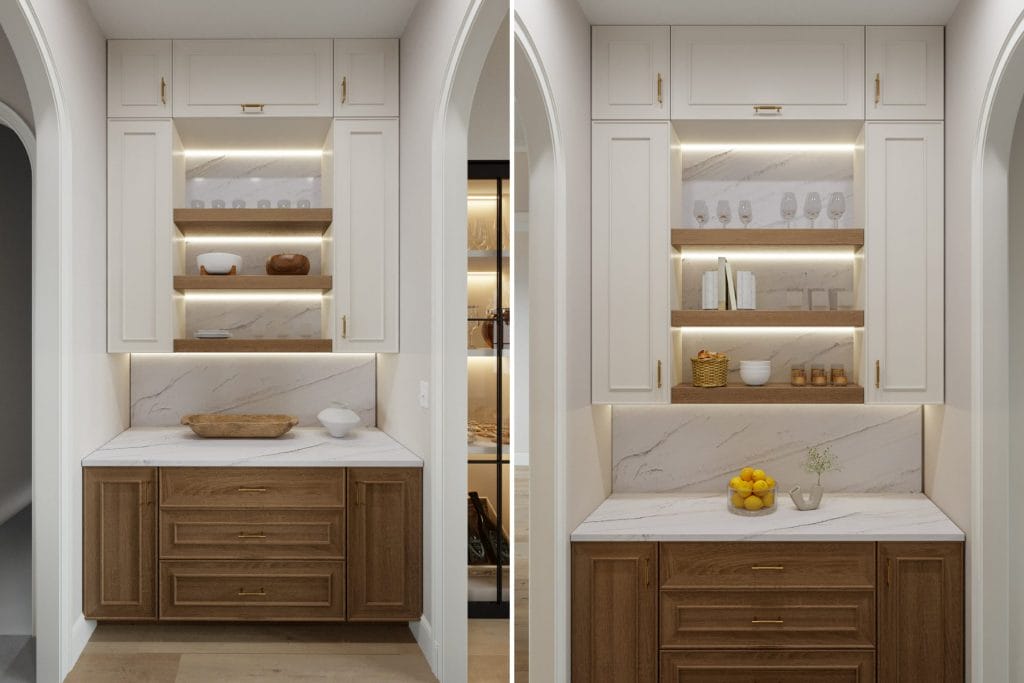
The close-up views of each end wall show how the designer handled the elevation. A lift-up cabinet tops the upper tier, with two floating oak shelves below holding glassware and serving pieces. The marble backsplash runs floor to countertop height. Dropping the ceiling to 10’6″ brought the upper cabinets into a more usable reach.
The hardwood flooring runs through here, keeping the material continuous with the kitchen and dining zones.
The Mudroom Design
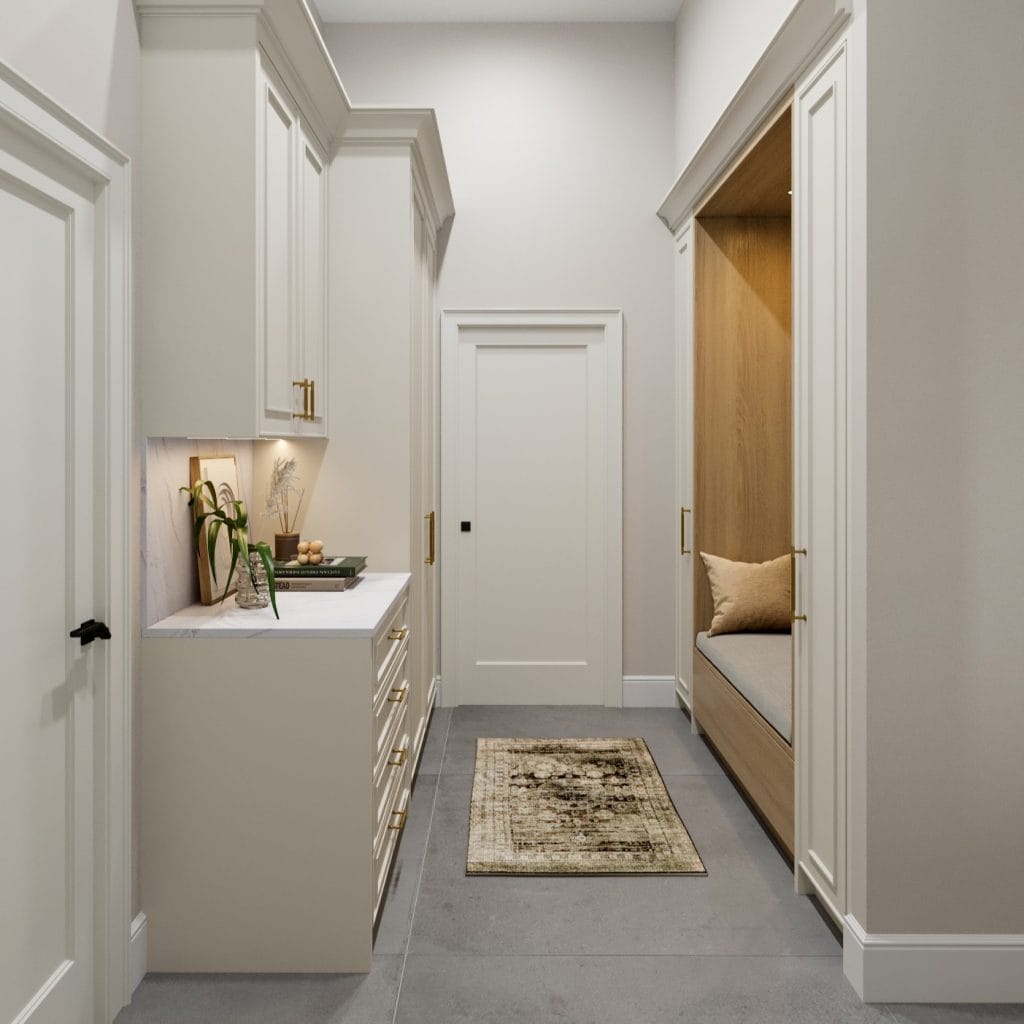
The mudroom connects the garage entry to the kitchen hallway, making it the first interior space the family passes through daily. Marine designed it as a compact utility room with cream-painted built-in cabinetry on both walls. Gray tile covers the floor, consistent with every wet-area specification in the house. Crown moulding runs along the cabinet tops, matching the profile used in the main rooms. The client’s brief included consultation on this hallway specifically, and the finished design treats it as a proper room.
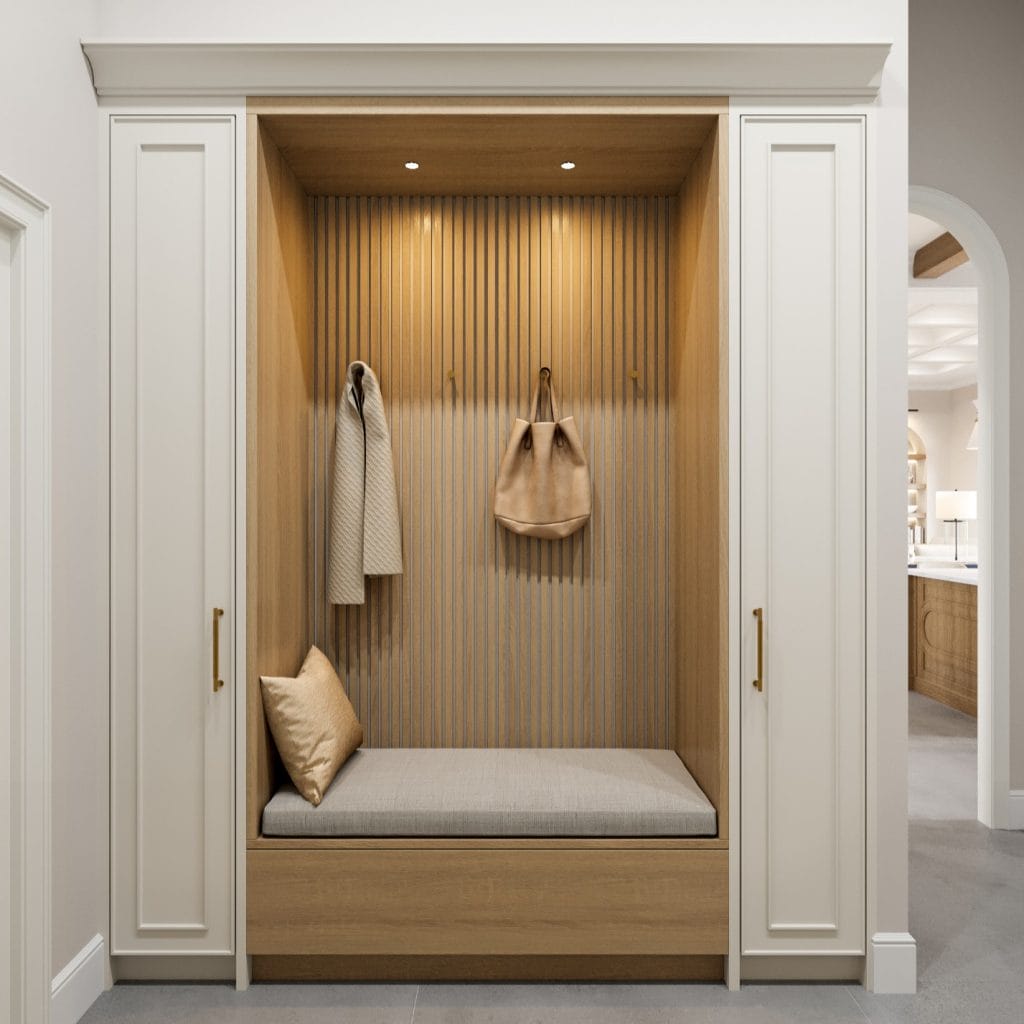
One wall holds the bench nook with hooks. Vertical oak slat paneling lines the interior, lit by recessed downlights above. A cushioned seat in neutral linen sits over a pull-out drawer. Tall white cabinets with brass pulls flank the nook on both sides, providing closed coat and shoe storage. The archway beside the bench leads toward the kitchen and great room, placing this utility space directly on the sightline into the home’s key interiors.
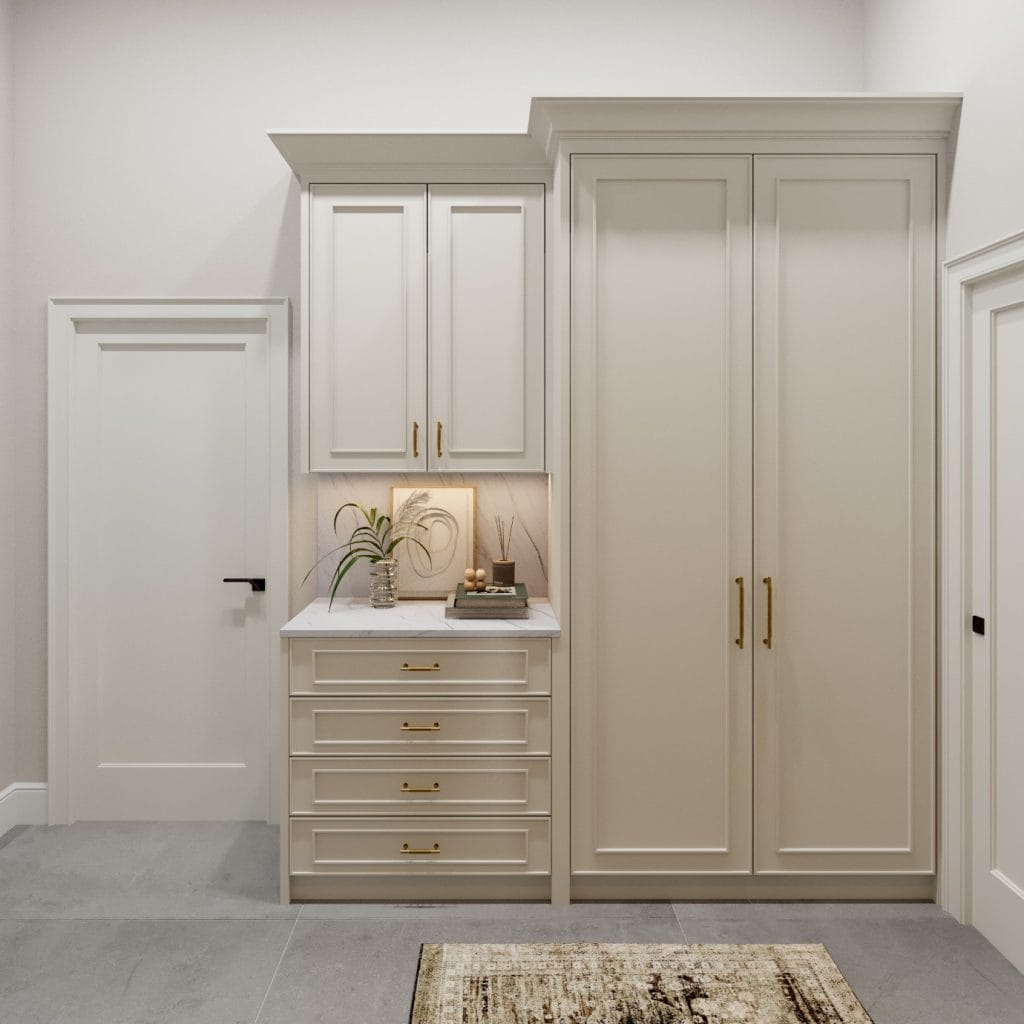
The opposite wall features a different storage configuration. A three-door wardrobe rises nearly to ceiling height, offering generous hanging space. Beside it, a four-drawer cabinet sits below a lit display niche with a marble surface that takes the role of a typical entryway console. A vintage-patterned runner softens the tile between the two walls.
Design Details: Sourcing the Perfect Pieces
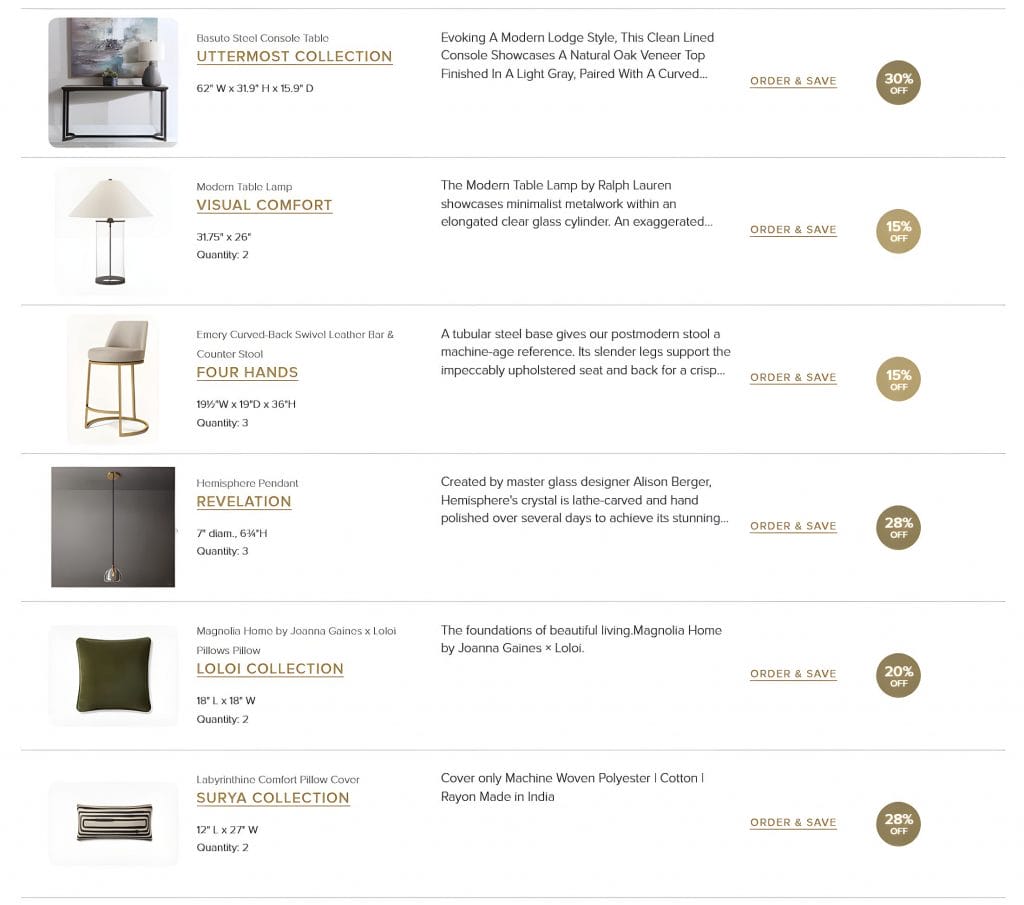
Decorilla’s 3D renderings gave the client a clear view of how each utility space connected to the kitchen and main hallway before materials were ordered. They could compare cabinet finishes across rooms and confirm that the butler’s pantry matched the kitchen exactly.
Marine continued fielding builder questions through the realization phase, updating the 102-page specification document with elevations and dimensions for every cabinet run and ceiling drop.
Meanwhile, the exclusive trade discounts helped keep costs realistic across multiple rooms that each required custom cabinetry and fitted millwork. The client’s appreciation held steady across every phase of the project: “Thanks, Marine! You did a great job, and we appreciate all your hard work in transforming our home.”
Our Picks for the Look
Looking for a stylish utility room design?
Decorilla’s professional designers know how to make hardworking spaces feel like a natural extension of your home’s main rooms. Book your Free Online Interior Design Consultation to start your project today!



Comments