


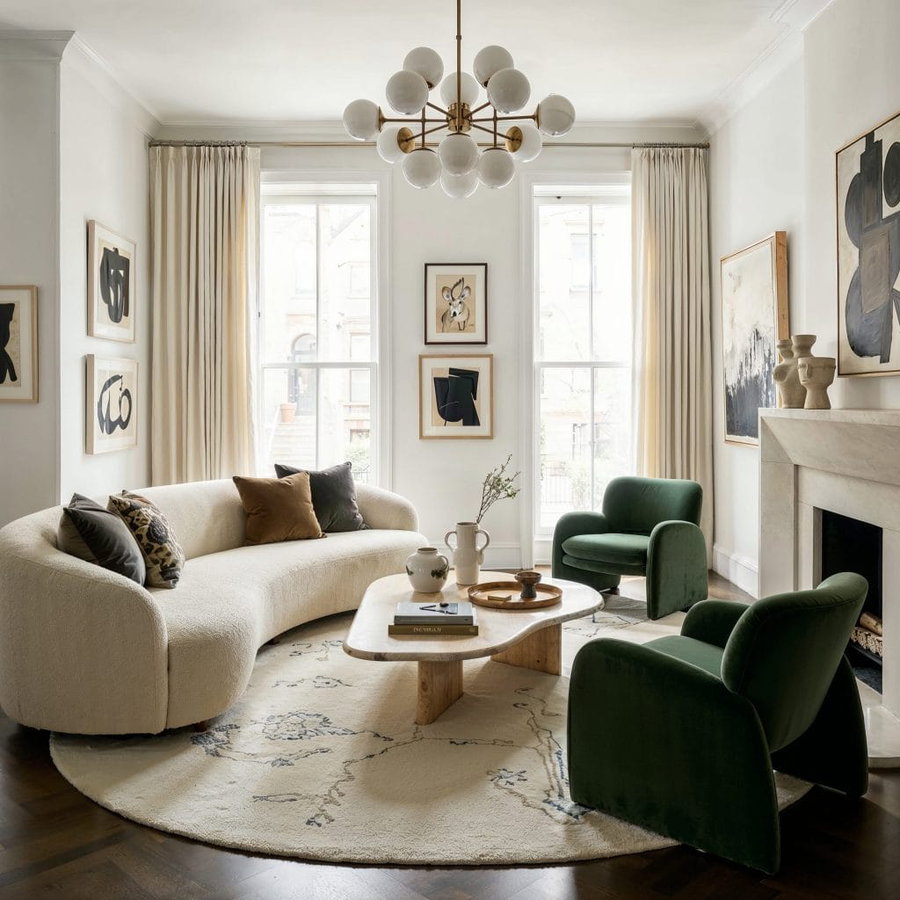
Curved furniture has moved from accent piece to design anchor, and for good reason. Rounded silhouettes soften a room’s edges, improve traffic flow, and bring a sense of movement that straight-lined spaces rarely achieve on their own. Our designers have been reaching for curved pieces across every category, and these are the selections that earn their place in a real room.
What Makes Curved Furniture So Popular
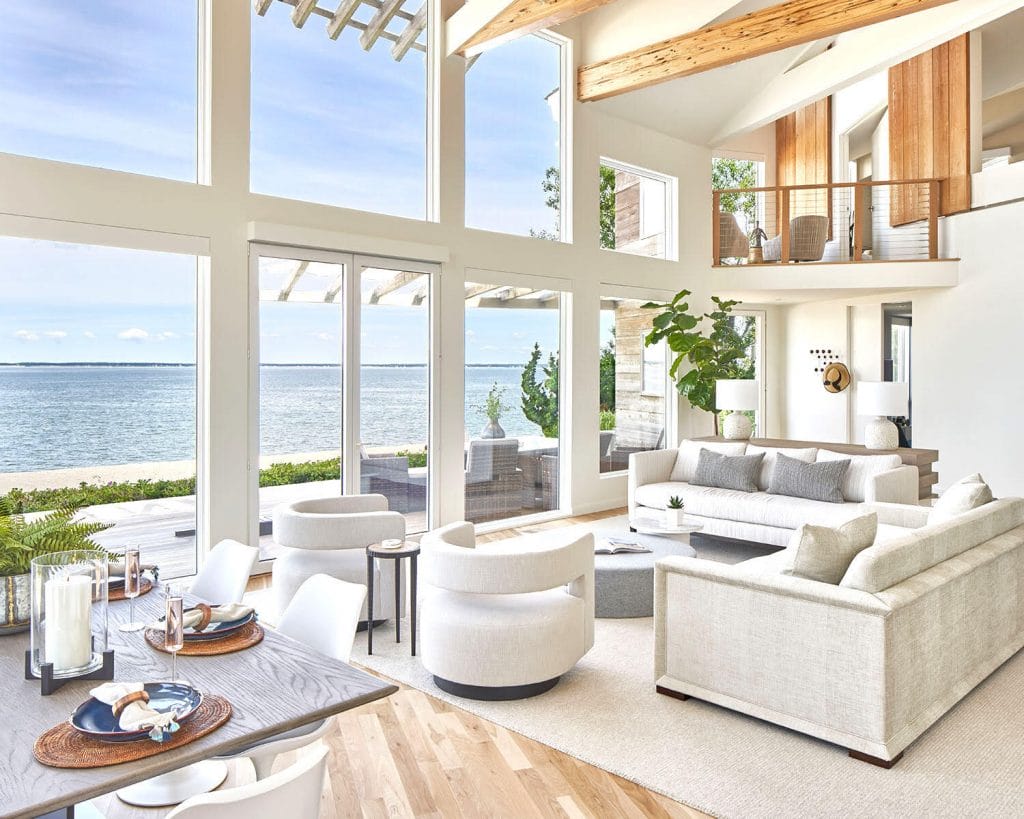
Straight walls and right-angled architecture dominate all styles of interior design. Curvy furniture works against that grid, introducing relief through form alone. A curved sofa breaks the parallel lines between a media wall and a coffee table. A rounded accent chair opens up a conversational grouping that rectangular seating would lock into place.
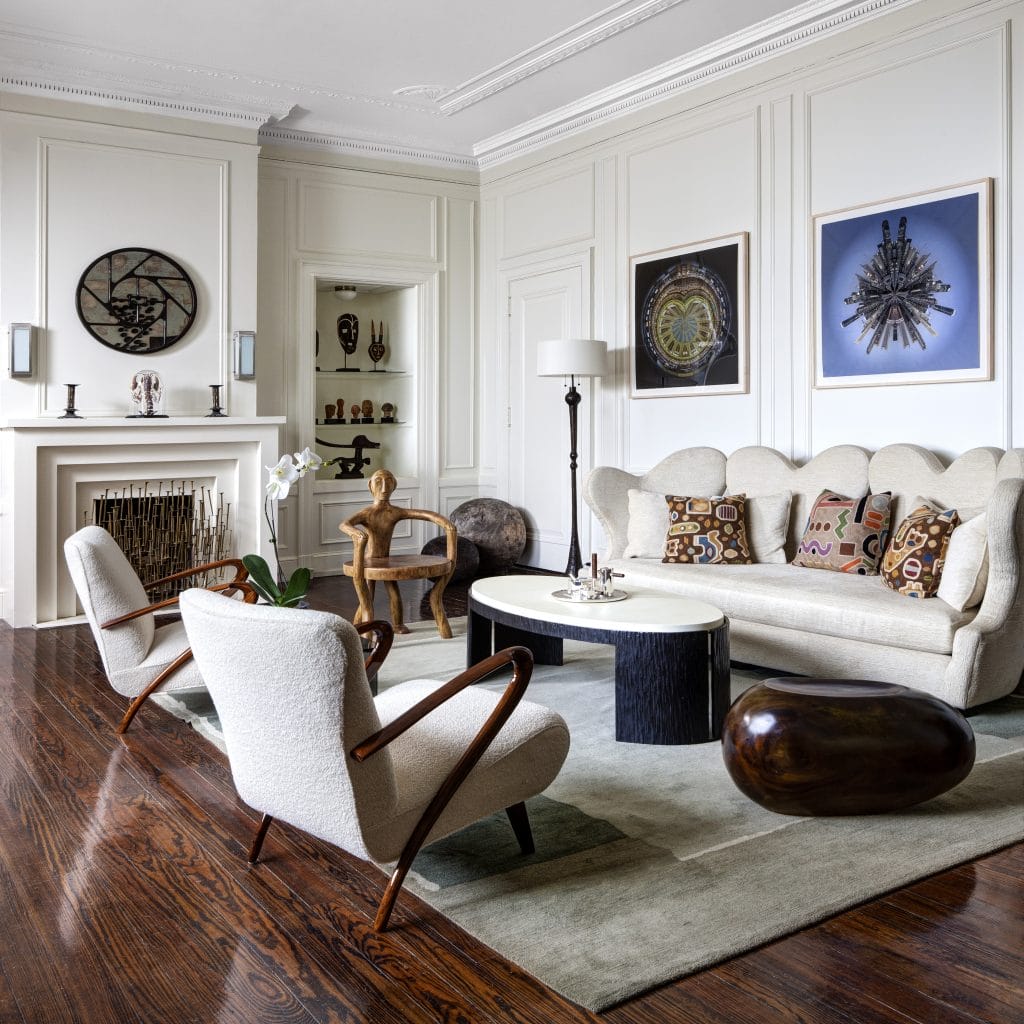
The practical case is just as strong. Styling curved pieces in your home improves circulation in open-plan layouts, fits naturally into bay windows and awkward corners, and scales from compact to oversized, making the shape accessible across room sizes and budgets.
Pro Tip: Save up to 45% off the best curved furniture designs! Sign up for Free to access exclusive discounts today!
Curvy Furniture Pieces Designers Love
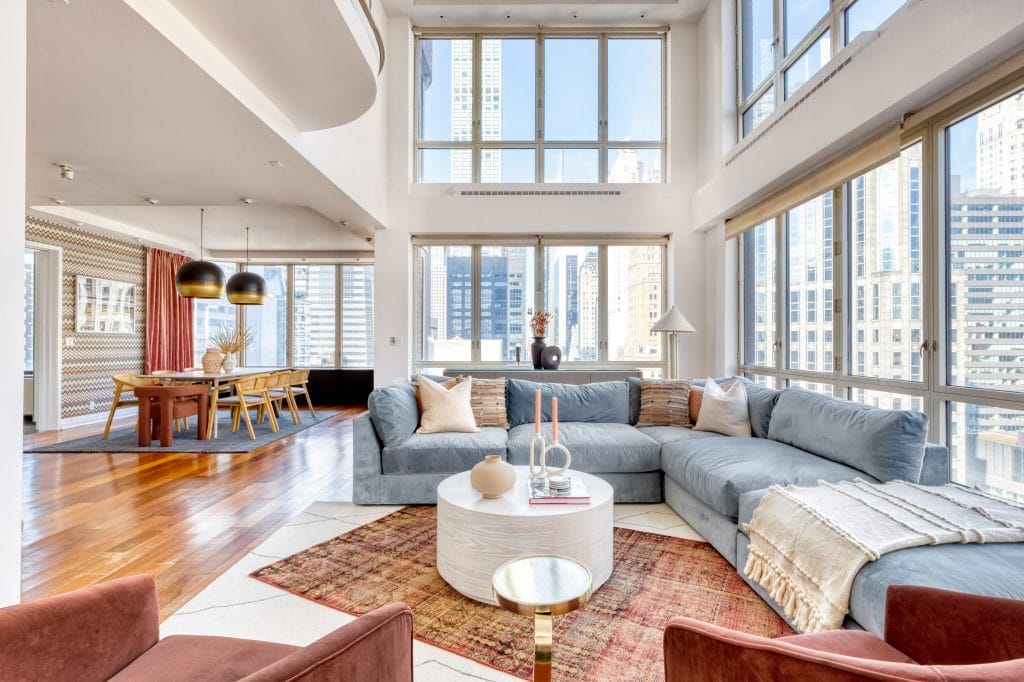
Here’s a look at the pieces leading furniture trends right now, from a small curved sofa that fits a compact apartment to sculptural side tables that finish a room. Each brings a distinctive profile into a different functional role across the living room.
Curved Couches
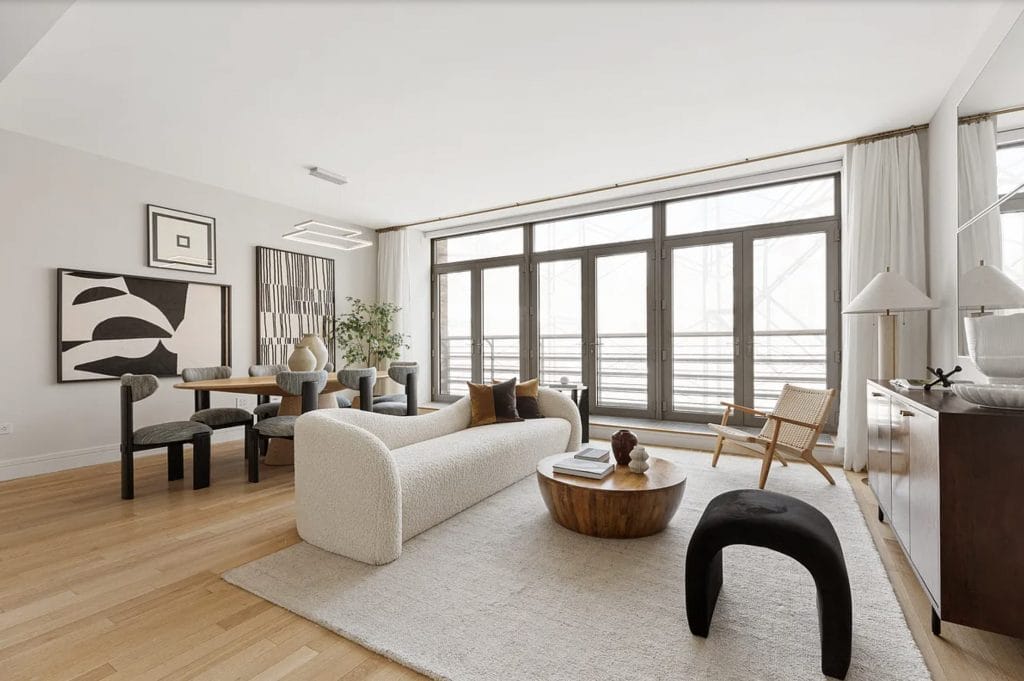
These rounded silhouettes anchor living rooms with soft lines that guide the eye and the flow of foot traffic in equal measure.
1. Sculptural Symmetry
Rounded arms roll into the backrest as a single curve, and each corner softens into an arc rather than a pressed edge. The Gibson Taupe upholstery shifts between warm and cool depending on surrounding light, settling easily among layered neutrals or richer accent tones. At 87 inches on low parawood legs in weathered sepia, the frame holds a grounded, mid-century proportion that pairs well with sculptural side tables, textured rugs, and open-plan living spaces. Performance-grade fabric and S-spring construction handle daily use.
WHY IT’S POPULAR: The continuous curve from arm to backrest gives the Sabine a softer presence than most sofas at this scale. Our designers often note how naturally it anchors a room without squaring off the layout.
2. Jellybean
The Rondo’s seat depth favors upright, conversation-oriented seating. Its design follows a jellybean-shaped footprint, wider through the center and tapering toward each end. A slim track arm narrows to a forward point that wraps around the tight seat and inner back. The silhouette floats close to the floor and pairs well with low-profile accent chairs and organic-shaped coffee tables. It also fits well into open contemporary layouts where curved furniture sets the room’s direction.
WHY IT’S POPULAR: Due to its narrow, pointed arms, which free up visual space, the Rondo reads lighter than its span suggests.
3. Quietly Dominating
The organic footprint of this curved couch flows outward through the seat and back in a continuous line. No sharp breaks at the arms or corners. Cream bouclé covers the full form and picks up a soft textured grain that shifts under changing light. This silhouette grounds well against feature walls or in open layouts where the curve can read uninterrupted. It also sits naturally alongside rounded accent chairs or sculptural side tables.
WHY IT’S POPULAR: The curved, wrap-around shape softens the geometry of a room immediately, especially in spaces with angular furniture or straight architectural lines nearby.
Curved Sectional Sofas
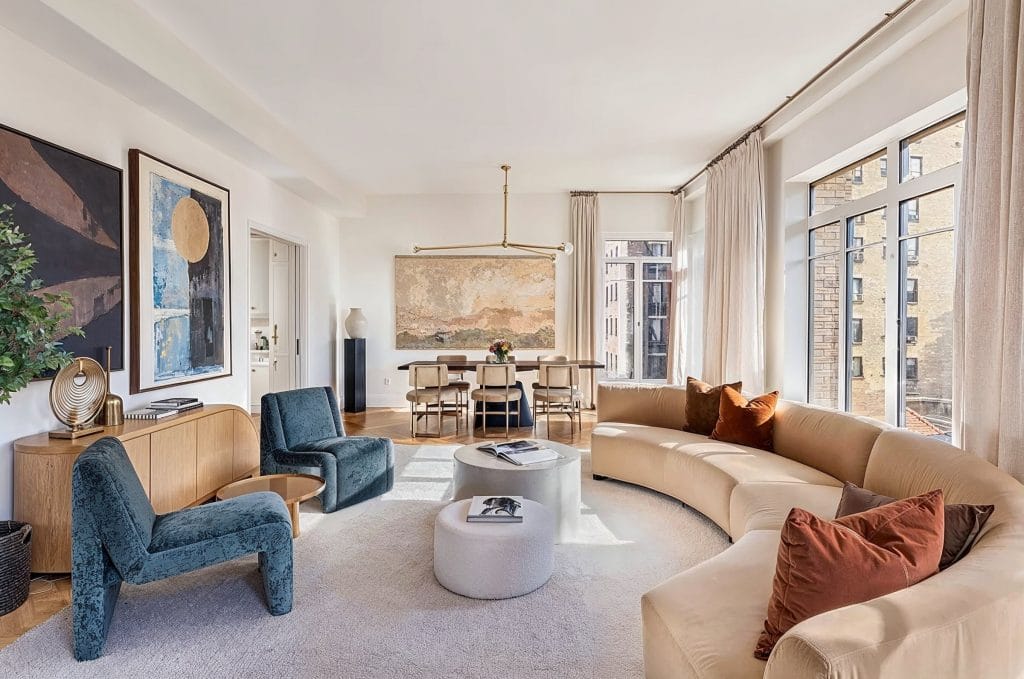
When a seating plan needs to wrap a room’s center, a curved sectional does it with fewer visual breaks than a modular L-shape.
1. The Anchor
Faye’s solid beech frame and 100,000-rub fabric are built for daily, high-traffic use. Black bouclé upholstery with exaggerated texture reads rich and tonal, adding depth to the surface as light moves across it. At 112 inches wide, this curvy sofa’s scale works well for open living areas where the arc can anchor a seating zone. Meanwhile, small, rounded rubberwood legs keep the base minimal and let the upholstered form do the visual work.
WHY IT’S POPULAR: Faye’s moody, grounded presence stands apart from the lighter neutrals dominating most curved sectionals right now.
2. Elegantly Modular
Stickley builds the Hayward as a modular curved sofa, so this right-facing unit works on its own or connects with additional sections to widen the arc. Broad arms curl inward at each end, which gives the piece a sheltered, lounge-oriented feel. The extra depth and loose spring down cushions reinforce that quality. Customizable across Stickley’s full fabric library and maple finishes, the Hayward adapts to rooms ranging from contemporary to eclectic. It’s handmade in North Carolina on a solid maple base.
WHY IT’S POPULAR: The modular format lets you begin with one curved section and expand later, so it’s a practical entry point for larger seating plans.
3. Curvy All the Way
What separates the Belen from most curved sectional sofas at this scale is how little visual structure it shows. The smooth back wraps the full perimeter without breaking at the arm or chaise transition, so the 159-inch frame reads as one continuous, amorphous volume. Nomad Snow performance fabric keeps the surface light and quiet, which helps a piece this large settle into a room. The S-spring seat sits low at 26 inches overall, encouraging a relaxed, sunk-in posture. Additional sofa or chaise units can clip in to extend the footprint further.
WHY IT’S POPULAR: The Belen fills the center of a large living space without the boxy segmentation that usually comes with the territory.
Curvy Chairs
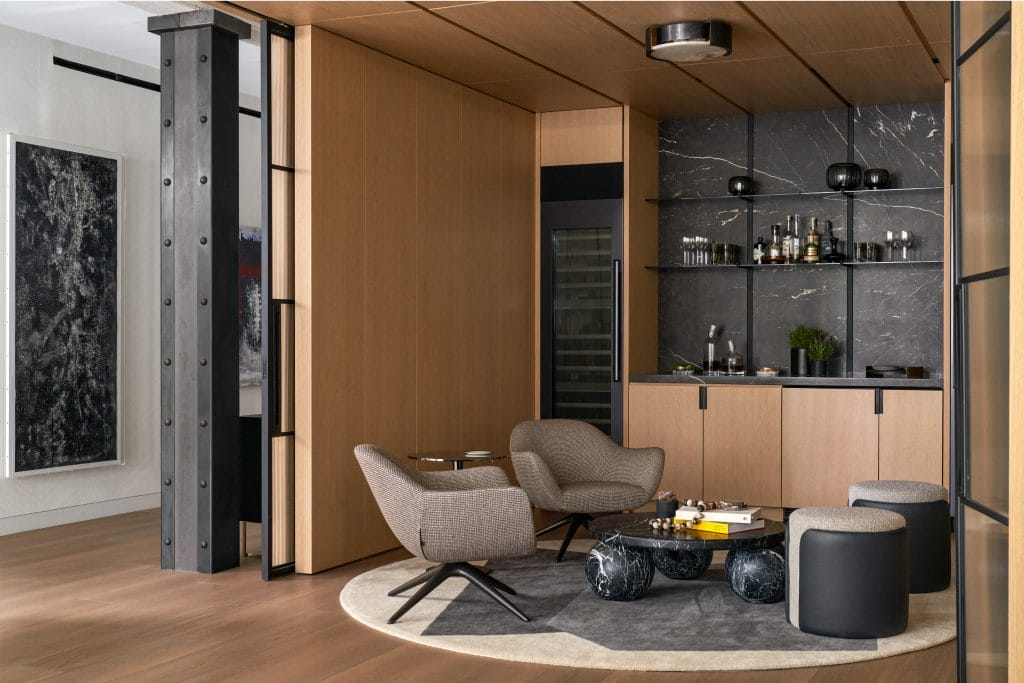
Barrel backs, swivel bases, and sculptural egg shapes bring curve-driven chair design into accent seating that holds its own while cozymaxxing the entire layout.
1. Warmly Earthy
Rust velvet on a barrel form tends to pull attention, and the Lansky leans into that. The full upholstery wraps the curved shell without any exposed frame, so the chair reads as a single soft volume. At 28 inches wide, it scales well as a curvy chair beside a sofa or paired across a coffee table. The three-leg base also opens up the floor line underneath, which keeps the visual footprint lighter than a four-leg or skirted barrel typically allows.
WHY IT’S POPULAR: The compact barrel shape tucks into corners and tight arrangements more easily than wider accent chairs. This makes it a practical pick for layered seating plans.
2. Reading-Friendly
Swivel chairs earn their place in open-plan rooms by letting one seat face multiple directions. Leander adds a generous barrel shape to that flexibility. At 43 inches deep with a 34-inch seat width, this curvy chair sits closer to a compact loveseat in scale. The recycled cotton-polyester linen in Bone White has a soft, lived-in drape that suits the oversized cloud cushion system. Rowe builds it on a mortise-and-tenon hardwood frame with a lifetime warranty on the structure, and also offers over 1,000 fabrics for custom orders made in the USA.
WHY IT’S POPULAR: The deep seat and loose kidney pillow make the Leander a go-to reading chair in a styled living room.
3. The Egg, But Tufted
Phillips Collection calls this the Egg Chair, and the form earns the name. Its silhouette references mid-century originals, though the low 29-inch height and wide stance update the proportions for contemporary layouts. The tufted interior cups the body while the smooth outer shell rounds away in an unbroken curve. As a result, the 35-inch-wide seat provides a cocoon-like enclosure. The 100% natural fiber in Gray Ramie has a matte, linen-adjacent texture that sits well in rooms where heavier velvets would feel overdressed.
WHY IT’S POPULAR: The smooth back looks as finished as the front. As a curvy chair with some visual heft, the Egg works pulled away from the wall or floating in the center of a room.
Curvy Coffee Tables
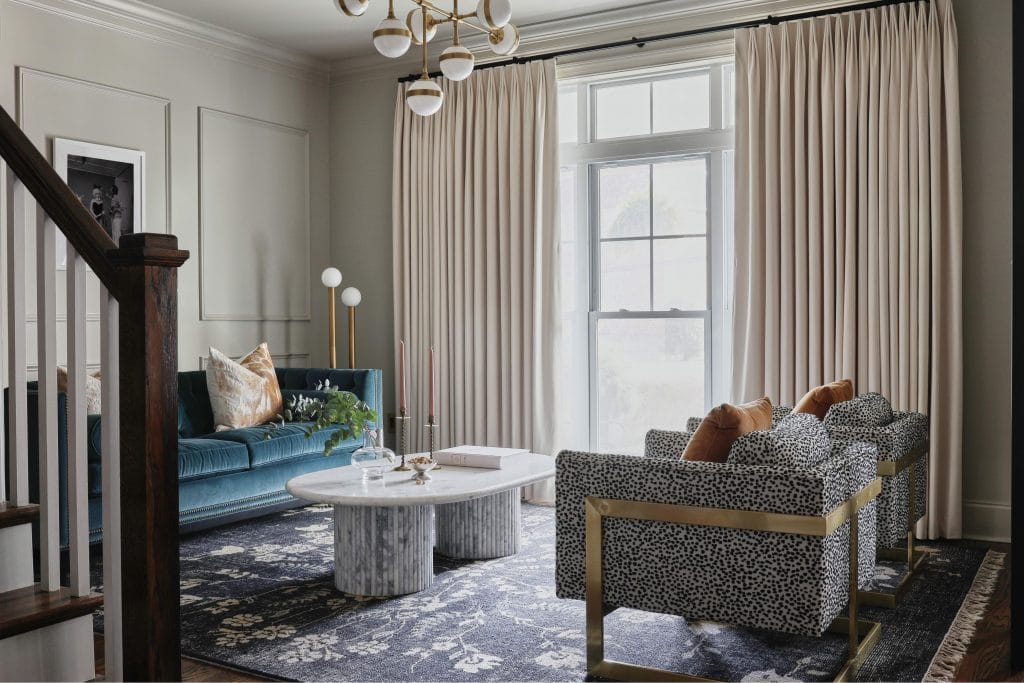
Organic and rounded tops eliminate sharp corners at the center of a layout, easing movement around deep-seated sofas and sectionals.
1. Solidly Grounded
At nearly 200 pounds of solid acacia, the Ronin is substantial enough to anchor a room on presence alone. Its dual cylinder pedestal bases support a 57.5-inch top with carved taper ends. Between them, a cubby adds concealed storage without breaking the table’s clean profile. The top, meanwhile, sits low enough to preserve sightlines across a seating arrangement—useful in rooms where the sofa backs are kept below window height. The natural grain variation also means each piece differs slightly in tone and figuring.
WHY IT’S POPULAR: The tapered edges and rounded pedestals of this curved furniture piece soften what could otherwise read as a heavy silhouette. Thus, it pairs well with upholstered seating that favors organic shapes.
2. Like a Cloud
Cocktail tables in a curved furniture arrangement sometimes have to sacrifice surface area to avoid fighting the room’s geometry. The Kindred sidesteps that with a fossil-shaped top in solid mahogany that follows an organic, cloud-like outline. Available in Godiva or Sesame finishes, this curvy coffee table echoes the lines of rounded seating without mimicking them directly. Reeded cylindrical bases catch light along their vertical ridges, adding texture to a restrained, low-slung form at around 16 inches high.
WHY IT’S POPULAR: The organic top shape eliminates sharp corners, which makes traffic flow easier around deep-seated sofas and sectionals.
3. Water-Worn
In a layout built around curved furniture, the River Stone removes geometry from the equation entirely. At 66 by 42 inches, this extra-large curvy coffee table indeed resembles a geological feature that happens to sit in the middle of a room. No right angles on it, every edge follows the logic of a water-worn boulder. At the same time, its flat top keeps the organic form functional. The finish uses natural crushed stone in resin over fiberglass. Due to its porosity, coloration shifts slightly between pieces, ranging from pale cream to warmer off-white.
WHY IT’S POPULAR: Families with young children keep coming back to the completely rounded profile—there’s nothing to bump into at toddler height. Plus, it also works outdoors.
Curvy Side Tables
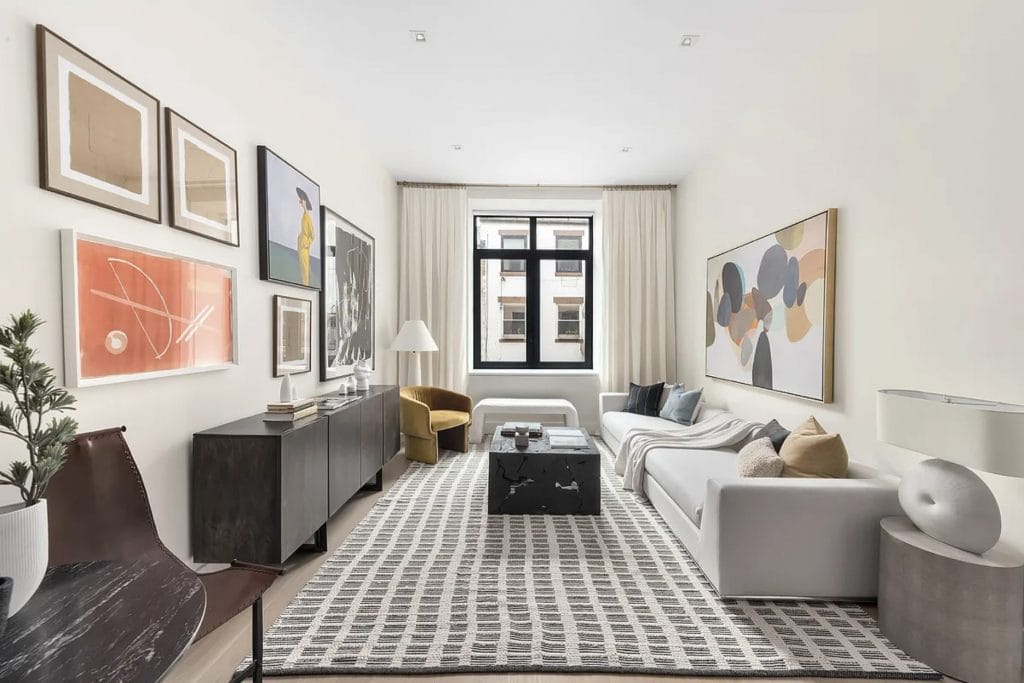
Scaled for tight spots beside low-armed seating, these rounded accent tables add material interest where a lamp or a drink needs to land.
1. Two Levels of Stone
Alabaster varies piece to piece, so Theo’s top will never match another one exactly. You’ll find warmer veining in some, cooler and more translucent in others. That natural stone sits on a drum-shaped ebony birch body with brass accents, while a second, smaller surface floats just above the main level. This design makes it genuinely useful as a curvy side table. Its scale suits low-armed sofas and deep-seated lounge chairs where a standard-height end table would feel mismatched.
WHY IT’S POPULAR: The two-tier layout lets you stage one surface and actually use the other. Accent tables this compact often force you to choose.
2. Soft Mineral
No two of these look the same. Each Sculpt is hand-finished in fiberglass with an undulating, amorphous profile that shifts depending on the angle. The Steel Grey finish has a soft, mineral quality that recedes into neutral palettes. At roughly 16 by 18 inches, this curved side table is scaled for use beside low seating or in pairs flanking a curved sofa. Meanwhile, its 17 pounds of weight make repositioning on a whim effortless.
WHY IT’S POPULAR: The sculptural silhouette works well as a small-scale accent piece between larger, quieter pieces. The form is also outdoor-safe, which extends its placement range to covered patios and screened porches.
3. Light Through Glass
A master glass blower in Poland makes each Pablo by hand, cycling molten glass through multiple rounds of heating/ cooling. That way, the material develops its signature mix of clear and opaque passages. The light passing through its body changes depending on what’s behind it and what time of day it is, shifting the mood of the room in the process. In addition, the solid glass form has real weight to it, which grounds what could otherwise feel decorative. Place it beside a deep sofa or between a pair of curvy chairs.
WHY IT’S POPULAR: Glass as structure rather than surface makes this table a conversation starter.
Ready to Shop Curved Furniture?
Decorilla members enjoy exclusive discounts from top furniture and decor brands. Join Free to start saving today!
Need help pulling it all together? Book your Free Online Interior Design Consultation to start your project today!


Comments